
Hold rates or defy Trump? US Fed chair Warsh faces ‘no-win’ inflation dilemma
He must soon decide whether to raise interest rates if inflation does not ease, even if it draws Trump’s ire
 Add BT as a preferred source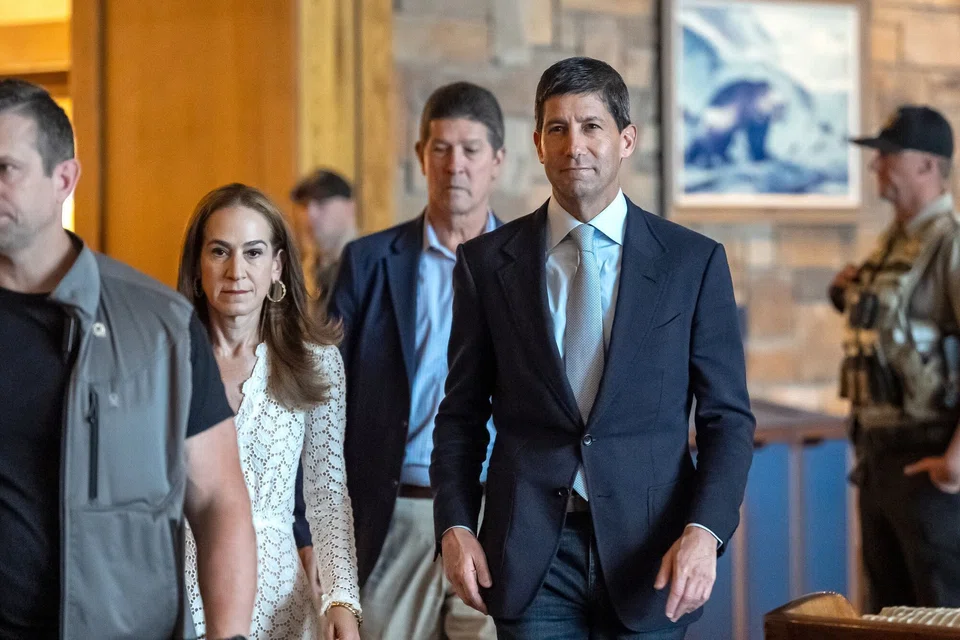
KEVIN WARSH cleared a crucial hurdle at his first appearance as the US Federal Reserve’s chair at its annual conference in Jackson, Wyoming.
He offered his most comprehensive views to date about the state of the US economy. He cleared up confusion about the US central bank’s commitment to getting inflation down to its 2 per cent target after sending mixed messages in July. And he acknowledged that the US Fed might have “work to do” to make good on that pledge, suggesting a readiness to raise interest rates if price pressures do not ease.
But the path ahead for Warsh is a precarious one. Financial markets now see a quarter-point increase at the US central bank’s Sep 15-16 meeting as more likely than not, leaving Warsh with a tough decision whether to follow through with action.
Another month of benign inflation data will alleviate the pressure on him to raise rates in September. But as the market blowback to his last meeting in July showed, the onus will be on him to explain how doing nothing aligns with his intolerance for elevated inflation.
A rate increase in September would help to underpin the seriousness around Warsh’s inflation pledge. Delivering that just before midterm elections, however, would create an immediate showdown with the Trump administration.
“He has multiple targets on his back,” Maurice Obstfeld, a senior fellow at the Peterson Institute for International Economics in Washington, DC, and former chief economist at the International Monetary Fund, said on the sidelines of the conference. “It’s a no-win situation.”
Shift in tone
Warsh on Friday (Aug 28) sounded like many of his fellow policymakers at the US Fed who had grown impatient about the slow pace of progress on taming inflation after half a decade of it overshooting the target.
He not only dismissed data that showed easing price pressures this summer, but also suggested that there was not much restraint on an economy that has been growing at a robust pace. He also made clear that with the labour market stable, the US Fed’s focus was chiefly on tackling inflation.
It is those same views that prompted Alberto G Musalem, president of the US Federal Reserve Bank of St Louis, to support raising rates in July. Musalem is not a voting member on this year’s policy setting committee, so he was not one of the three who officially opposed July’s decision to hold rates steady.
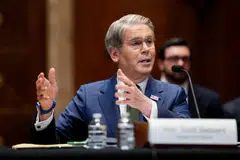
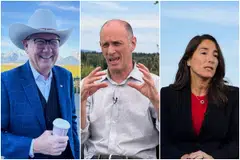
Musalem, in an interview, endorsed Warsh’s message on Friday, especially his decision to put “a level and a sense of timing” around inflation’s retreat before some tightening is required.
Musalem, who said he was keeping a “very open mind” going into the September meeting, conveyed that there was a solid case for raising rates to squash inflation.
Given his views that there are “both supply and, very importantly, persistent demand forces pushing inflation above 2 per cent, I believe that without some restraint on inflation, the probability that inflation will be meaningfully above target 18 months from now is higher than the probability that we’re going to converge to target” by then, he said.
Musalem noted that while US inflation expectations did not indicate a loss of confidence in the Fed’s commitment to reaching 2 per cent, that conviction was contingent on the Fed adjusting its policy settings appropriately.
“If we delay action in spite of data, expectations may be affected by that,” he said. “Right now, inflation expectations are very anchored because the same markets expect us to raise interest rates by about 75 basis points in the next nine months or so.”
Raising rates by three-quarters of a percentage point, the argument goes, would ensure there is some downward pressure on economic activity, helping in part to snuff out price pressures.
Forgoing forward guidance
Warsh had a plea during his speech on Friday that people in attendance who know him well said the public should heed. “Just don’t call it forward guidance,” the chair quipped when outlining the contents of his speech.
Many in markets were quick to perceive it exactly as that, however, despite Warsh leaving himself room to manoeuver.
“He was very clear: He is not telling us what he’s doing at the next meeting,” said Kristin Forbes, a former Bank of England official who is now at the Massachusetts Institute of Technology. Still, Forbes conceded that Warsh was in a “tricky situation” as he contends with markets reading it as such.
“He might feel the pressure to verify what people are saying, and then fall back into that trap or he might feel pressured to not verify what people are saying to show that there is not guidance in a speech like that about the economy,” Forbes said. “I think he does have enough credibility and wants to do the right thing enough that he will not make a decision just to send a lesson.”
Austan D Goolsbee, the president of the Chicago Fed, said in an interview that the right decision came down to whether the data showed the most recent bout of inflation, caused partly by the Iran war and US President Donald Trump’s tariffs, was persistent or just a one-time increase in the level of consumer prices.
“The reason to wait, just in theory, would be if that inflation is going to go away on its own, then you easily could generate a recession and you didn’t need to,” Goolsbee said.
So far, the inflation data is “ambiguous,” he said, pointing to the fact that price pressures across the services sector remain elevated. Monthly inflation readings near 0.3 per cent are “nowhere near target,” Goolsbee added. “That’s not evidence that we’re headed back to 2 per cent.”
In July, the Fed’s preferred inflation gauge, once volatile food and energy prices are stripped out, rose at an unrounded monthly pace of 0.246 per cent.
If the next US consumer price index report, scheduled for release Sep 11, comes in soft, Warsh, now having provided a framework for his thinking, could “legitimately stand up” in September and justify holding rates steady, said Donald Kohn, who served as vice-chair of the Fed from 2006 and 2010 when Warsh was a governor.
“You have to have a good reason not to do it,” Kohn cautioned about forgoing a rate rise.
Sparking a showdown
Increasing rates would put Warsh immediately at odds with Trump, who has gone to great lengths to pressure the Fed into lowering rates. Trump handpicked Warsh for the job, after running an elaborate audition process that hinged on finding someone who would support his views.
The administration’s desire for lower rates was on full display this past month when US Treasury Secretary Scott Bessent embarked on surprise interventions amid a sharp rise in longer-term US government bond yields.
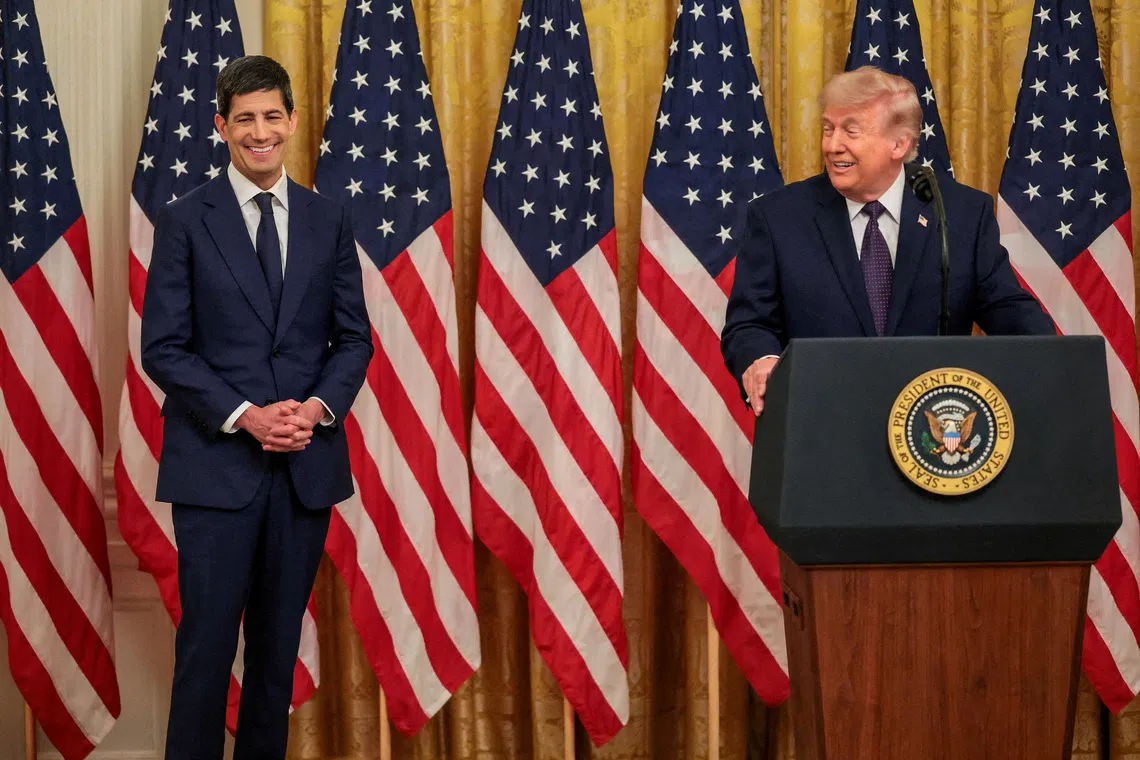
Policymakers at the Fed officially maintain that these interventions do not make their jobs harder, but there are reasons to think that it has some negative impact.
For one, Bessent’s actions have muddied the economic signals that the Fed would otherwise glean from the level of Treasury yields, which reflect heightened policy uncertainty, concerns about the US’ debt load and higher growth prospects, among other factors.
Moreover, Bessent, in making clear that he will take steps to tamp down borrowing costs, has created a situation in which yields are more likely lower than they otherwise would be. If that results in overall financial conditions that are less restrictive, that could make taming inflation more difficult.
“With anything having to do with fiscal policy or debt management, what Treasury does impacts markets and the economy and so impacts what the Fed does, and vice versa,” said Patricia Mosser, who previously worked as a top official at the New York Fed and is now at Columbia University. “Going at cross purposes is usually not a wise idea.”
Some believe Warsh, who has a close relationship with President Trump, will be more effective at managing the fallout in the event that the Fed raises rates. Trump has chosen so far to place blame on Warsh’s colleagues for not cutting borrowing costs.
The universal message from Fed officials is that they do not feel constrained by political considerations. What would imperil their independence more, they argue, is if they opt against a move that was necessitated by the data.
“The central bank’s timetable is not the market timetable, and it’s not the election timetable and so we often face tensions with outside bodies,” Goolsbee said.
But defying Trump just before the midterms will no doubt raise tensions.
“If they can possibly put it off till after the midterms, it would be good for the institution,” said Kenneth Rogoff, a Harvard professor who previously served as chief economist at the IMF.
“We’re clearly in a constitutional crisis at the moment, and if you’re trying to preserve Fed independence, are you preserving it better by spitting in his face, or are you preserving it better by laying low and waiting until the winter?” NYTIMES
Decoding Asia newsletter: your guide to navigating Asia in a new global order. Sign up here to get Decoding Asia newsletter. Delivered to your inbox. Free.
Share with us your feedback on BT's products and services