JSW pact: Fresh cash alone won’t put Volkswagen in India’s fast lane
Local sourcing key to German carmaker’s proposed tie-up, but US$1.4 billion tax dispute clouds talks
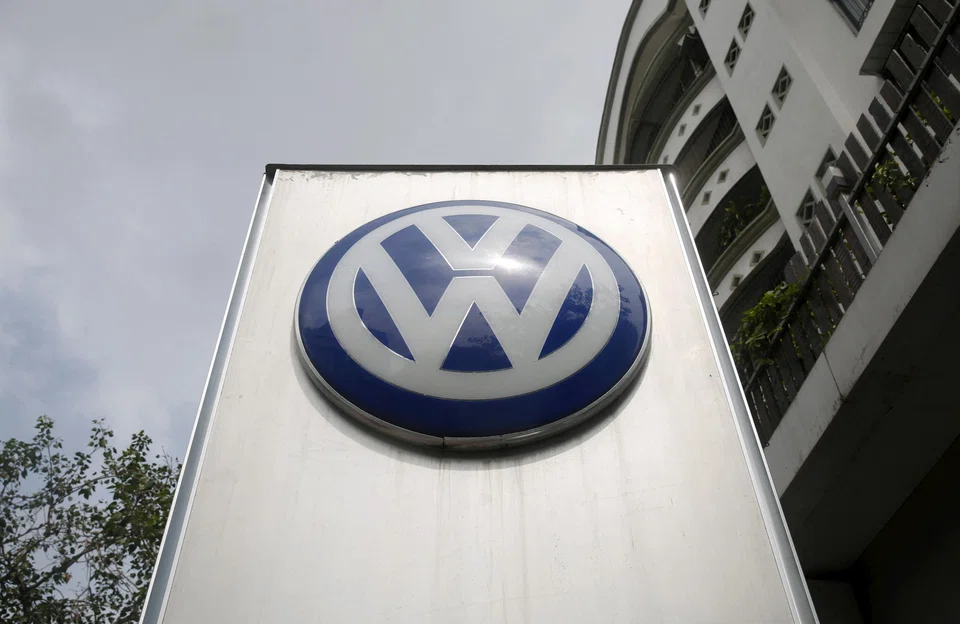
[BENGALURU] Volkswagen’s proposed pact with India’s industrial powerhouse JSW Group will need to bring in more than fresh capital for the German automaker to build scale in India’s highly competitive passenger-vehicle market, say analysts.
Greater localisation and stronger supply chains will determine if the planned venture with Mumbai-based JSW – one of India’s largest multinational corporations, led by Indian billionaire Sajjan Jindal – will grow Volkswagen’s share in the world’s third-largest car market.
Volkswagen currently holds merely 2 per cent of India’s passenger-vehicle market. Its struggle to gain market share in India stems partly from product strategy, pricing, localisation efforts, late shift towards SUVs and slow decision-making, said Vinkesh Gulati, chairperson of the Automotive Skills Development Council and former president of the Federation of Automobile Dealers Associations.
“JSW’s biggest contribution could be an Indian entrepreneurial mindset, faster decision-making and a deeper understanding of operating in a cost-sensitive, highly competitive market,” he said.
In September, the two companies signed a non-binding memorandum of understanding to form a 51:49 joint venture, with JSW holding the majority stake. Neither has since announced a definitive agreement. Volkswagen and JSW Group had not responded to The Business Times’ requests for comment by publication time.
Localisation and scale key
Puneet Gupta, director at Mobility Global, said the tie-up could offer Volkswagen an opportunity to source more components from India rather than rely on existing supply chains in China.

It will also be able to leverage JSW’s local presence and industrial capabilities. Volkswagen needs more than a few new models. It needs a wider India-relevant product portfolio, competitive ownership costs and a stronger, financially viable dealer ecosystem, said Gulati.
JSW could potentially bring the local execution capabilities required to convert those strengths into scale, added Gulati, referring to Volkswagen’s strong engineering and brand credentials.
The venture could also support Volkswagen’s export ambitions.
India could become a manufacturing and export base as global automakers look to diversify sourcing under a “China Plus One” strategy. Greater localisation and the extent to which the venture supports exports would be important indicators of its potential, Gupta said.
Volkswagen’s passenger-vehicle business in India operates through Skoda Auto Volkswagen India, which manages the group’s Skoda and Volkswagen brands in the country.
The proposed partnership with JSW is expected to cover these operations, initially including both brands’ existing models and planned launches.
It’s complicated
A US$1.4 billion tax claim against Volkswagen in India could complicate negotiations over the proposed partnership, particularly the valuation of its Indian operations. The dispute centres on how imported vehicle components were classified for customs duties.
For prospective investors, the tax exposure adds to the uncertainty surrounding the proposed venture. VG Ramakrishnan, managing partner at Avanteum Advisors, said investors would want to understand a company’s potential liabilities before establishing a joint venture.
JSW wants Volkswagen to bear any liability arising from the pending tax case, Bloomberg reported. The potential exposure could affect the joint venture’s valuation and how much capital each partner contributes.
In September, a Bloomberg report citing people familiar with the matter said, JSW indicated that it would not proceed with the deal if it were required to assume the liability.
The dispute also comes as Volkswagen faces growing financial pressure across its global operations.
The automaker reported an operating loss of 5.9 billion euros (US$6.6 billion) in the third quarter, its largest quarterly deficit since the Dieselgate-related loss in 2015. Revenue fell 6.3 per cent to 75.3 billion euros, while vehicle sales declined 15.1 per cent.
The company is also pursuing a sweeping restructuring programme that includes plans to cut a further 50,000 jobs by the end of the decade, taking total planned reductions to about 100,000.
The big-picture strategy
Reports that Volkswagen has paused further investment in its Indian electric-vehicle programme have added another layer of complexity to the proposed partnership. The automaker has dismissed the reports as “incorrect and misleading”.
Gupta, however, sees the proposed alliance as a longer-term strategic play, with Volkswagen’s India ambitions needing to be assessed in the context of its broader market strategy.
For Volkswagen to establish a meaningful presence in India, it will need a robust strategy to secure a 5 per cent share of the passenger-vehicle market. Without that, its sales in the country would remain relatively insignificant to its global business, said Ramakrishnan.
But working with a domestic partner does not, by itself, guarantee success, Gulati cautioned.
“The Indian consumer wants global quality, but at an Indian value proposition. Equally, dealers need sufficient volumes and margins to make their investments viable,” he said.
JSW’s existing automotive interests would also need to be managed carefully to avoid potential overlap or conflicts.
“Partnerships like this tend to succeed when the global partner is willing to adapt its processes and product philosophy to India rather than the other way around,” said Gulati.
Decoding Asia newsletter: your guide to navigating Asia in a new global order. Sign up here to get Decoding Asia newsletter. Delivered to your inbox. Free.
Copyright SPH Media. All rights reserved.