


Shein’s valuation plunges 70% to US$27 billion at best in Hong Kong IPO
The decline in valuation follows questions over slowing growth, rising costs and changing market conditions
 Add BT as a preferred source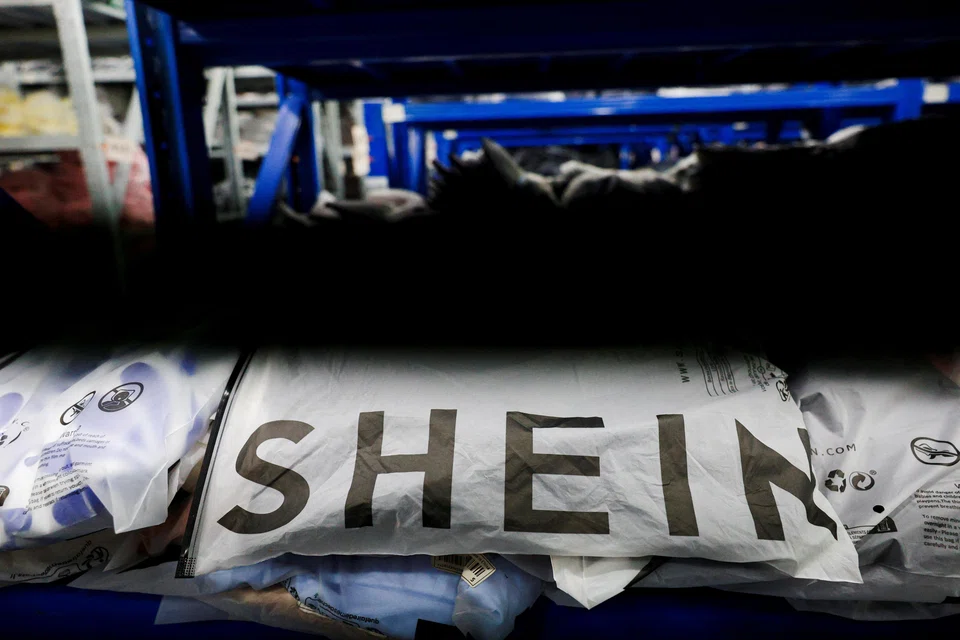
[HONG KONG] Online fast fashion retailer Shein’s valuation has dropped by around 70 per cent from its private market peak four years ago, as it aims to raise up to HK$13.86 billion (US$1.77 billion) in its Hong Kong initial public offering launched on Monday (Aug 24).
The long-awaited Hong Kong IPO comes after Shein, known for selling US$5 dresses and US$10 jeans to shoppers in about 160 countries, scrapped plans to list in New York and London over the past four years.
It is selling 280 million shares between HK$47.60 and HK$49.50 per share, the filings showed, valuing it at close to US$27 billion at the top of that range.
Reuters last week exclusively reported the Shein IPO was set to value the company at around a quarter of the US$100 billion it was worth in 2022.
Shein was valued at US$64 billion in 2023 and April 2024.
The China-founded, Singapore-headquartered company will announce the final price on Aug 31 and start trading on Sep 1.
Shein had first sought an IPO valuation of US$30 billion to US$40 billion when investor meetings ahead of the IPO kicked off.
The marked decline in valuation comes after the company faced questions over slowing growth, rising costs and changing market conditions.
Investors had said they were not convinced Shein could return to the growth rates that valued it at nearly US$100 billion four years ago.


The weaker valuation reflects a new equilibrium, said Winston Ma, an adjunct professor at New York University School of Law and former head of North America for China’s sovereign wealth fund CIC.
“Public investors are no longer paying for hyper-growth. They are underwriting a mature cross-border platform that must now defend its profit margins against trade tariffs, higher compliance costs, and regulatory scrutiny in both the US and China,” Ma said.
The US$27 billion market capitalisation values Shein at around 0.7 times its forecast sales, more expensive than European rival Zalando, which is trading at 0.4 times, but cheaper than H&M and Zara owner Inditex, which trade at multiples of around 1.1 and 4.0 respectively, according to LSEG data.
Cornerstone investors led by existing shareholders Boyu, Tiger Global and General Atlantic have subscribed for about US$383 million worth of Shein shares, the prospectus showed.
Tencent, Greenwoods, Taikang Life and UBS Asset Management will also take stock.
Shein said it would use about 80 per cent of the cash raised in the IPO to improve its technology and increase its brand and global presence.
It has agreed to pay up to about US$3.5 billion in cash to certain investors who bought special shares in earlier private funding rounds, according to the prospectus.
The shares sold in the Hong Kong IPO will have one-tenth the voting rights of the shares held by the company’s founders.
Co-founders Xu Yangtian Sky, Maggie Gu, Molly Miao and Tony Ren will control 90 per cent of Shein’s voting rights, the prospectus showed.
Growth slows sharply
The float comes as slowing revenue growth and weaker core earnings weigh on Shein’s business, while shrinking margins have also raised concerns its expansion is running into headwinds from higher trade costs, tighter regulatory scrutiny and intensifying competition across global e-commerce.
Shein said in the prospectus its first-half 2026 revenue growth is expected to be broadly in line with the 1.1 per cent growth posted in the first quarter, while its operating margin is expected to be slightly lower than the first-quarter level.
The company said this is due to new European import charges, pricing pressure and weaker demand in the Middle East linked to the Iran war.
It swung to a US$99 million quarterly loss after the US removed an import duty exemption on small packages, and a US$328 million fair-value charge on convertible redeemable preferred shares following an accounting change.
The de minimis rule had allowed packages worth less than US$800 ordered online from China to enter the US duty free.
Shein previously said Chinese-origin products sold by it or through its marketplace and shipped to the US are now subject to tax rates ranging from 10 per cent to 87.5 per cent.
In its prospectus, Shein said it faces a “significantly higher level of duties and taxes” in the US which directly triggered a 14.3 per cent drop in US revenues during the first quarter of 2026.
The company said it has set aside about US$80 million as at end-March for ongoing legal and regulatory cases.
These include a US Federal Trade Commission investigation that could result in significant payments, an EU Digital Services Act investigation and data privacy cases in France and Ireland.
Shein’s purchase of US clothing brand Everlane in May for US$80 million is now facing a national security review by the Committee on Foreign Investment in the United States (CFIUS), Bloomberg News reported on Monday.
Shein did not immediately respond to a request for comment from Reuters.
Shein’s IPO is the largest new share sale in Hong Kong in 2026, surpassing autonomous driving firm Momenta Global’s US$751 million offering in July.
It is the third-largest IPO in Asia, behind CXMT and China Resources New Energy, which raised US$9.8 billion and US$3.6 billion respectively, in Chinese onshore IPOs.
Hong Kong new listings have raised about US$41 billion so far in 2026, a record for the period and more than double the US$17 billion raised a year earlier, LSEG data showed. REUTERS
Decoding Asia newsletter: your guide to navigating Asia in a new global order. Sign up here to get Decoding Asia newsletter. Delivered to your inbox. Free.
Share with us your feedback on BT's products and services
TRENDING NOW

National Day Rally: 8 things to know, from more childcare leave to higher BTO income ceiling
How BYD disrupted Singapore’s car market – and why the strategy is turning on itself

NDR 2026: Every Singaporean child to get direct financial support from birth to age 17

When every phone becomes a satellite phone, what happens to Asia’s telcos?

