
‘Take the money and run’: Sydney sellers cut prices as rates, tax changes crack Australia’s housing boom
The country’s government is under increasing pressure to tackle the affordability of homes
 Add BT as a preferred source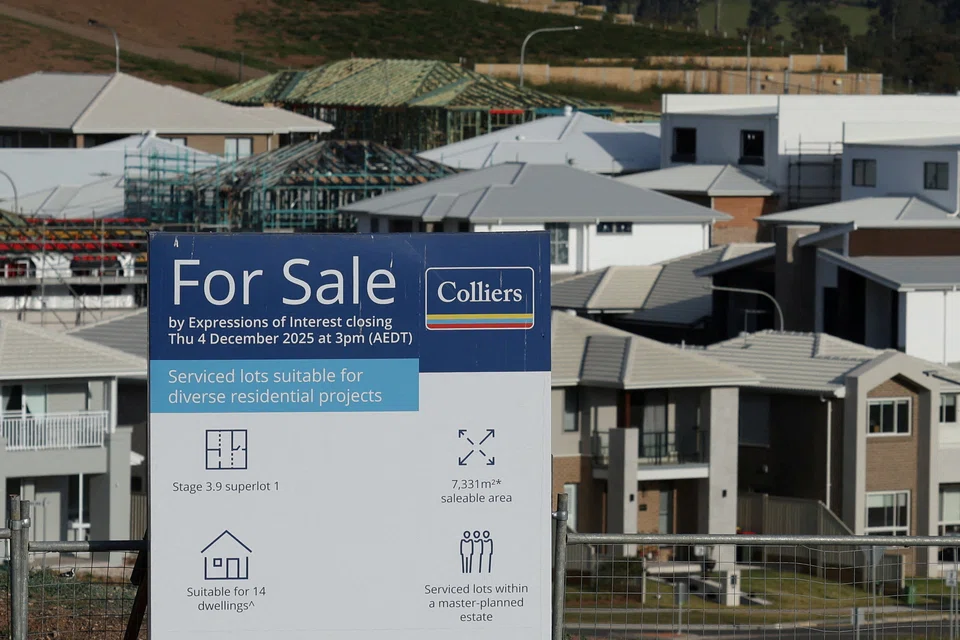
FOR the past three decades, buying a home in Sydney has been the surest bet in Australia.
Rising prices have enriched families and made property the engine of household wealth. Now the boom is under threat, and the consequences are rippling across the financial system.
Home values are sliding as borrowing costs rise and buyers react to the removal of tax incentives favouring property investments in the May Budget.
In Sydney, prices are down about 7 per cent from their peak in February, according to the latest figures from property consultancy Cotality. Declines that started in the priciest neighbourhoods are spreading nationwide, with home values falling in 93 per cent of suburbs in Australia’s capital cities.
The slump is hitting the country’s biggest banks, with mortgage applications dropping as much as 20 per cent since the Budget and one CEO saying “volatility and uncertainty” were more structurally present than for decades.
On Aug 25, one of Sydney’s biggest developers, Bathla Group, fell into insolvency owing A$3.3 billion (US$2.4 billion).
The challenge is an extreme version of the one facing governments around the world after decades of leverage-fuelled and state-sanctioned home price gains. Policymakers must figure out how to deflate frothy property markets and boost affordability, without derailing the economy at a time when inflationary pressures are driving up borrowing costs.
The risk for Australia is any prolonged downturn could hit families in their pockets at an already tough time. A measure of consumer confidence fell to “deeply pessimistic” levels in June. About 60 per cent of household wealth is tied up with property, according to Commerzbank.
“People don’t transact in a high-ticket item like property when they are not secure about their finances or the broader economy,” said Nicola Powell, chief residential economist for Domain, an online property portal.
SEE ALSO

Restricting negative gearing
The Australian government has been under increasing pressure to tackle housing affordability.
In Sydney, the average home costs almost 14 times the annual disposable income, making it the world’s second-most expensive city to buy property after Hong Kong, according to 2024 data from Demographia.
Treasurer Jim Chalmers targeted what he called the “unfair” status quo in the housing and tax system when he unveiled rules on May 12 restricting so-called negative gearing.
Previously, if the cost of owning a rental property was higher than the income it generated, landlords could deduct this net loss from their personal taxable income, reducing their overall tax bill.
Under the new regulations, which take effect from July 2027, existing property purchased after May 12 no longer qualifies for negative gearing, although new builds still do.
The goal was to encourage construction of new supply and make it easier for first-time buyers to enter the market by decreasing the appeal of investing in multiple homes.
The market “is going to be operating in a very different rhythm because you have seen policy change that impacts quite a large buyer cohort and first-time buyers are not large enough to replace investors,” said Powell.
“We are really yet to see the true impact of fewer investors in the housing market.”
Cotality’s national home price gauge fell 0.9 per cent in August in a fifth month of declines, taking the drop from the March peak to 3.6 per cent. Prices slid 1.4 per cent in Sydney that month.
Transactions are also slumping: Home sales are down 15.5 per cent from a year earlier, and 11.5 per cent below the five-year average, according to the firm’s quarterly estimates. Brisbane, Perth and Sydney have had the biggest declines in sales, with volumes down more than 20 per cent year on year, it said.
Properties are also taking longer to sell, meaning supply is elevated. In the four weeks through to Sunday (Aug 30), capital city listings were 24 per cent higher than a year ago and 8 per cent above the five-year average, Cotality data showed.
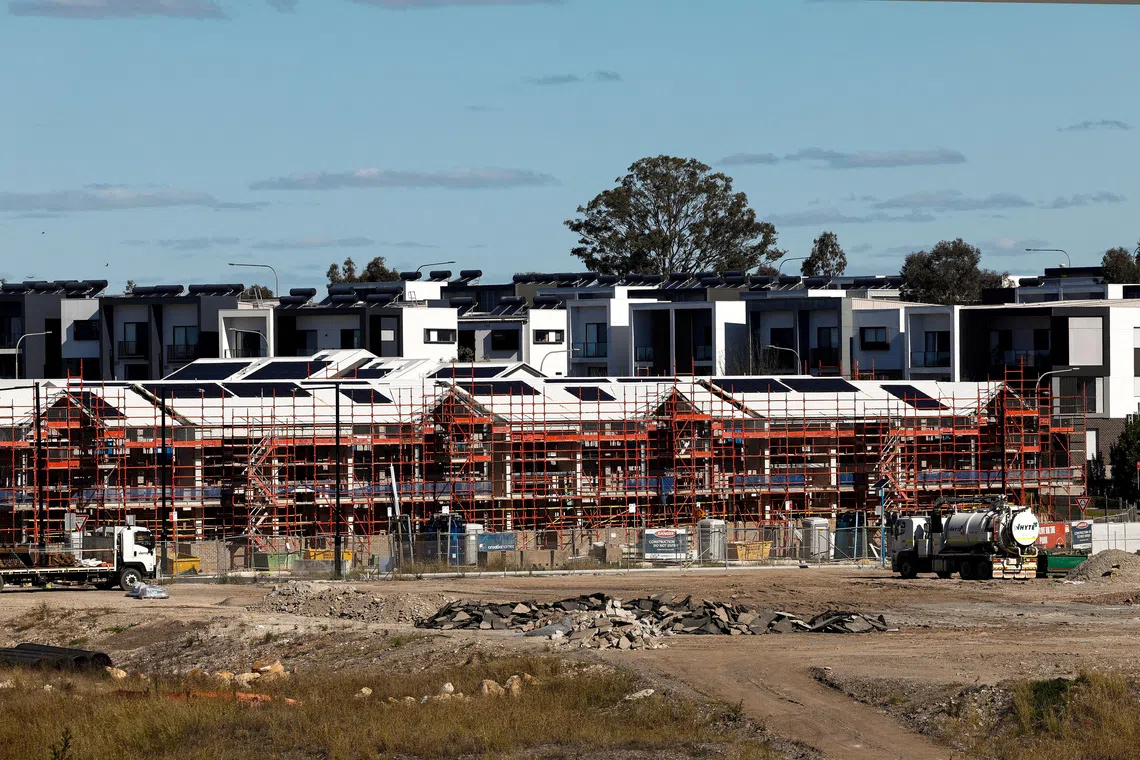
“Sydney continues to lead the downturn,” said Tim Lawless, research director at Cotality. “The combination of a sharp drop in demand and higher than average advertised stock levels is weighing more heavily on Australia’s largest housing market.”
Yet, rising interest rates mean homes are not getting more affordable even as prices decline.
The Reserve Bank of Australia (RBA) has hiked three times in 2026 to lift the cash rate to 4.35 per cent, up from 0.1 per cent as recently as early 2022.
Unlike the US, where homebuyers typically take out 30-year fixed mortgages, less than 5 per cent of Australian mortgages are on fixed terms, according to the RBA – meaning any increase in the cash rate feeds into their monthly repayments.
Elevated inflation limits the support the central bank can give the housing market. The RBA is widely expected to hike again as early as September, with one Deutsche Bank economist calling underlying inflation “intolerably high”.
Impact on investors
The shifting environment means the calculus has changed for residential real estate investors. Just six weeks before the Budget, Chris Hanna bought his fourth investment property, adding to a roughly A$6.5 million portfolio spread across Sydney’s west.
While the 33-year-old considers himself lucky that his purchase will not fall under new tax rules, Hanna estimates it has dropped in value from about A$1 million to A$960,000. Instead of buying a fifth property as he previously planned, he is considering selling one or two of his homes.
It is a sharp reversal from when Hanna bought his first property in 2019. Low borrowing costs meant the investment was largely paying for itself, while rising values encouraged him to keep buying.
“With interest rates and everything, it’s getting hard to manage a large portfolio like this,” he said, adding that another quarter-point rate increase would cost him an extra couple of thousand dollars a month.
Gerry Bronn had planned to buy two or three residential properties in Australia over the course of a year, adding to investments including his home and a commercial property.
Instead, he parked the few hundred thousand dollars he saved for the deposits into artificial intelligence and semiconductor shares, among others, while he waited for a better time to invest in real estate.
Residential property had previously seemed like a “no brainer”, Bronn said, but the expected returns no longer looked compelling. He now expects to wait at least six months before reconsidering. “We want to time the market so that we’re not basically buying on the downswing.”
There is a view that the downturn could prove fleeting, like others in the past, with Sydney’s chronic housing shortage and targeted support for first-time buyers helping limit declines.
“I think property prices will keep falling into the June quarter and then you’ll probably see the RBA making noises about potentially cutting interest rates through the second half of next year,” said Shane Oliver, chief economist at AMP. “That will then set the scene for some sort of rebound in property prices through 2027 and 2028.”
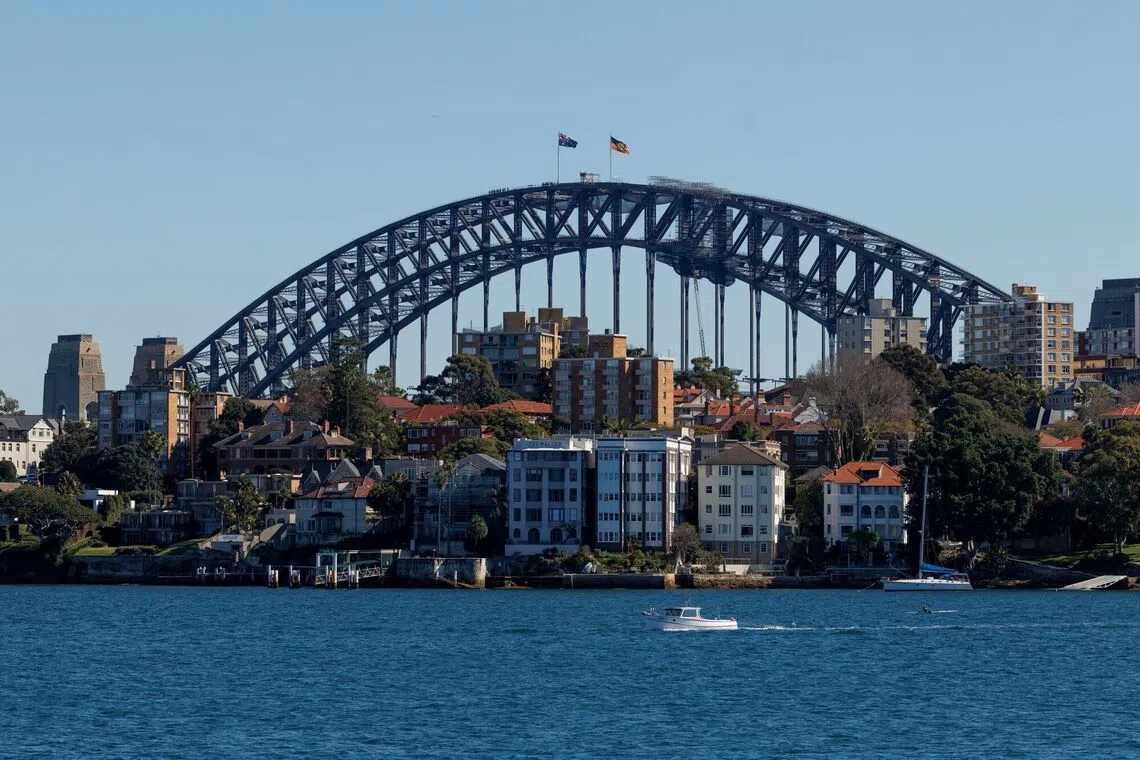
Yet there are few recent examples of countries trying to tackle overheated housing markets without seeing a sustained slump.
China is five years into a property crisis that has weighed heavily on the economy. New Zealand, once home to one of the world’s biggest housing booms, is in the grip of the prolonged downturn that is dragging on growth. A 20 per cent plunge in Canadian home prices is not far enough for many priced out of the market.
The recent declines in Sydney are not making homes look much more affordable to Jahra Mortimer, a first-home buyer in his early 30s. He began looking for a two-bedroom home a few months ago with his partner, backed by financial assistance from their parents.
“I definitely feel like the properties are still too high,” said Mortimer. “It’s scary for somebody who doesn’t have any injection of cash like that to purchase, because it’s so expensive.”
As for sellers, dwindling interest means some are taking whatever offers they can get.
Mark Kownacki listed his sprawling farmhouse in Sydney suburb Castle Hill in March after agreeing to buy another family home on the coast. He thought the 90-day settlement on the new purchase would give him plenty of time to sell, but the energy shock sparked by the US-Iran war, rising interest rates and changes in negative gearing disrupted that plan.
“We did an open house every Saturday. If we got one person through, we were doing really well,” he said.
With the settlement deadline approaching and the family already using bridging finance, Kownacki lowered the price by A$300,000 to A$400,000 from what he had originally targeted in order to make a quick sale at auction, where there was just one interested bidder.
“We decided to take the money and run,” he said. BLOOMBERG
Decoding Asia newsletter: your guide to navigating Asia in a new global order. Sign up here to get Decoding Asia newsletter. Delivered to your inbox. Free.
Share with us your feedback on BT's products and services