


From Trump tariffs to Bitcoin’s crash: 10 global events that made headlines in 2025
It’s been an eventful year with Nvidia’s record-breaking share price and a Cambodian scam ring with international links
 Add BT as a preferred source
Sudeshna Dhar
[SINGAPORE] The year 2025 has seen a number of upheavals that dominated headlines and rocked the global economy.
From US President Donald Trump’s globe-spanning tariffs to Nvidia becoming the first company to achieve a US$5 trillion valuation, The Business Times looks at some of the year’s most impactful events.
1. Trump imposes reciprocal tariffs
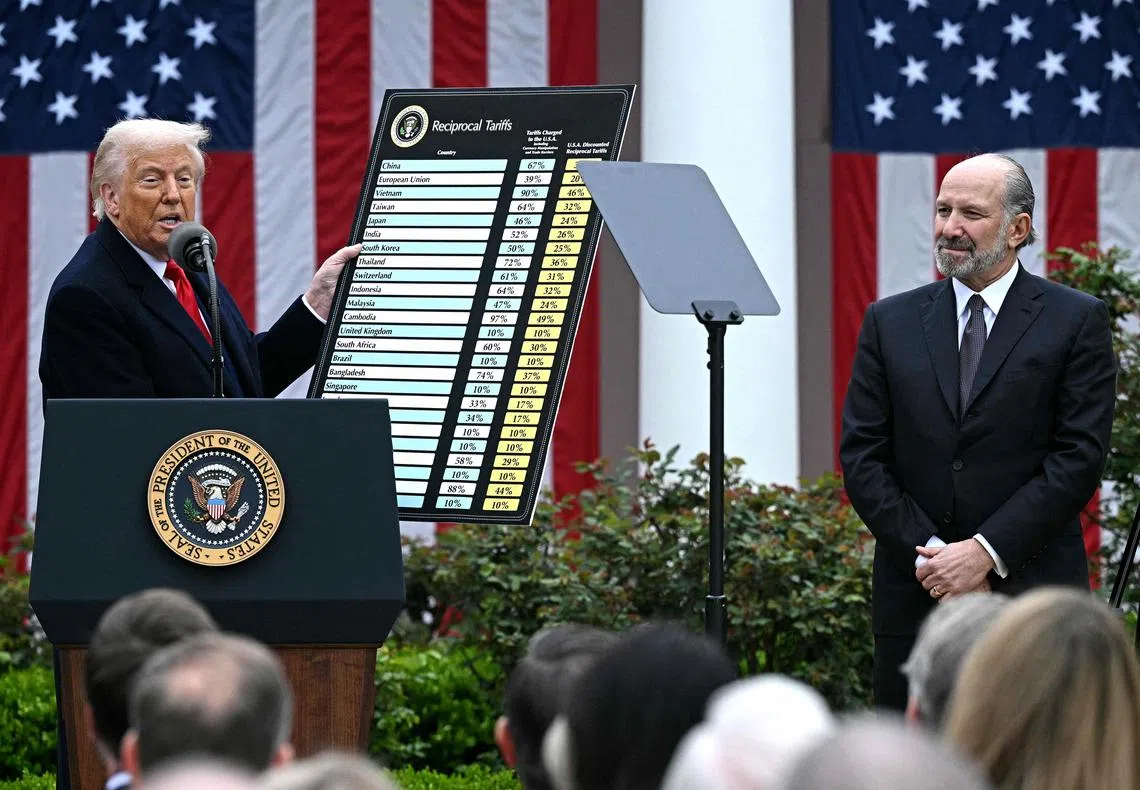
On Apr 2, Trump announced the imposition of a 10 per cent blanket tariff on all imports, with higher rates applied to countries with which the US had a trade deficit.
Some South-east Asian countries were particularly affected; Laos, Vietnam and Cambodia were hit the hardest, with tariffs of up to 48, 46 and 49 per cent, respectively. Meanwhile, a tariff rate of up to 32 per cent was imposed for Indonesia; 36 per cent for Thailand; 24 per cent for Malaysia; and 10 per cent for Singapore.
A 90-day pause on the tariffs then commenced on Apr 9, although this excluded China, for which the tariffs later rose to 145 per cent.
Beijing retaliated by imposing tariffs of up to 125 per cent on US goods, before leaders of the two countries met in May and agreed to scale back duties.
Navigate Asia in
a new global order
Get the insights delivered to your inbox.
South-east Asian countries chose to avoid imposing retaliatory levies, instead seeking negotiations with the US and offering concessions for relief from the tariffs.
While Malaysia – as Asean chair – pushed for a unified regional response to the tariffs, some observers suggested that the levies had caused rifts within the bloc.
Member states were pursuing separate bilateral agreements with the US, which strengthened Washington’s leverage over the region.

2. Cambodia scam ring

A joint operation between the Singapore Police Force and Cambodia National Police (CNP) this year uncovered a massive Phnom Penh-based crime syndicate linked to 438 government-official impersonation scams.
Singapore victims who were targeted suffered at least S$41 million in losses.
Officers raided multiple locations across Singapore – which included hotel rooms and apartments – and arrested 12 suspects who were later charged under the Organised Crime Act on Sep 11.
The CNP also raided a building and warehouse in Cambodia, where they found devices and equipment used for the scams.
Investigations revealed that Ng Wei Liang, a Singaporean citizen who is on the run, had set up the ring in 2024. In total, 34 suspects were initially linked to the group. To date, 24 Singaporeans and six Malaysians linked to the scam ring are still at large.
The investigation into the ring ultimately intensified global scrutiny of scam syndicates.
3. Nvidia sets market cap record

On Jul 9, Nvidia became the first company to achieve a US$4 trillion market valuation.
Only a few companies were anywhere close to Nvidia’s valuation at the time: Microsoft with a market capitalisation of US$3.7 trillion and Apple with US$3.1 trillion.
On Oct 29, the chipmaker again made history as the first company to achieve US$5 trillion in market value, equalling half the size of Europe’s benchmark equities index, the Stoxx Europe 600.
The record valuations emphasise Nvidia’s dominance in the artificial intelligence (AI) race, but have also fuelled speculation of a tech-valuation bubble, resulting in market volatility.
In August, OpenAI chief executive officer Sam Altman warned that investors may get “burnt”, while Bloomberg’s Dave Lee predicted an “AI winter”. However, the company’s third-quarter earnings beat Wall Street’s expectations with 62 per cent revenue growth.
4. US government shutdown
October began with a shutdown of the US government after Democrats and Republicans failed to reach a deal which would have kept the government funded through Nov 21.
The shutdown disrupted pay for thousands of workers, paused many non-essential government services, and delayed the release of key economic data, including labour force metrics.
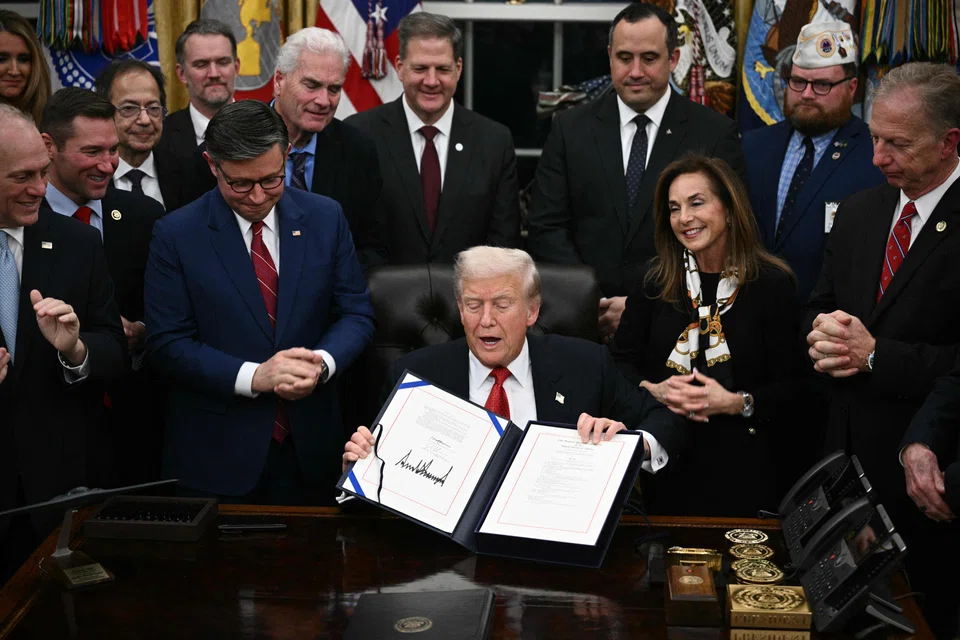
Trump eventually signed a Bill to end the shutdown on Nov 12 after the Republican-led House passed a Senate-approved funding package.
This allowed about 670,000 furloughed federal workers to return to work, and essential staff who worked without receiving a salary, including over 60,000 air traffic controllers and airport security personnel, were granted back pay.
5. Gold prices hit several records

In 2025, gold surged past a series of financial market records, cementing its place as one of the year’s best-performing assets.
For instance, it jumped more than 60 per cent, its strongest annual performance since 1979.
The bullion also raced past US$4,000 an ounce for the first time on Oct 8, in a historic rally driven by factors such as interest rate cuts, a weak US dollar, solid central bank buying and more.
The asset class repeatedly set new daily highs across the year, with analysts predicting gold to hit US$5,000 an ounce in 2026.
However, on Oct 21, gold prices plunged by 6 per cent – its biggest drop since 2013 – and held losses through Oct 24 to close at US$4,113.05 an ounce.
The drop extended to Oct 27, falling 1.1 per cent to US$4,070.31 an ounce and sparked a buying frenzy across the world. Analysts labelled the drop an indication that gold was overstretched and overbought.
Gold prices have recovered since the flash crash, making it 2025’s best-performing asset class.
6. Bitcoin crash
November saw Bitcoin’s worst monthly performance since 2022, with the cryptocurrency falling to the low US$80,000s.
The severe plunge wiped out over US$600 billion in market capitalisation, and dragged its total market value down by over US$1 trillion from its high in October.
The wider crypto market had also contracted sharply in the weeks leading up to the November drop.
In early December, Bitcoin was trading below US$90,000 with sentiment deeply bearish, and a sharp price drop on Dec 1 caused nearly US$1 billion of leveraged crypto positions to be liquidated.
Lori Calvasina, head of US equity strategy research at RBC Capital Markets, wrote in a Nov 24 note that the trend could be a “sign of fatigue”.
“While it’s not clear to us exactly what’s causing Bitcoin to drop, stabilisation in this corner of financial markets would likely help to calm some nerves within US equities as well,” she said.
7. AI bubble fears shaking up markets
This year has been characterised by companies pouring massive amounts of money and investments into AI, culminating in surging valuations that hinge more on potential than proven returns.
This has prompted analysts to warn of a potential trillion-dollar AI bubble, leading investors to question the sustainability and expected returns of AI-driven growth, pulling back even as some financial markets managed to register record highs.
As a result, AI bubble fears have fuelled speculation, leading to volatility in the share prices of chipmakers and other companies in the AI race, as seen in Nvidia’s stock price fluctuations earlier this year.
Asian markets, especially Tokyo, Singapore and Hong Kong, reflected growing sentiment about stretched valuations, with mixed performances across tech-linked stocks.
8. Malaysia hosts 47th Asean Summit; Trump shows up
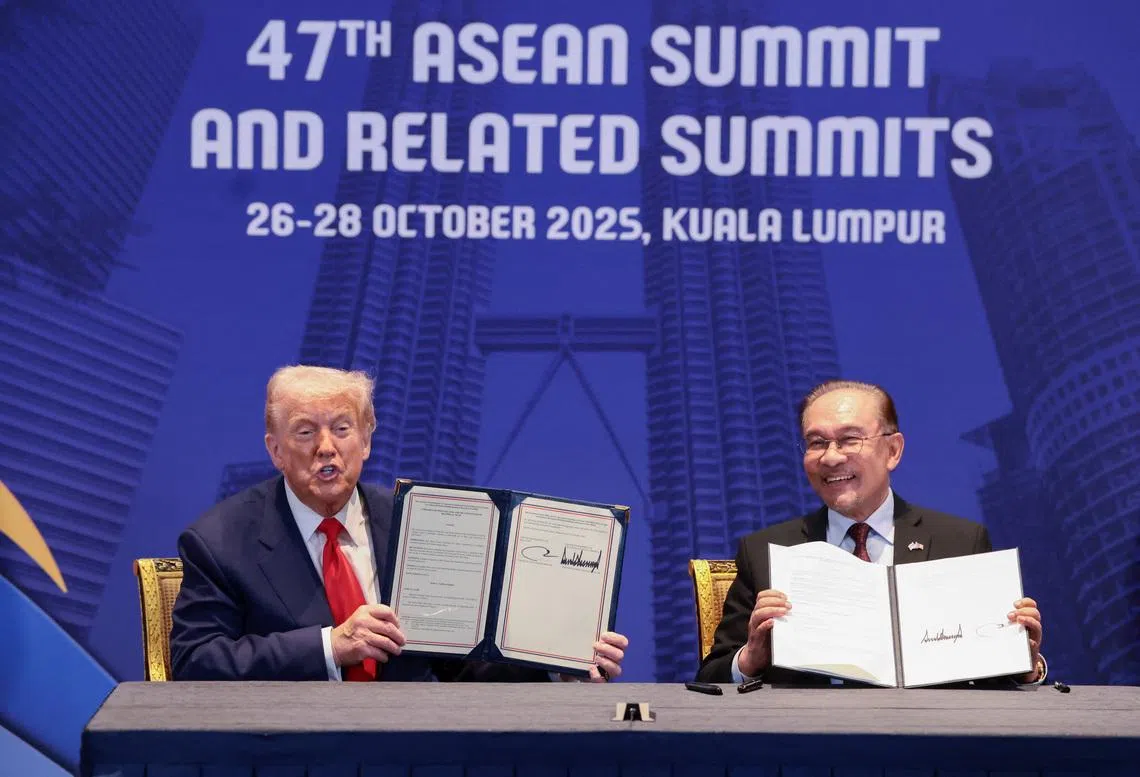
The 47th Asean Summit was held in Kuala Lumpur from Oct 25 to 28, marking one year of Malaysia’s chairmanship of the regional bloc.
Trump was also in attendance, making it his first visit to South-east Asia since the start of his second term in office.
The summit saw Malaysia facilitating the Kuala Lumpur Peace Accord between Thailand and Cambodia, which temporarily ended border tensions. Trump and Malaysian Prime Minister Anwar Ibrahim also signed a trade agreement and critical minerals pact.
The Philippines is set to take over Asean’s chairmanship in 2026.
9. Youth-led protests in South-east Asia
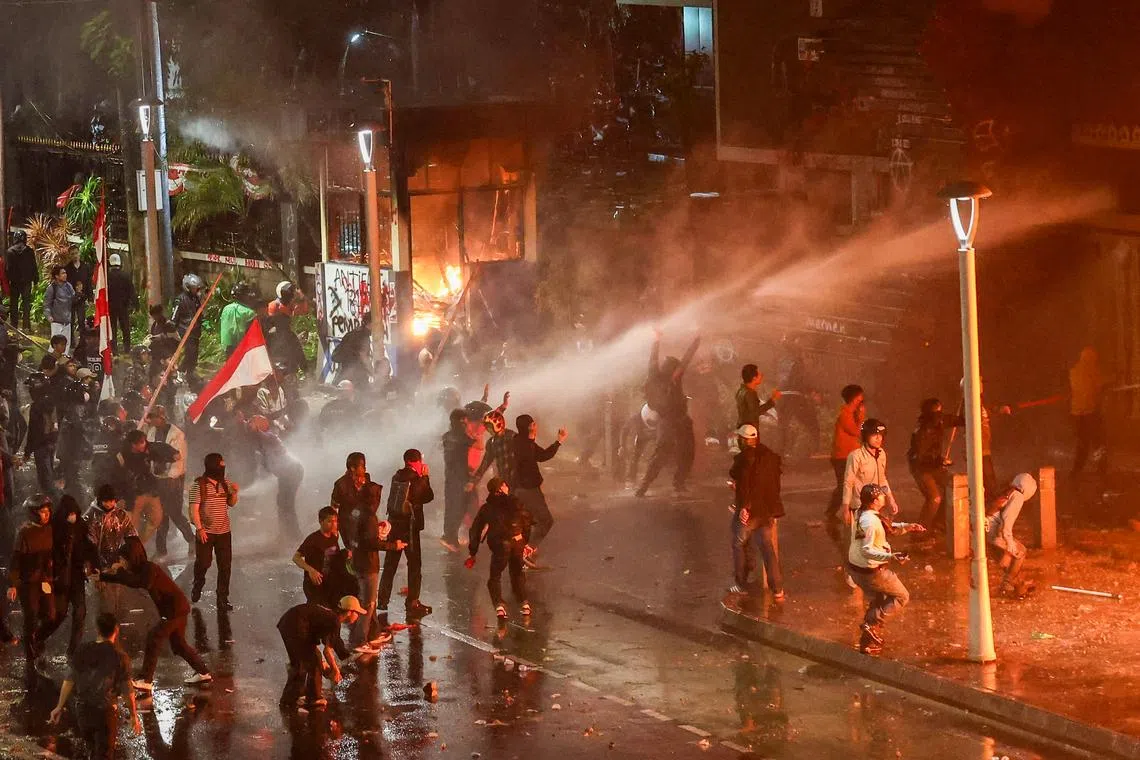
The latter half of 2025 was marked by regional unrest in South-east Asia, characterised by youth-led mass demonstrations against economic inequality and border tensions.
On Aug 25, demonstrators in Indonesia poured into the streets, venting their frustrations against cost-of-living woes and recently introduced lawmakers’ perks. The youth-led protests took a violent turn on Aug 28, when 21-year-old delivery driver Affan Kurniawan was run over by an armoured paramilitary police vehicle.
The incident intensified mass rallies and demonstrations across the country, leaving at least eight people dead, with rioters storming the home of long-serving Finance Minister Sri Mulyani Indrawati.
The unrest eventually forced President Prabowo Subianto to rescind the perks his administration had introduced for lawmakers. He also removed five ministers from his Cabinet, including Sri Mulyani.
Meanwhile, in the Philippines, thousands rallied in September against government corruption, triggered by a scandal surrounding the fraudulent allocation of public funds meant for flood-control projects.
In response, Philippine President Ferdinand Marcos Jr stepped up investigations into the scandal, eventually arresting seven suspects, with efforts underway to locate those still at large.
Over in Timor-Leste, protests led by university students erupted in September over government plans to purchase vehicles for lawmakers. The mass demonstrations successfully pressured the government into scrapping the scheme, in addition to lifting lifetime pensions for high-ranking government officials.
10. Thailand-Cambodia border war
This year also saw a border war between Thailand and Cambodia, after long-simmering tensions erupted into open hostilities on Jul 24.
The fighting, which involved heavy artillery and aerial strikes, left dozens dead and displaced more than 150,000 civilians on both sides of the border.
While Malaysia, as Asean chairman, negotiated a ceasefire between the two sides on Jul 28, clashes along their 800 km border began again on Dec 8.
Despite Trump’s subsequent claim that the leaders of both nations had told him they would “cease all shooting”, the conflict continued to escalate until a new ceasefire agreement was reached on Dec 27.
The uneasy truce remains in place even as Thailand has delayed its return of Cambodian prisoners of war after accusing Cambodia of breaching the truce by flying drones into its territory.
Decoding Asia newsletter: your guide to navigating Asia in a new global order. Sign up here to get Decoding Asia newsletter. Delivered to your inbox. Free.
Copyright SPH Media. All rights reserved.

