

Japan to scale back fuel subsidies as Iran war costs mount
About 1.2 trillion yen (US$7.6 billion) was spent subsidising petrol and diesel from mid-March to September
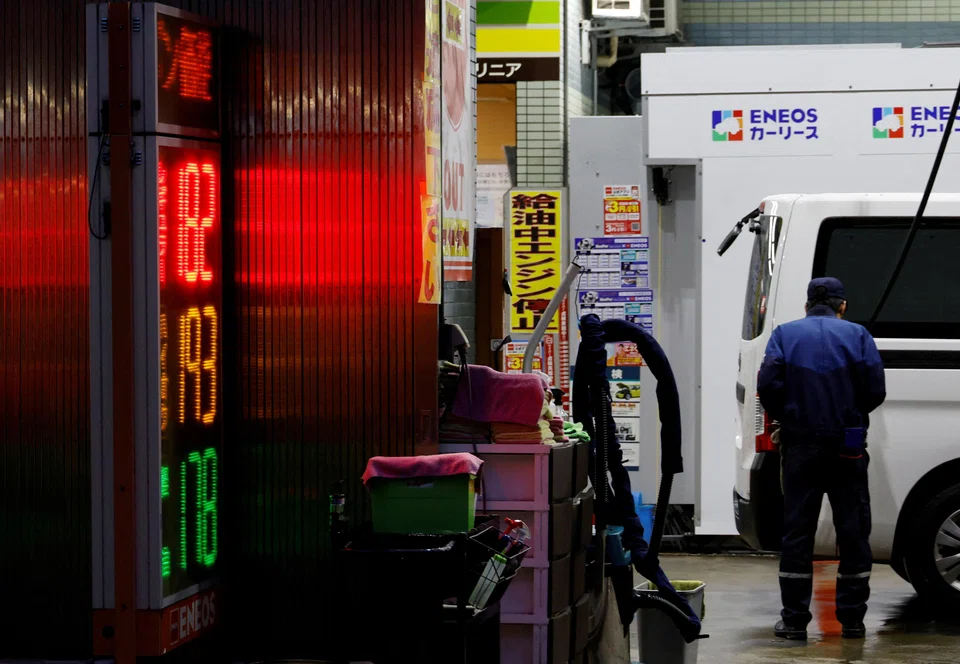
JAPANESE motorists are poised for a more expensive commute as the government scales back generous fuel subsidies that have helped cushion consumers from the impact of the US-Iran war.
The fuel-price subsidy will be gradually wound back from December into early spring, raising the benchmark retail price by 5 yen (US$0.03) a litre each month, Prime Minister Sanae Takaichi said on Thursday (Oct 29). The Japanese leader declined to say when the mechanism would be fully phased out.
The subsidy has kept retail petrol prices around 170 yen a litre, equivalent to about US$4.10 a gallon, with Japan also providing similar support for diesel and kerosene.
But the programme has come at a steep cost. The government is estimated to have spent 1.2 trillion yen (US$7.6 billion) subsidising petrol and diesel from mid-March through September, according to BloombergNEF.
Japan is particularly exposed to the energy shock triggered by the war, having relied on the Middle East for more than 90 per cent of its crude needs before the conflict. Tokyo has tapped strategic reserves, while the country’s refiners have been forced to buy more expensive alternative supplies, particularly from the US.
The fuel-price mechanism was originally introduced in 2022 as economies emerged from the pandemic, and expanded as Russia’s invasion of Ukraine sent energy markets into turmoil. It remained in place in various forms before Tokyo sharply ramped up assistance following the start of the Iran war in late February.
That level of support stands out among major economies for the scale of direct government intervention.
While many countries responded to price shocks with measures such as temporary fuel-tax cuts, Tokyo effectively guaranteed a retail price by absorbing the cost above its benchmark. That has drawn criticism over the expense and most likely beneficiaries.
“The program costs hundreds of billions of yen a month, with additional funding coming from a budget financed entirely by deficit-covering bonds,” Takahide Kiuchi, a former Bank of Japan board member and executive economist at the Nomura Research Institute, wrote in an Oct 27 note.


He described the subsidies as poorly targeted and disproportionately benefiting heavy fuel users. “Concerns over fiscal expansion can also weaken the yen, adding further inflationary pressure,” he added.
Scaling back the subsidy offers some budget relief, but risks heaping more economic pain on people grappling with sustained inflation after decades of largely stagnant prices. The Consumer Union of Japan, a nongovernmental body that represents grassroots consumers, has opposed the subsidy cuts.
Ending the support while consumers and businesses are struggling with higher prices and fuel costs “would deal a major blow to their livelihoods and operations,” said Eiji Hara, a co-representative of the group.
Even as it pares back fuel support, the government is bringing forward other energy aid. Takaichi said electricity and gas bill subsidies will start a month earlier, in December, providing a typical household with about 7,000 yen in relief through February. REUTERS
Decoding Asia newsletter: your guide to navigating Asia in a new global order. Sign up here to get Decoding Asia newsletter. Delivered to your inbox. Free.
Share with us your feedback on BT's products and services
TRENDING NOW

If Europe goes to war, the fallout will be felt in East Asia

Indonesia stocks suffer worst plunge in nearly 30 years as MSCI proposes standalone status

China’s market is tougher than ever. Where can Singapore firms still find room to grow?

Nvidia CEO says ties to Singapore firm under spying probe were ‘normal’

