

US lawmakers near deal to ban Chinese cars, spare Mercedes
If enacted, the profitable car market will be walled off to automakers such as BYD and Geely Automobile
[WASHINGTON] Lawmakers in Washington are closing in on a deal to ban Chinese cars from the US, said people familiar with the matter, following last-minute negotiations aimed in part at sparing Mercedes-Benz, which is nearly 20 per cent owned by Chinese entities.
Republicans and Democrats from car-producing states behind the effort aim to send a bill to President Donald Trump’s desk by the end of the year, said the people, who asked not to be identified because the deliberations are private.
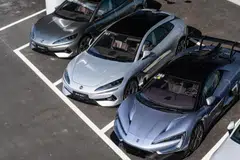
If enacted, the profitable US car market would be walled off to automakers such as BYD and Geely Automobile, whose low-cost, technology-packed electric vehicles have rapidly gained market share in Europe and South America.
Chinese cars are effectively shut out of the US because of steep tariffs and restrictions on Chinese vehicle technology imposed by the Commerce Department.
Enshrining a ban into law would take those measures a step further to address growing concerns about national and economic security threats posed by China’s ambition to dominate the global car industry.
Details about the measure are still being hammered out.

Republican Senator Bernie Moreno on Wednesday (Nov 18) briefed automaker representatives on changes under consideration to earlier legislation that aimed to block Chinese connected vehicles from the US, including provisions that would shield Mercedes from an outright ban, said the people.
Automaker representatives were broadly supportive of the effort Moreno described, though a Mercedes official voiced reservations and negotiations remain under way, the people said.
Proponents are working to pass the measure before the next Congress begins in January.
“We continue to meet with all stakeholders who have a shared interest in ensuring this important legislation becomes law in this Congress,” Mercedes said.
Agreement as early as this week
A bill advanced by a Senate panel earlier this year would have prohibited manufacturers that are more than 15 per cent owned by Chinese entities from selling cars equipped with technology that can transmit data.
Mercedes, which has lobbied for changes to that bill, is nearly 10 per cent owned by China’s BAIC Motor, a state-owned carmaker.
Li Shu Fu, the billionaire founder of Chinese carmaker Geely, also holds nearly 10 per cent of Mercedes’ shares, putting the company above the earlier bill’s 15 per cent threshold.
Lawmakers are in talks with multiple parties, including Mercedes, and have expressed optimism that an agreement could be reached as early as this week, said one person close to the talks who asked not to be identified.
Provisions under discussion include looser rules for companies with passive ownership stakes that lack voting power and how such an approach would be structured and verified.
The White House did not respond to requests for comment.
Republican Senator Katie Britt of Alabama, a major hub of Mercedes’ sport utility vehicle production, said she has worked through the bill with Moreno and believes both Mercedes and Alabama will be protected.
“We understand that there will be some adjustments that have to be made, but feel good about Mercedes continuing to be able to thrive in our state and across the country,” she said.
Banning Chinese cars would also run counter to a more permissive approach taken by Europe and Canada. Chinese automakers have quickly made inroads in Europe, in particular, leading to intense competition with home-grown brands.
The EU has started to pull back after Chinese automakers rapidly expanded their share of the market there, reaching an agreement last month with China to curb imports of hybrid vehicles into the bloc. BLOOMBERG
Decoding Asia newsletter: your guide to navigating Asia in a new global order. Sign up here to get Decoding Asia newsletter. Delivered to your inbox. Free.
Share with us your feedback on BT's products and services
TRENDING NOW

What shattered Crystal Jade? How the culinary empire shrank from 120 to just 9 outlets
SGX gold-linked counters lose their shine as the precious metal hits one-year low

‘The next 40 years’: SingLand CEO Jonathan Eu on remaking Marina Square

Alibaba sued for allegedly hiding ties to suspected spy Alice Huang from Megaspeed

