

Volvo Car to deepen job cuts as China sales slump
Most of the reductions, representing around 6% of its global workforce, will be in Sweden, it says
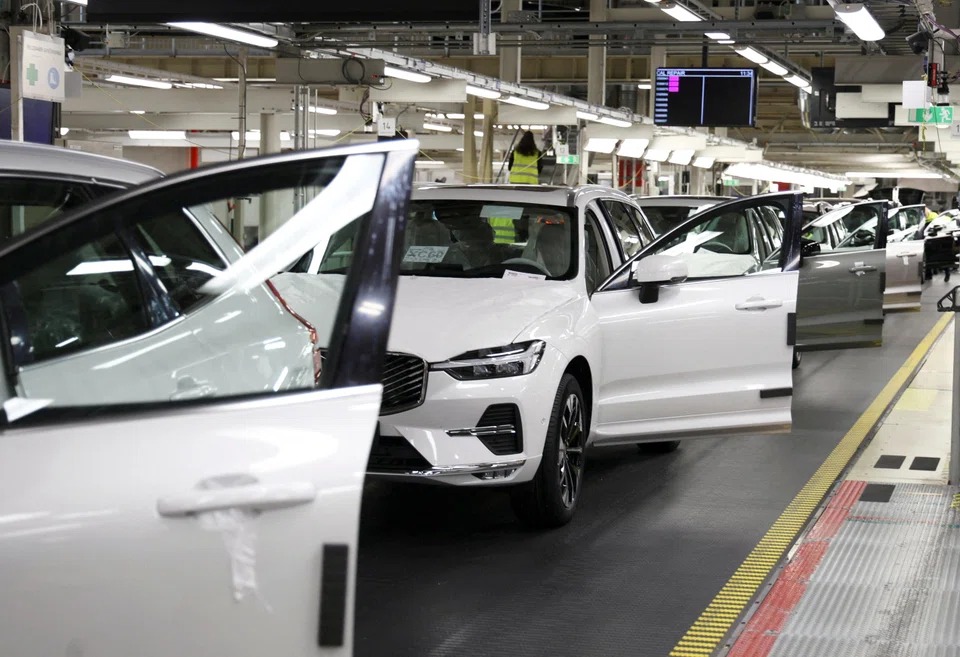
[STOCKHOLM] Volvo Car plans to slash another 2,500 jobs, as cratering sales in China and tariffs in the US complicate the Swedish automaker’s turnaround.
Most of the reductions, which represent around 6 per cent of its global workforce, will be in Sweden, Volvo said on Friday (Oct 23) when reporting quarterly earnings. The measures are meant to save five billion kronor (US$504 million) and build on an earlier restructuring with around 3,000 job cuts.
The savings add to similar moves by manufacturers including Volkswagen and BMW, who are trying to become leaner to meet mounting Chinese competition.
Like its peers, Volvo is suffering from worsening conditions in China, where its deliveries fell more than 40 per cent in the third quarter.
Local brands dominate on electric vehicles, with the overall Chinese market in decline due to a spending crisis.
“The possibility to sell Western-developed cars in China is more or less gone,” CEO Hakan Samuelsson told Bloomberg Television.
Volvo’s earnings reflect the company’s troubles.
The automaker reported an operating loss of 5.6 billion kronor in the three months to September, significantly higher than analysts had expected. Aside from the issues in China, the company cited costs from tariffs in the US and the removal of EV subsidies there.
To get back on track, the company plans to introduce seven new vehicles for Western markets and six regionally tailored models for China by the end of the decade, while making greater use of technology and other synergies with controlling shareholder Zhejiang Geely Holding to lower costs.


The relationship with Geely is a “huge advantage” when it comes to developing cars meeting Chinese customer tastes, Samuelsson told Bloomberg TV.
In Europe, Volvo managed to grow sales even as competition from Chinese brands is also intensifying. An EU push to limit hybrid imports from the Asian country may provide only temporary respite, as brands including BYD set up manufacturing in the region.
Samuelsson, who returned in April 2025 after leading Volvo for a decade till 2022, is preparing to hand over the CEO post to former Skoda boss Klaus Zellmer. The German manager is due to take over no later than Oct 1, 2027. BLOOMBERG
Decoding Asia newsletter: your guide to navigating Asia in a new global order. Sign up here to get Decoding Asia newsletter. Delivered to your inbox. Free.
Share with us your feedback on BT's products and services
TRENDING NOW

Knight Frank’s Tan Tee Khoon leaves firm, Nicholas Keong takes over auction business

Keppel Energy, Sembcorp Utilities and Tuas Power to supply biomethane in pilot project

GovTech retrenches another 38 staff in second round of layoffs

Take-up of new private homes dives 45% in Q3 as prices accelerate with 1.4% rise

