
Winter economy becomes poster child for China’s stimulus tilt to services
Beijing is trying to redirect some incentives from sometimes wasteful investments on transport, housing and industrial infrastructure to potentially more productive areas
 Add BT as a preferred source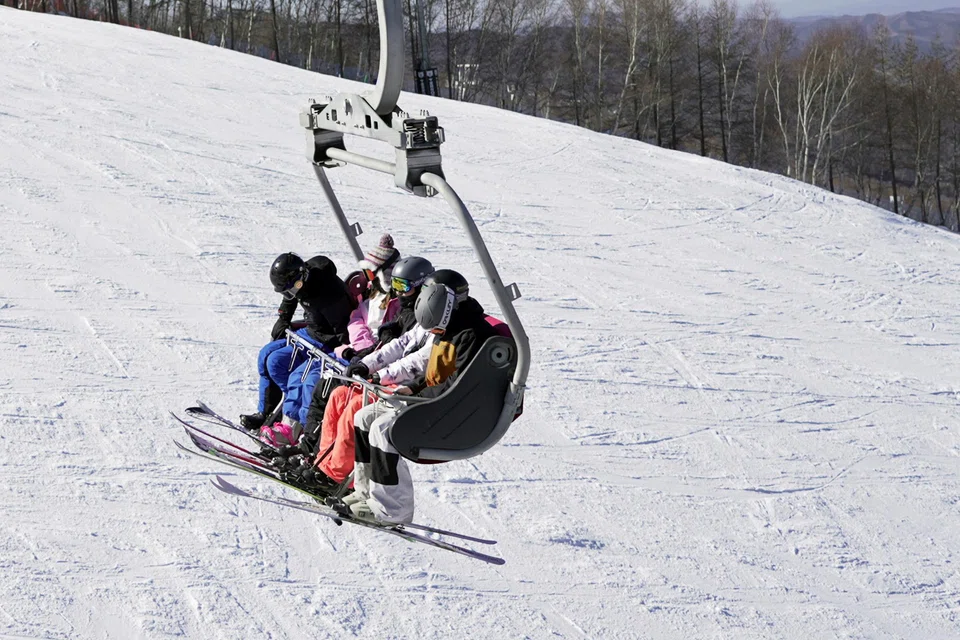
[CHONGLI] Luo Li’s ski resort – north of Beijing – is a rare post-pandemic success story that Chinese authorities want to replicate through state-led investments in various services sectors, in what is emerging as an important, albeit risky, policy shift this year.
About two decades ago, when he opened the Wanlong complex in Chongli – 200 km outside the capital – he had more staff than customers. But China’s hosting of the 2022 Olympics brought new transport infrastructure to the area, encouraging seven more resorts to open.
Once the country lifted Covid-19 restrictions in early 2023, the crowds started to come. Wanlong is now profitable for a second straight year.
“We created the demand,” said the 64-year-old, who employs 1,200 staff catering for the ski resort’s 600,000 visitors this year. “Agglomeration effects really matter. When it was the only ski resort here, it was very hard to attract people on my own.”
Policy shift
Beijing has been signalling a policy shift to focus on services this year as it tries to redirect some stimulus from sometimes wasteful investments on transport, housing and industrial infrastructure to potentially more productive areas.
An added bonus could be that, just like in Luo’s case, once the facilities are in place and services become available, some latent household demand can be unlocked and help revive consumption – a longstanding structural weakness.
Navigate Asia in
a new global order
Get the insights delivered to your inbox.
Soft consumer demand has hobbled the economy, and Beijing’s measures so far have not turned it around. Per capita services consumption was 46.1 per cent in 2025, well below the 70 per cent in the US.
Its new services-focused policy carries risks. It is using the same old supply-side playbook, hoping the “build it and they will come” approach that fostered the rise of megacities such as Shenzhen or the advanced industrial clusters across the country can also be applied to services.
Analysts caution that such a policy model can bring to the services sector the same ills of wasteful investment and overcapacity that taint China’s export-focused economy today.

“Chongli’s experience highlights an important dynamic; when frictions are reduced and capacity constraints are alleviated, demand can respond strongly,” said Tommy Xie, OCBC’s head of Asia macro research. But, he added: “China has no shortage of examples where overinvestment... eventually resulted in underutilised or abandoned assets.”
In recent months, Chinese state media ran multiple articles about the booming “ice and snow” economy, spanning ski resorts, adjacent dining, accommodation facilities and winter sports equipment manufacturing. They projected it to grow to 1.5 trillion yuan (S$274 billion) in 2030 from one trillion yuan in 2025.
Local authorities have unveiled investment plans in various services.
Jilin and Hebei in the north plan to expand winter sports facilities, sub-tropical Henan pushes for the “night-time economy” of bars, clubs and concerts, Hainan island promotes yachting and medical tourism while the wealthier Beijing goes for education, health, elderly and childcare.
In all these services, China currently faces supply shortages, analysts say, while urging caution.
“China’s boom in winter sports is a useful example highlighting how expanded infrastructure can unleash demand for services that hitherto lay dormant,” said Fred Neumann, chief Asia economist at HSBC. “The risk, however, is that overincentivising supply can also lead to excess capacity, with demand ultimately unable to meet the expectations.”
Boomtown
Chongli’s economic growth averaged 6.5 per cent annually in the past five years, outpacing national figures.
“People say China’s economy is not good now, but I haven’t felt that,” said Luo.
Before its boom, Chongli was largely agrarian, producing oats, and “not even doing well at that”, he said. Now its streets are bustling with tourists, while winter gear shops and roasted lamb restaurants are thriving.
Student Yan Jingyi boasts about earning more than 10,000 yuan monthly as a ski instructor – surpassing entry-level salaries in almost any industry in China. Taxi driver Ren Bing earns 9,000 yuan, about a third more than he made previously as a truck driver in Beijing.
But there are also signs that growth risks stalling if Beijing’s focus on the service sector is not complemented by other policies that accelerate income growth, which has been lagging the economy for years.
Some indebted local governments have cut pay after Covid-19, while manufacturers trimmed wages as they fight price wars due to endemic overcapacity.
The hashtag “poor people skiing” has become popular on Chinese social media, with users sharing tips on where to buy second-hand skis and snowboards or the best unbranded winter clothing.
Collinder Chen, who works in the cultural sector in the southern city of Guangzhou, earns little more than a Chongli ski instructor, and tried limiting her spending on a recent five-day trip to 6,000 yuan in total. “Skiing as a regular sport is definitely quite expensive,” said Chen. “But as a single trip it’s still okay.”
Beijing has promised to reverse last year’s 3.8 per cent decline in fixed asset investment, the first since at least 1996, which came as local governments struggled to identify additional infrastructure needs.
But some analysts say China might be better off if the state sector stepped back instead of deepening its presence.
Regulatory crackdowns in recent years and state companies’ dominance in some key industries have dented business sentiment and turned away foreign investors.
“If the investment climate is right, the government doesn’t need to get overly involved in expanding supply. It can and should leave that to the private sector,” said Louis Kuijs, chief Asia economist at S&P Global Ratings. REUTERS
Decoding Asia newsletter: your guide to navigating Asia in a new global order. Sign up here to get Decoding Asia newsletter. Delivered to your inbox. Free.
Share with us your feedback on BT's products and services

