World finance chiefs head to IMF with a sense of deja vu
They will assess the damage US President Donald Trump’s war on Iran has caused to growth in the Middle East and beyond
 Add BT as a preferred source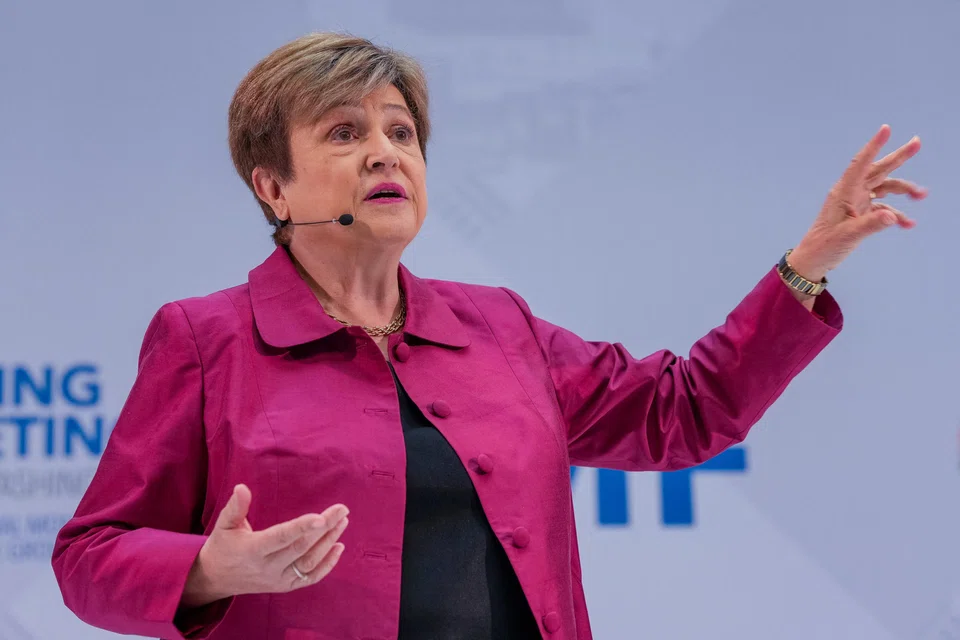
DeeperDive is a beta AI feature. Refer to full articles for the facts.
[WASHINGTON] Economic policymakers are about to gather in Washington to assess the damage President Donald Trump’s war on Iran has caused to growth in the Middle East and beyond.
For many attendees of the International Monetary Fund and World Bank’s spring meetings, to be held from Apr 13-18 in the US capital, the trip will bring a sense of deja vu, after last year’s event was dominated by punitive trade tariffs – another shock brought on by Trump.
The 2026 edition is set to focus on reading the tea leaves after the US and Iran failed to reach an agreement after marathon weekend talks in Pakistan aimed at turning a two-week ceasefire into lasting peace, and on how governments and central banks can best support their economies without creating new problems.
Ahead of the meetings, which will be attended by finance ministers and central bankers from around the world, IMF chief Kristalina Georgieva warned that the international community is becoming less able to respond to shocks. Fiscal space is lacking, policies that protect one country may harm others, and great-power politics are more likely to fuel conflicts than resolve them.
“Buckle up” was the main advice she offered ahead of new economic forecasts to be published on Tuesday, along with a report on global financial stability. “Given the impact of the war, we are going to downgrade them.”
In January, world output was seen rising 3.3 per cent this year, with expansions of 2.1 per cent in the US, 1.4 per cent in the eurozone and 5.4 per cent across emerging Asia.
Navigate Asia in
a new global order
Get the insights delivered to your inbox.
Then, at the end of February, bombs started hitting Iran.
“The next couple of quarters are going to be essential to understand how much this has tested the resilience of some economies that were a bit in a muddle-through period before the war,” Ludovic Subran, chief economist at Allianz, told Bloomberg Television.
What already seems clear is that the ripple effects of Trump’s aggression and the mistrust it has sown will linger – even if the truce agreed to by the US and Iran holds up, peace is restored, and shipping through a key waterway returns to normal.


“This ceasefire has clearly removed the most extreme downside risk,” said Ewa Manthey, a commodities strategist at ING. “For this to be a true turning point, we would need to see sustained and uneventful flows through the Strait of Hormuz, not just the headlines about reopening.”
With top monetary policy officials in Washington, the central bank slate elsewhere looks thin. Still, economic indicators are due across regions, including Chinese and UK GDP prints and inflation readings from India to Nigeria to Argentina.
Investors will receive the next instalment of March US inflation data with the producer price index (PPI) on Tuesday. Similar to the consumer price report, the measure of wholesale inflation will reflect the surge in energy prices during the first month of the Iran war.
Economists project the PPI rose 1.1 per cent from a month earlier, which would be the largest increase in four years. In addition to crude oil and diesel, the PPI could also indicate how quickly and to what extent disrupted Middle East production is spreading to the US.
The report includes price changes for materials used in the early stages of the production process, such as metals, plastics, chemicals and fertiliser. Transportation services costs may also reflect the impact from higher fuel prices.
The core producer price index or PPI, which excludes energy and food, is forecast to rise 0.4 per cent for a second month, extending a stretch of heightened wholesale inflation pressures that dates back to late 2025.
Apart from the PPI, the relatively sparse economic data calendar includes a report on March existing-home sales that will probably underscore a languishing housing market.
Economists expect little change in contract closings, which largely reflect buying decisions from a month or two earlier. Mortgage rates approached 6 per cent in late February before advancing sharply in March, when inflation fears spooked the bond market. BLOOMBERG
Decoding Asia newsletter: your guide to navigating Asia in a new global order. Sign up here to get Decoding Asia newsletter. Delivered to your inbox. Free.
Share with us your feedback on BT's products and services