Asian-inspired French-Japanese style at Loca Niru
French techniques and South-east Asian ingredients come together at this new fine dining space at House of Tan Yeok Nee
 Add BT as a preferred source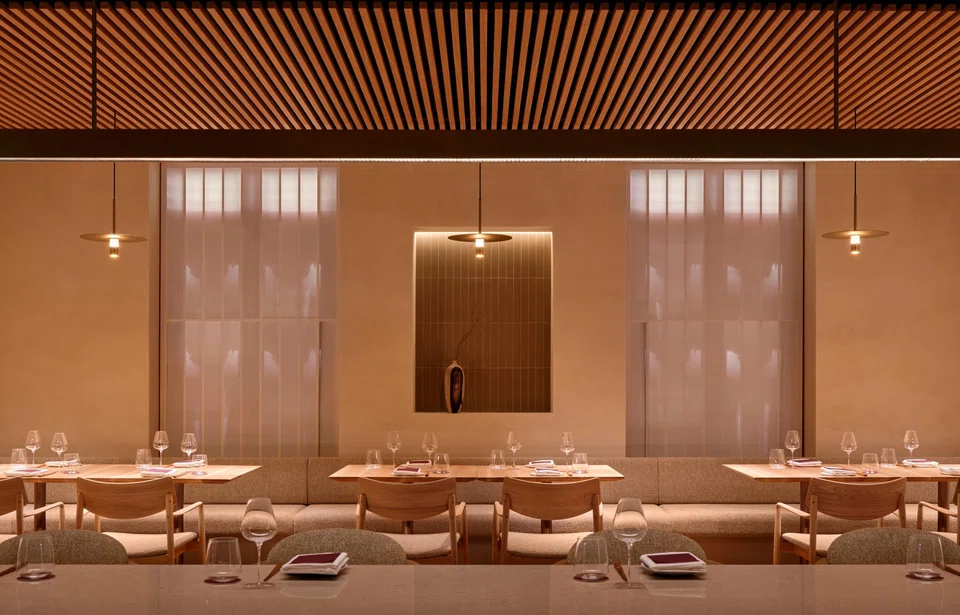
DeeperDive is a beta AI feature. Refer to full articles for the facts.
NEW RESTAURANT
Loca Niru #02-01 House of Tan Yeok Nee 101 Penang Road Singapore 238466 Tel: 6592 5815 Open for dinner only, Tuesday to Saturday, 6.30 pm to 11 pm
[SINGAPORE] When you’re down and troubled and need a helping hand, there was once a singer whose name you could call if you needed a friend. But since they’re currently indisposed, there’s another name you can call: Loca Niru.
The folks at this new fine dining outpost are very friendly. And we mean really, really friendly. Golden retrievers could not be more friendly. They call you by name. They’ll call your dining companions by name too, if you tell them. If you demur, they’ll hazard a guess anyway.
They’re super hospitable – eager to share everything they know about the restaurant, from design to bar to private room. They even invite you to crash on the couch in the living room. Bless their hearts, they do everything to make you feel welcome and wanted.
It is also rather unnerving.
Navigate Asia in
a new global order
Get the insights delivered to your inbox.
Loca Niru is Shusuke Kubota’s sophomore act after Omakase@Stevens, where he built up a cult following for his own brand of Japanese-infused French cuisine. Who would turn down a chance to trade a mid-range hotel location next to 7-Eleven for the stunningly restored House of Tan Yeok Nee?
But a new address in an S$80 million Teochew landmark comes with high expectations. You realise this after puffing up a flight of sturdy timber stairs that could double as an ECG stress test (old house, no lifts). The entire second floor is designed as an interior design showcase in Japandi-style – warm-lit lounge contrasting blond and dark woods and muted hues. There’s a matching bar, and private rooms too. You’re led to the dining room itself – divided between tables and a counter where Kubota holds court like a silent maestro waiting for the orchestra to settle.
He is oddly detached from the activity – a shy presence who stays in the background while chief cheerleader Kevin leads the charge. He runs you through the restaurant’s backstory, current story and future musings while your S$298 tasting menu unfolds at a pace that makes you look longingly at the couch between courses.
The eight courses are technically faultless – sharp presentation, strong techniques and precise flavours. It’s just not that fun to eat. It’s like a very well thought-out exam paper, with your hypotheses duly proven with all the right case studies and anecdotes. It works intellectually, but not on a personal level.
The plot goes like this: a Japanese chef trained in French techniques, living in South-east Asia. How do you present a cuisine that’s true to your skill, yet grounded in where you are? Ergo: use local ingredients – pick, mix, swap.
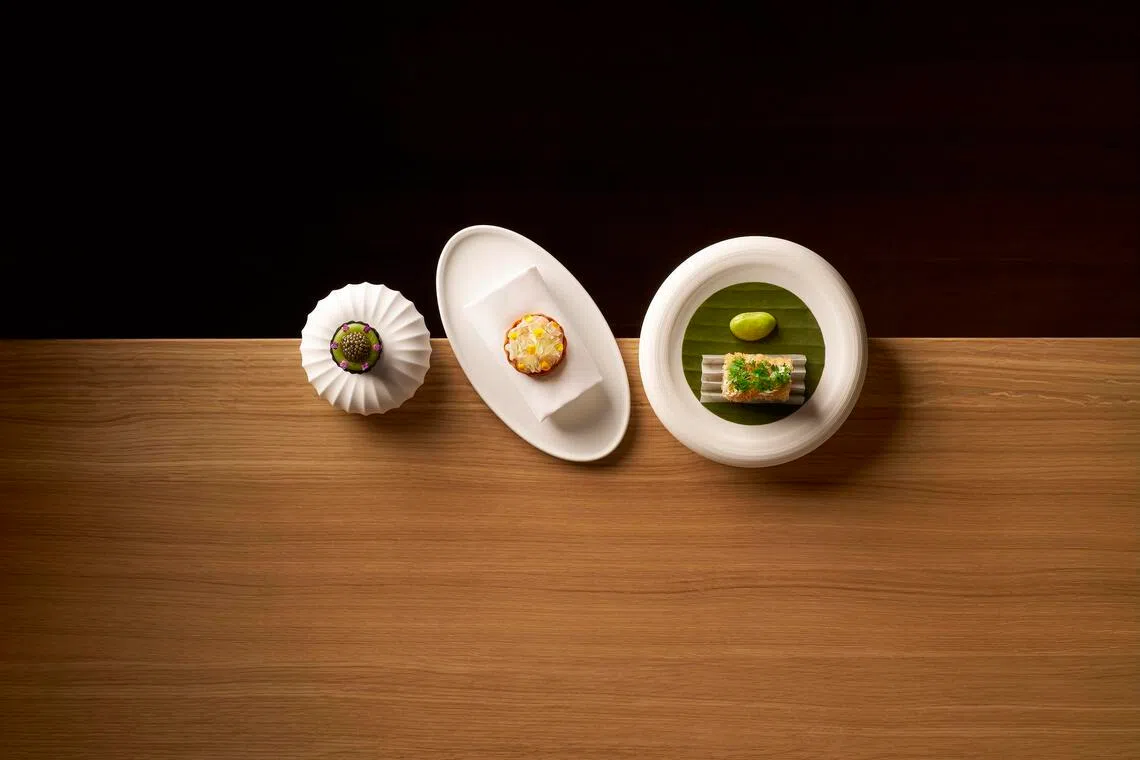
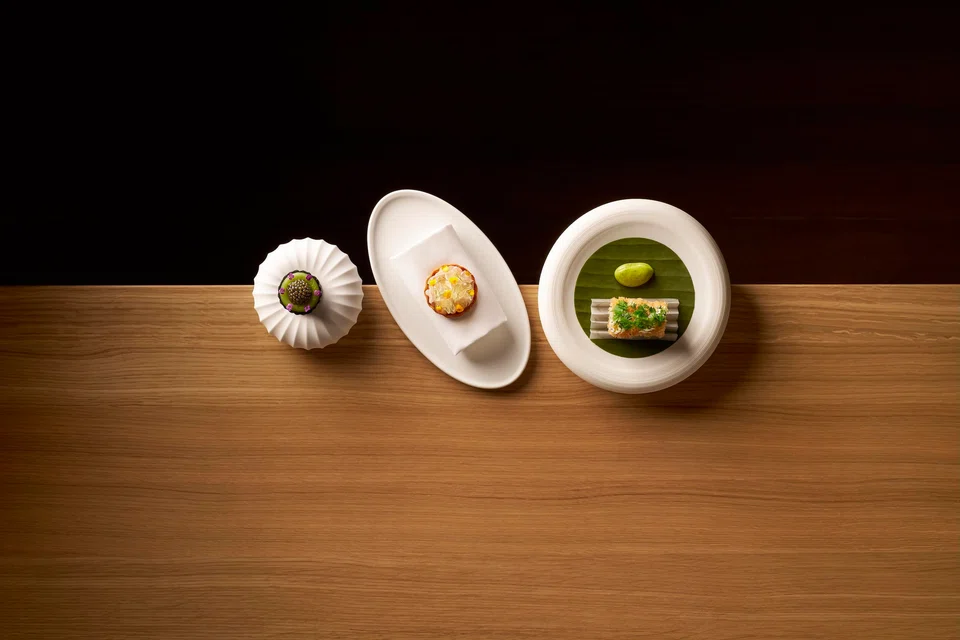
What he calls “hassun”, we call “snacks”. We get a bite of raw shrimp and pomelo in a tart shell, and a pie tee filled with brandade of local fish, topped with pickled celtuce and caviar – fancy but a non-starter. A bouncy mixture of minced frog meat wrapped in shredded filo pastry and deep fried shows more spunk, especially with a dab of curry aioli.
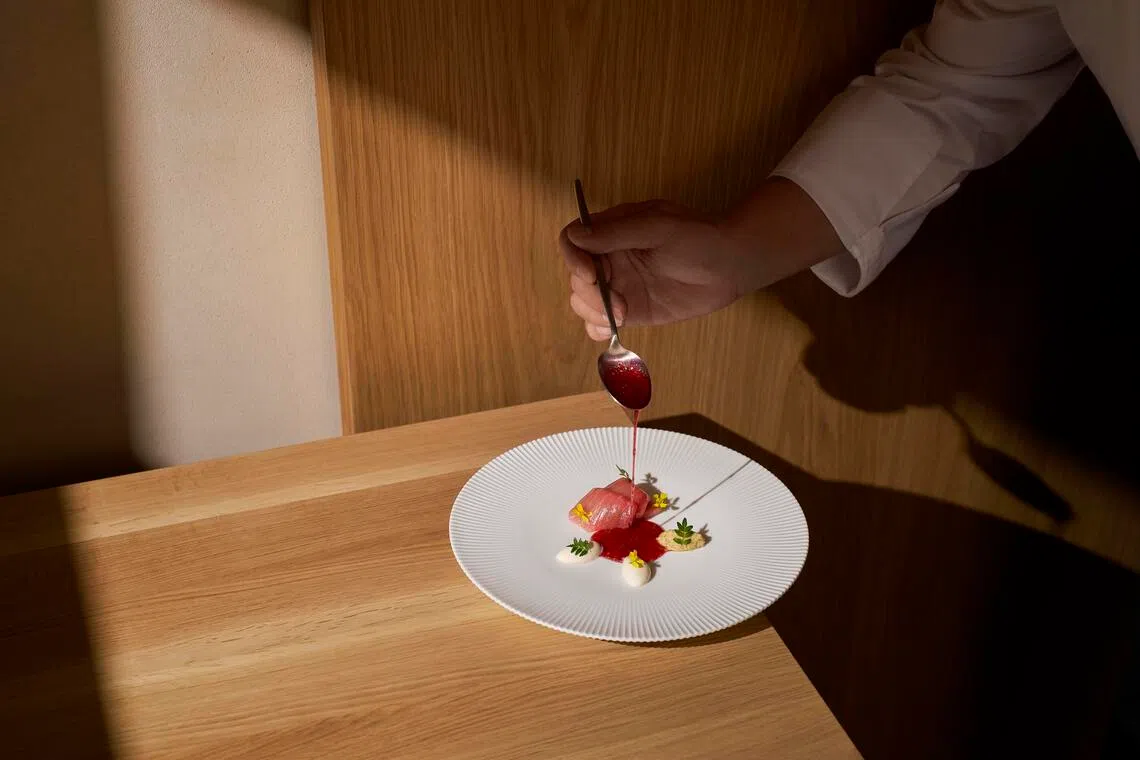
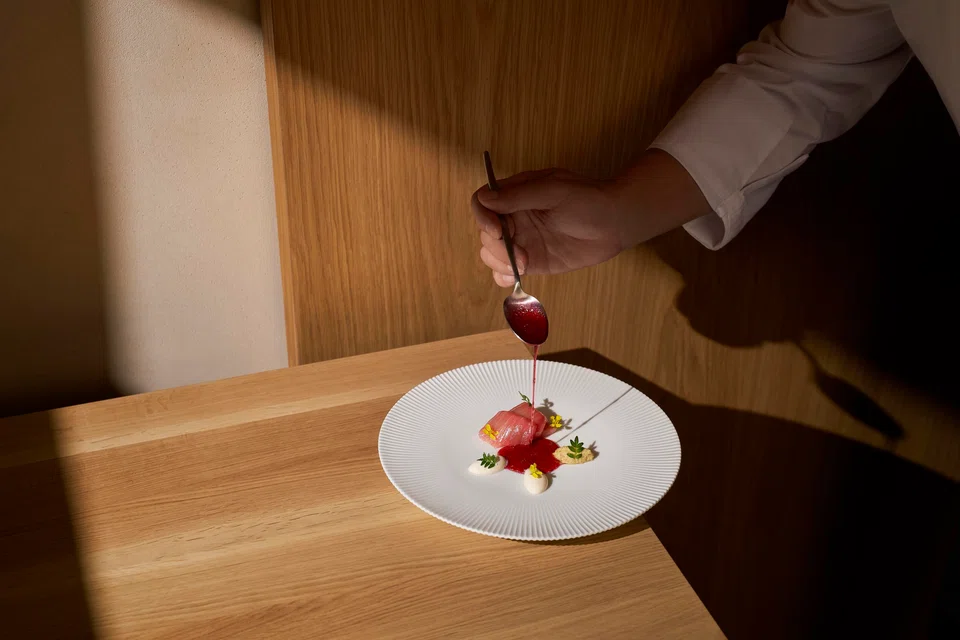
Jewelled slices of chutoro are plated like a still life, with splashes of colour from roselle and calamansi sauce, smoked tofu puree and a mustard-scallion condiment with a wasabi-like bite. It’s sweet, tingly, mildly smoky but not statement-making.
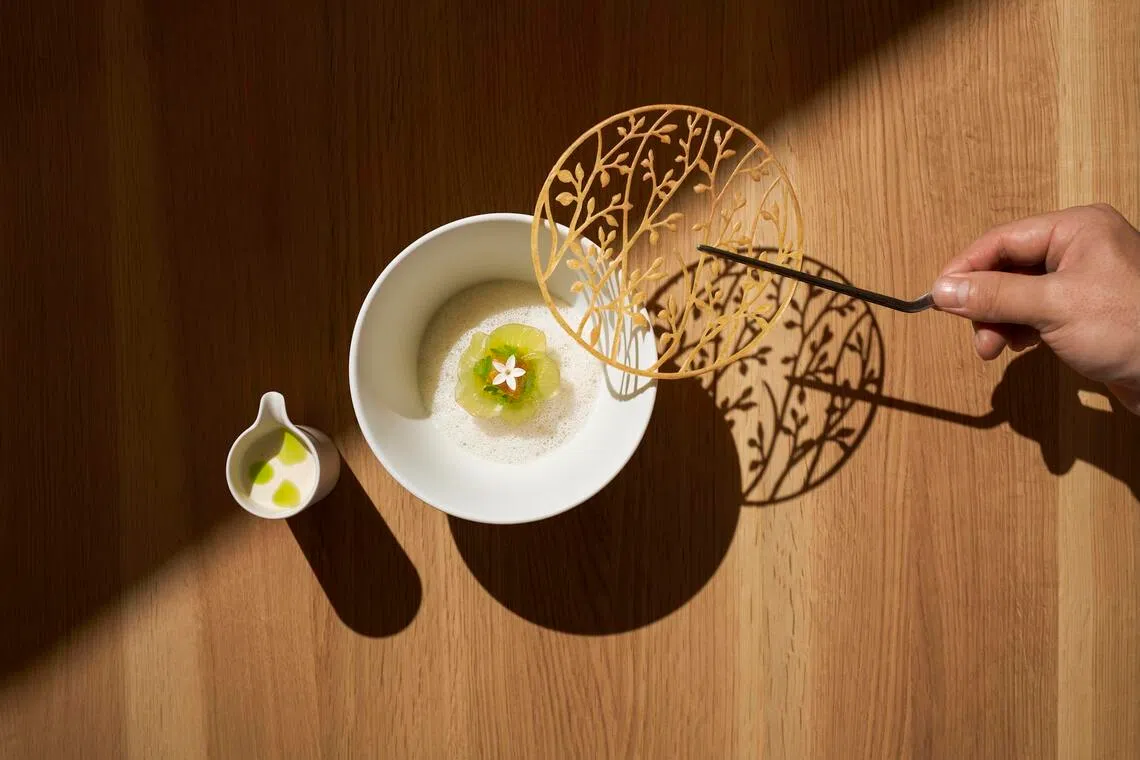
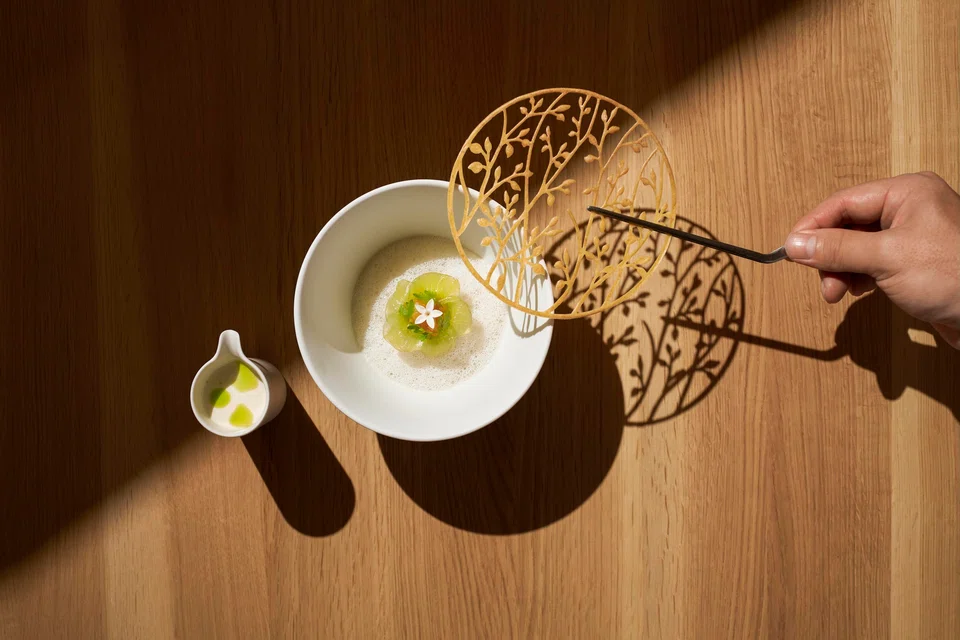
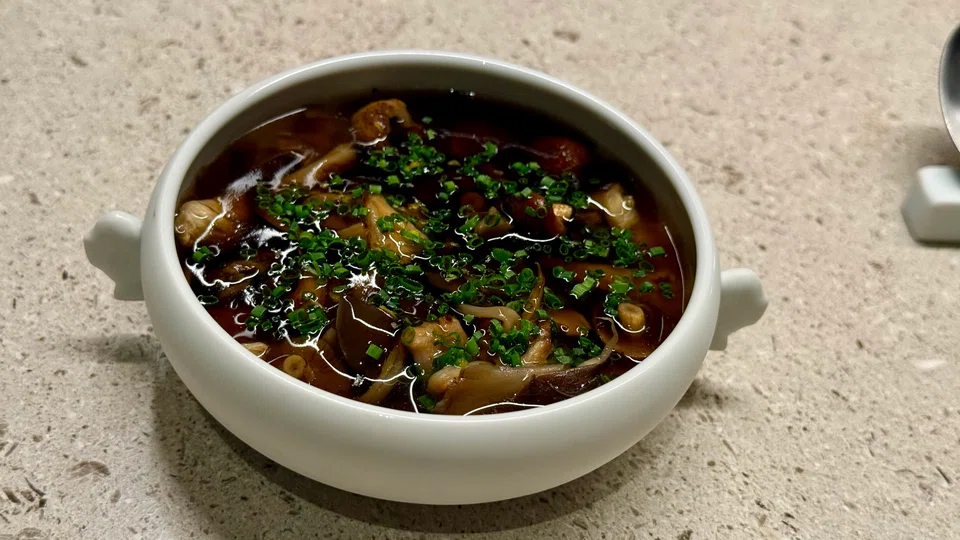
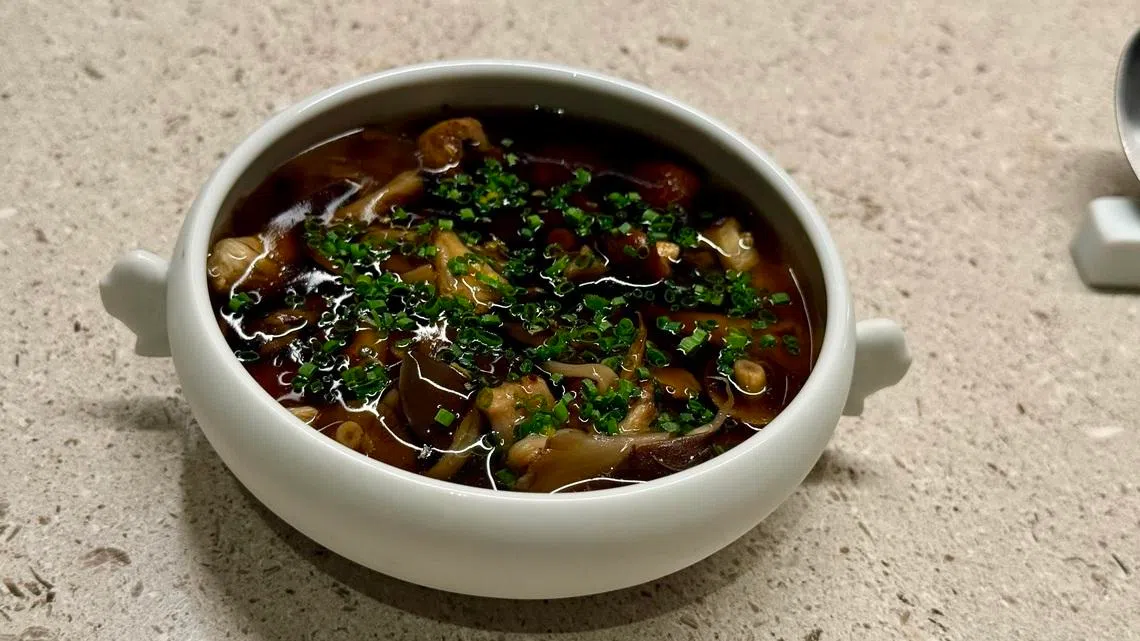
A vegetable-based broth for chawanmushi with mixed mushrooms and abalone is closer to our heart, and we’re taken with the chewy-chunky vegetable dumpling in a soul-lifting kombu and soya milk broth. Topped with a laser-cut potato tuile, it’s out-of-the-box good.
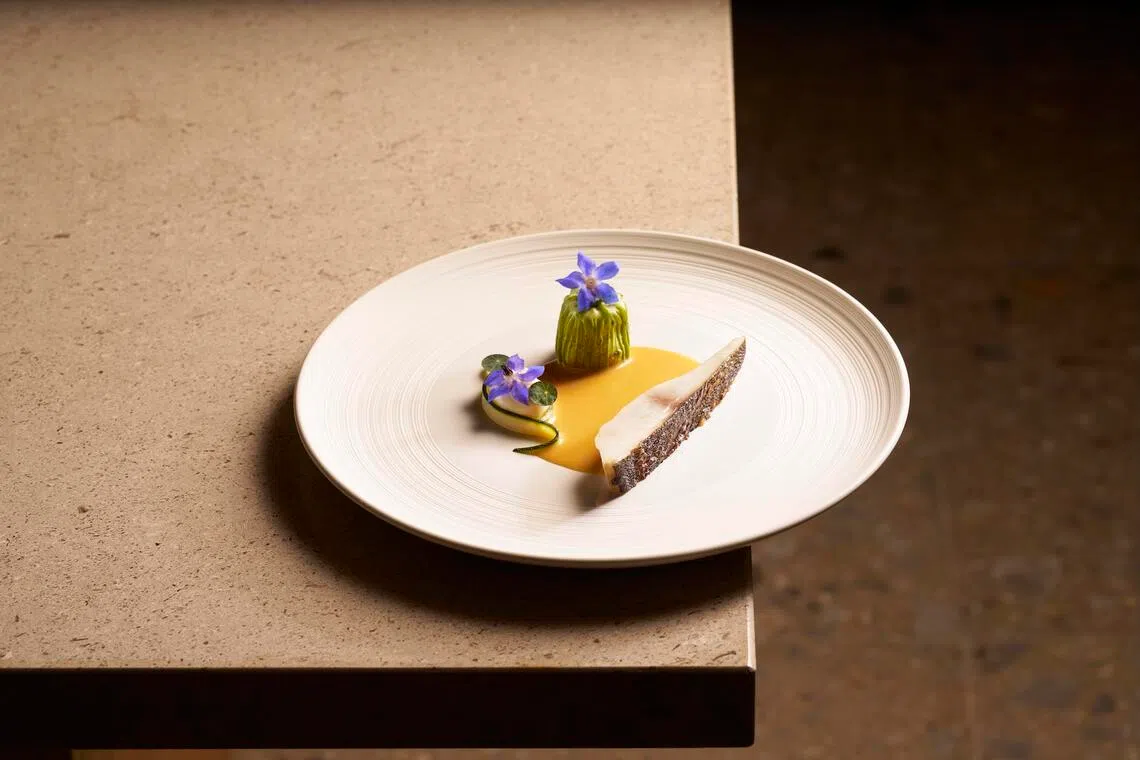
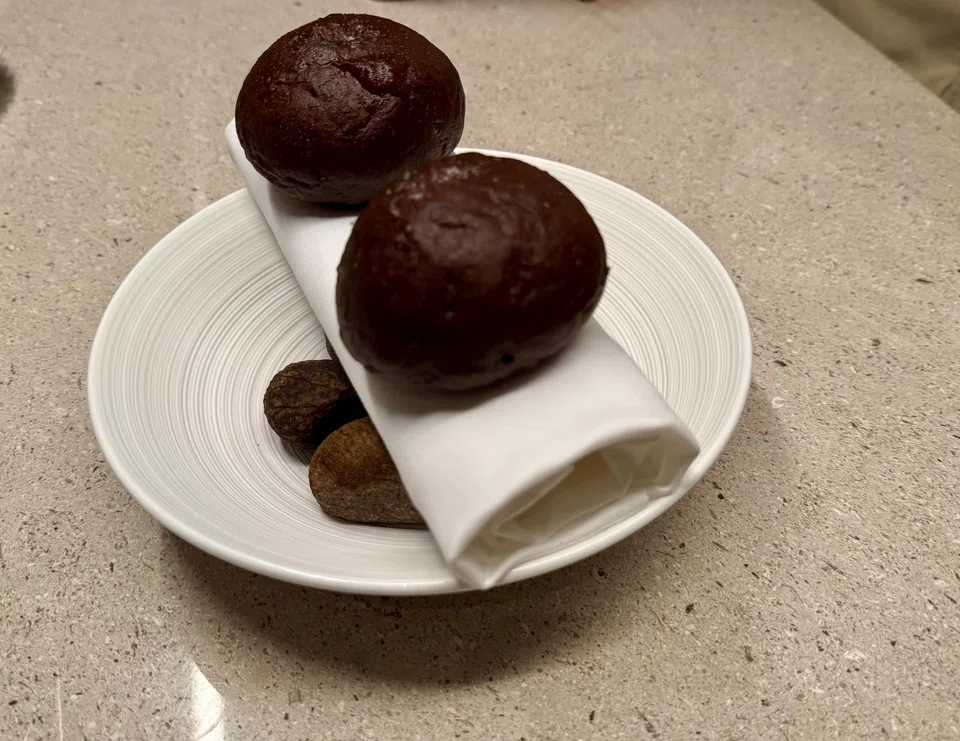
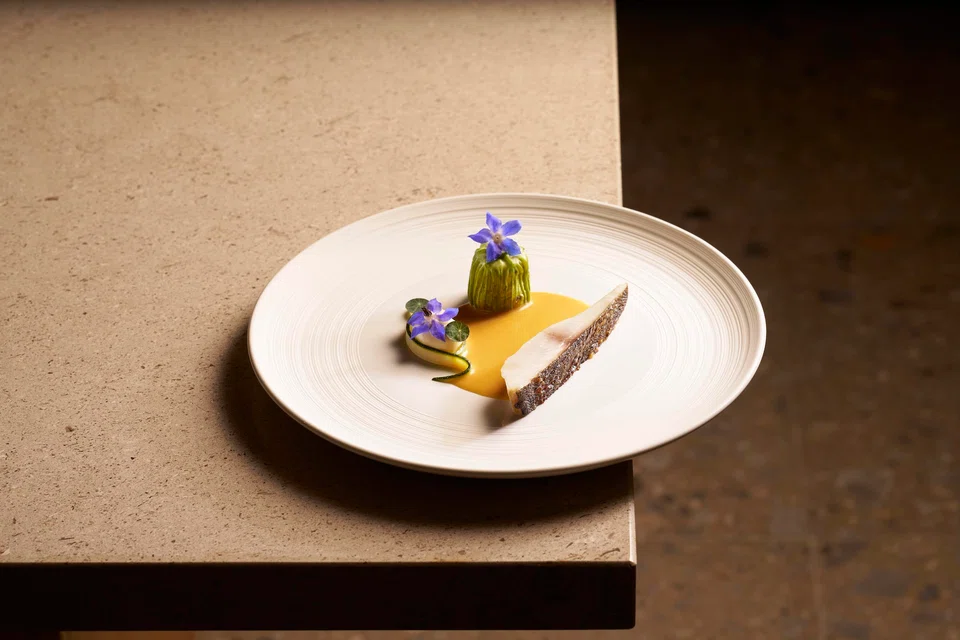
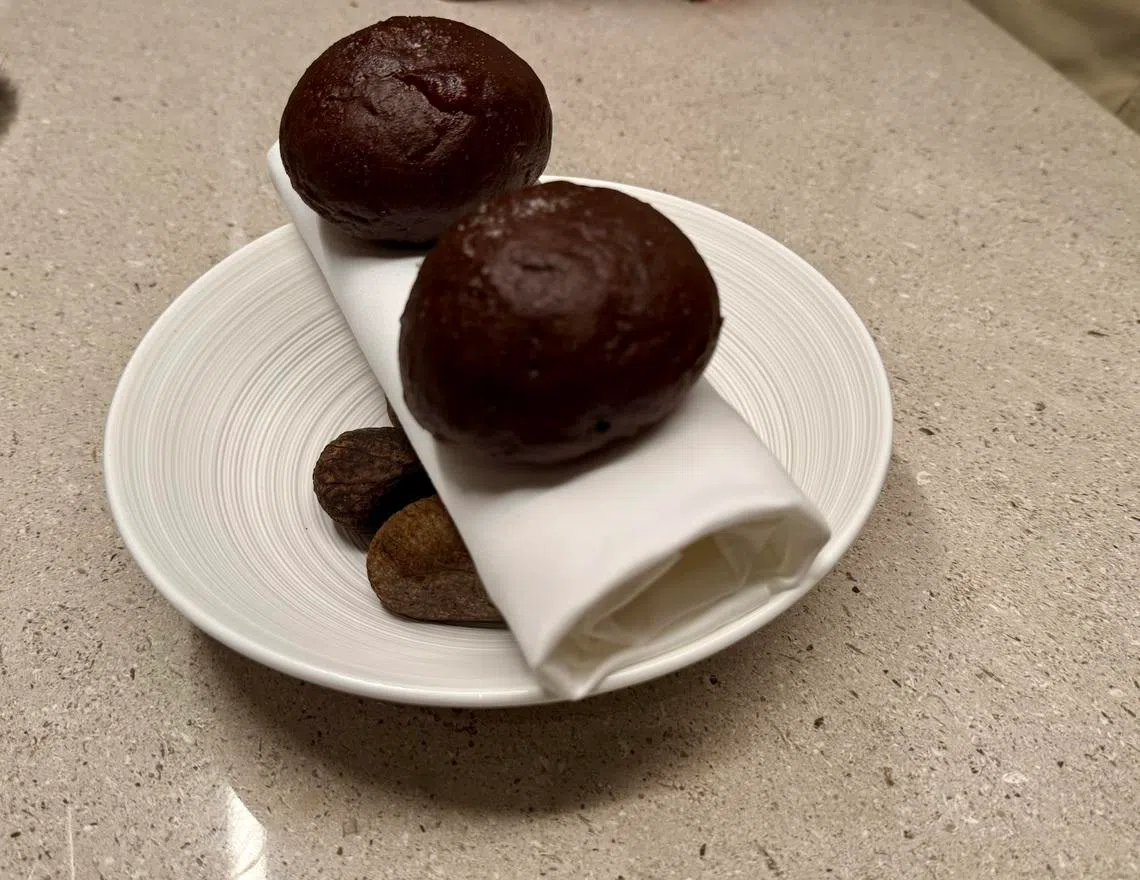
Pan-fried isaki or grunt fish wins for sheer skill – thanks to its firm flesh and impossibly crackling skin. The laksa-ish beurre blanc that it comes with works, but is a little cliched. Fluffy, earthy buah keluak bread is better on its own with butter, rather than the distracting “nonya” sauce.
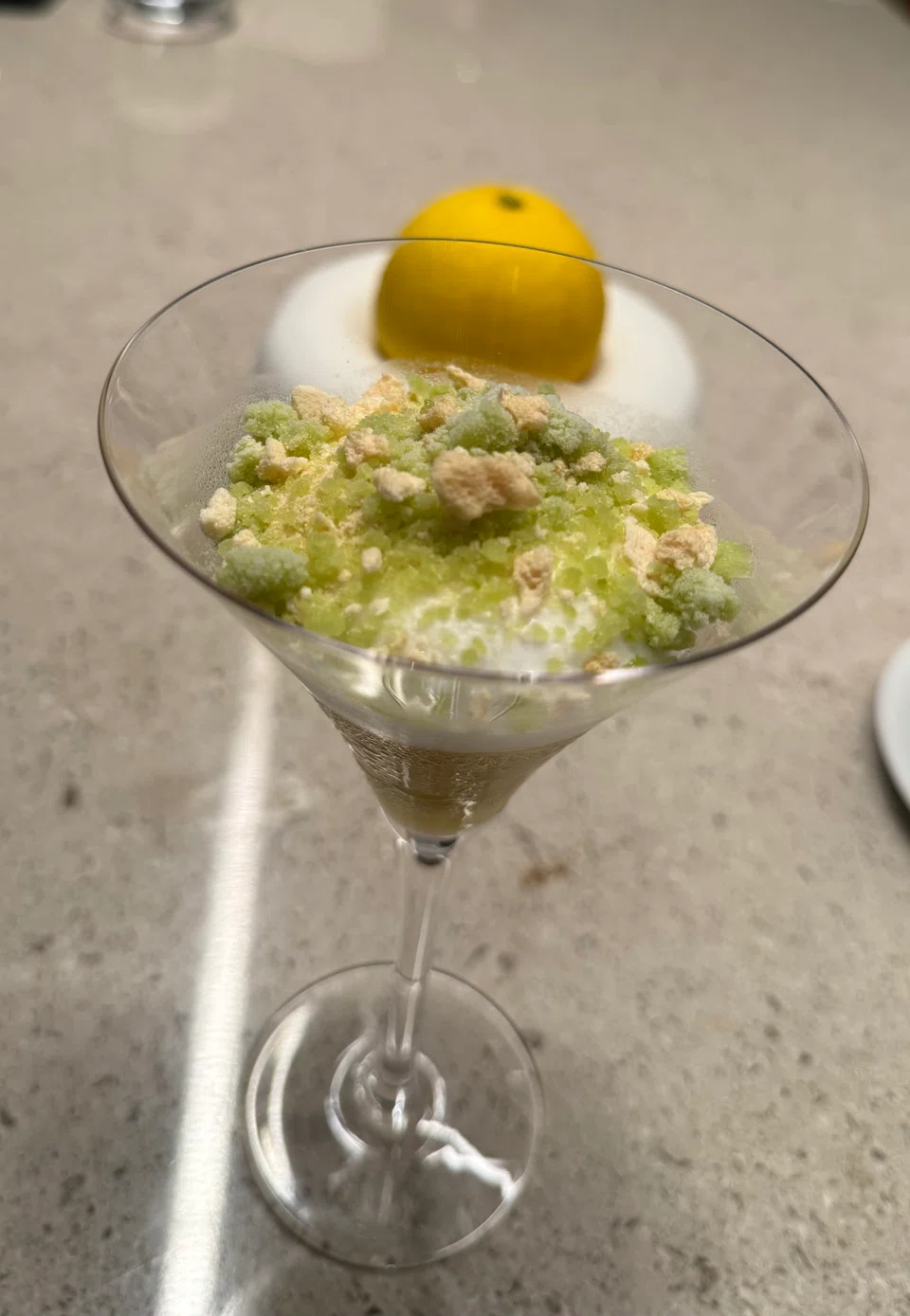
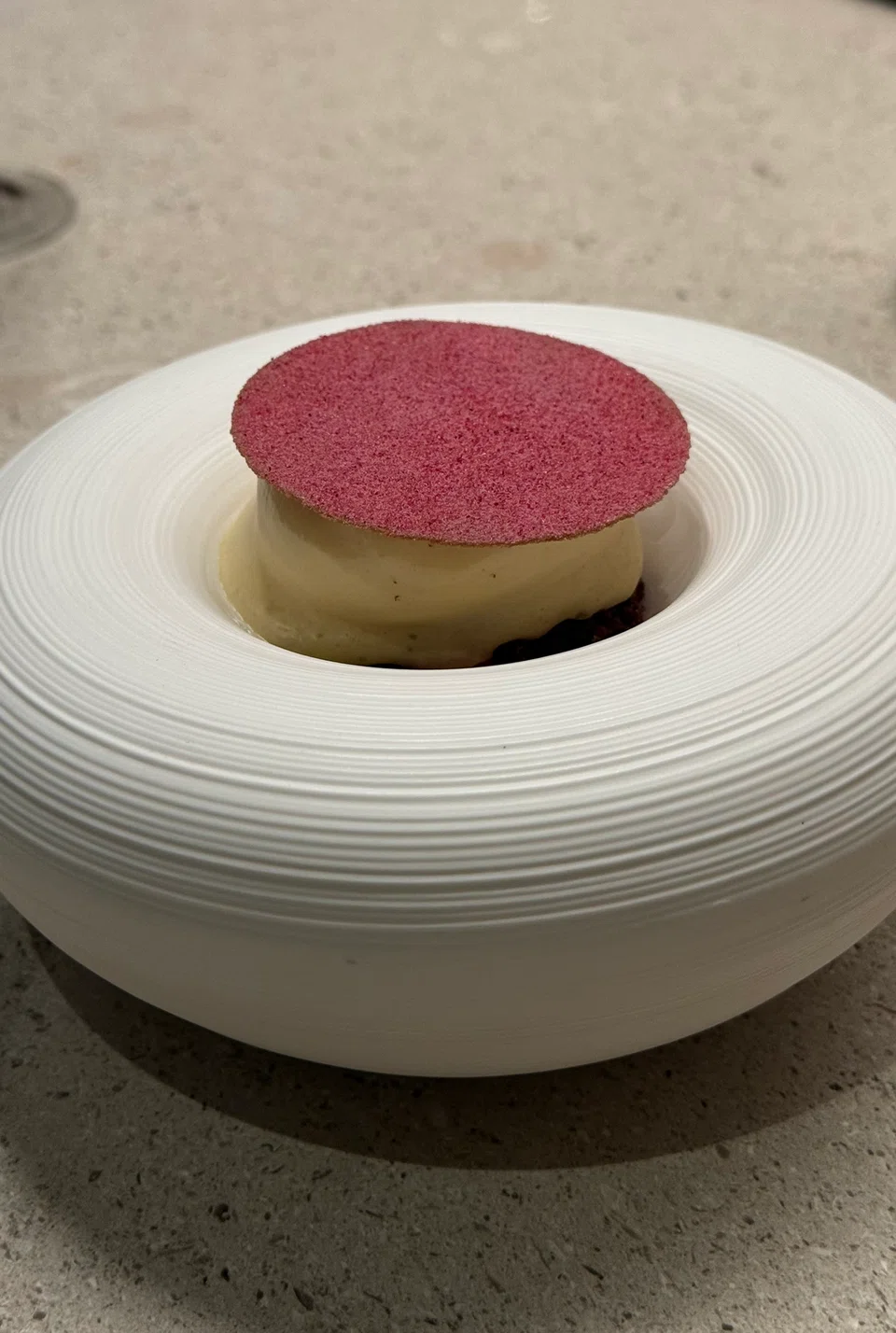
Where foreign chefs of yore would make desserts out of pineapple and coconut and consider themselves “native”, Kubota bravely tackles kedondong. We can barely pronounce it, but he turns it into jelly and sorbet, layered with coconut mousse and meringue bits. Hats off.
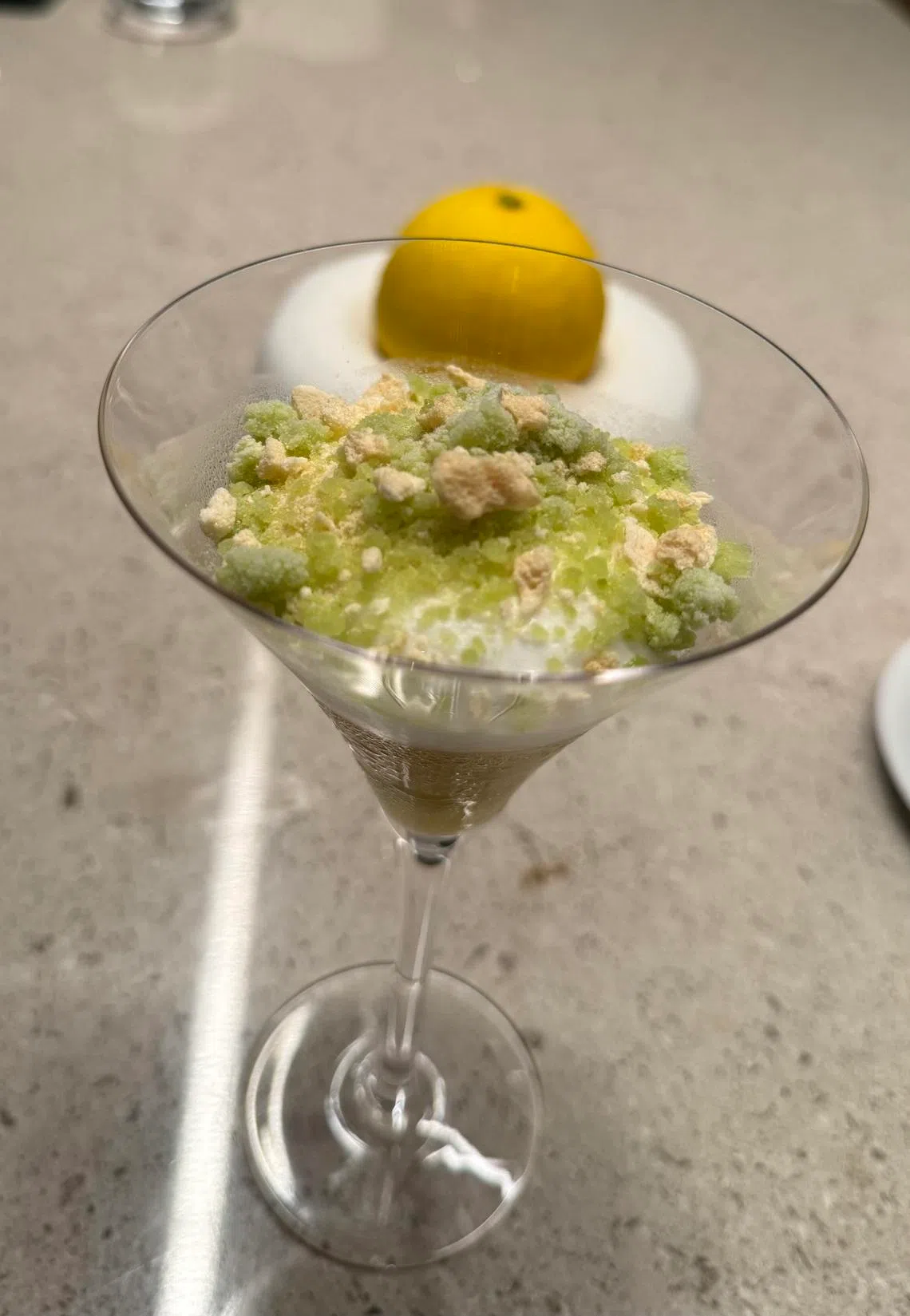
Malaysian chocolate ice cream and gula melaka on a cookie base is more conventional, with a barely-there hint of nutmeg.
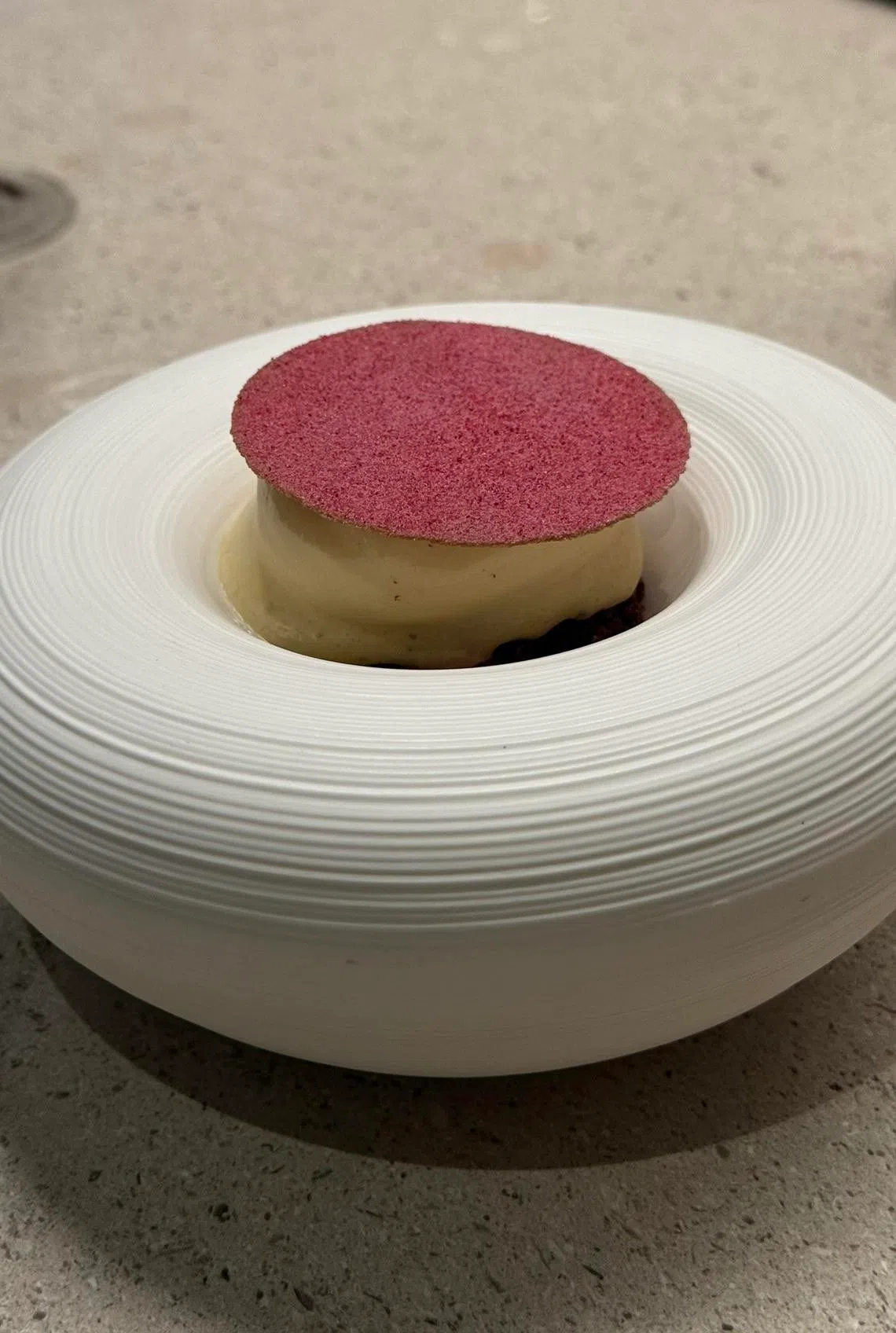
Kubota’s intentions are noble, but he only scrapes the surface of South-east Asian ingredients or flavours. At times it feels more like box-ticking than forward-thinking, and S$298 is a lot to pay for an academic exercise in Asian-Japanese-French cooking.
With a space like this, and the hospitality – like the passionate sommelier Vincent who takes you through the S$148 sake pairing – Loca Niru calls for food that resonates. And a chef who doesn’t stand at a distance but connects with his diners. Kind of like, well, a friend.
Rating: 7
Decoding Asia newsletter: your guide to navigating Asia in a new global order. Sign up here to get Decoding Asia newsletter. Delivered to your inbox. Free.
Copyright SPH Media. All rights reserved.