
K-meat fever hits Singapore
The long-awaited arrival of Korean beef and pork raises the bar in a dining scene already crowded with Japanese, Australian, American and Spanish equivalents
 Add BT as a preferred source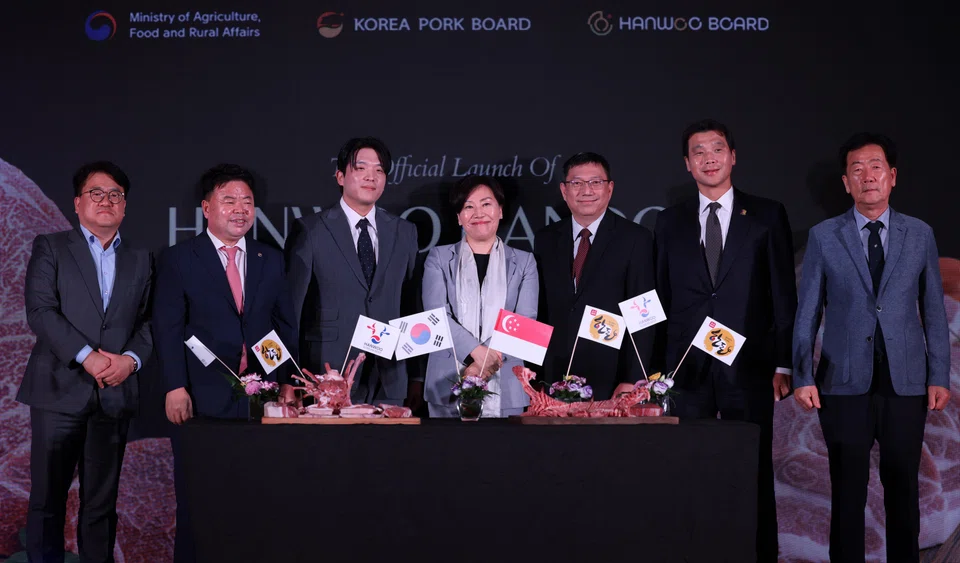
[SINGAPORE] When Anh Sung-jae finally stepped up to the stage at a Marina Bay Sands convention hall, an expectant crowd broke into the kind of cheers reserved more for celebrity meet-the-fan sessions than an industry trade event promoting the official launch of Korean meat in Singapore.
Better known as the stone-faced, much-feared judge on the Netflix hit Culinary Class Wars, he was briefly in Singapore last week to lend star power to an event showcasing premium hanwoo (beef) and handon (pork) – which, until late 2025, were not approved for export to Singapore because of strict safety regulations.
His whirlwind appearance was icing on the cake following 10 long years of negotiations between Singapore and South Korea – a deadlock that was finally broken on the sidelines of the Apec Economic Cooperation Summit in November 2025, when the two sides agreed to a strategic partnership to boost all aspects of trade.
That arrangement would include the import of pork and beef from Jeju island, which was officially declared free from foot-and-mouth disease by the World Organisation for Animal Health in May 2025.
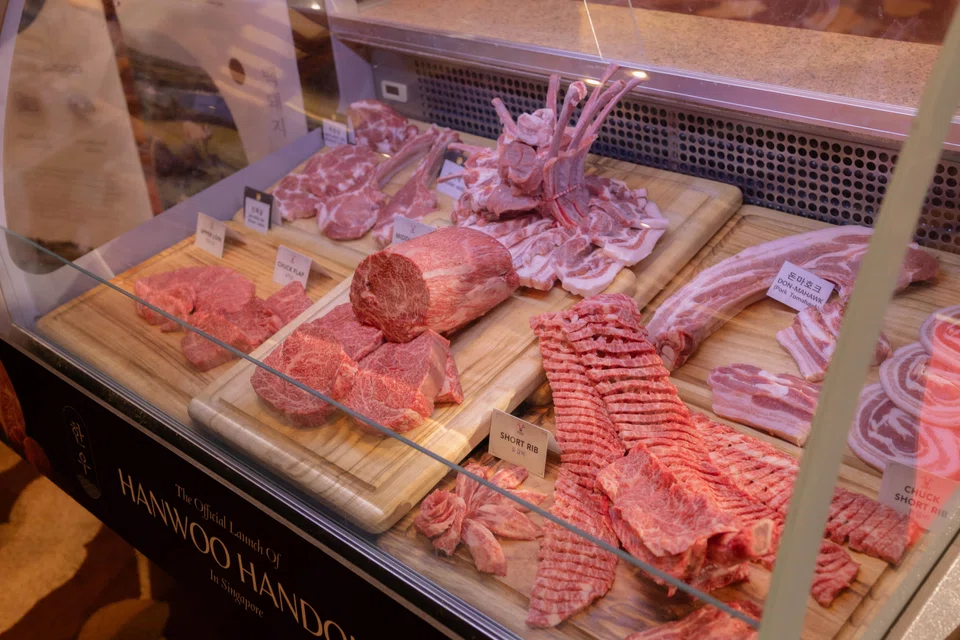
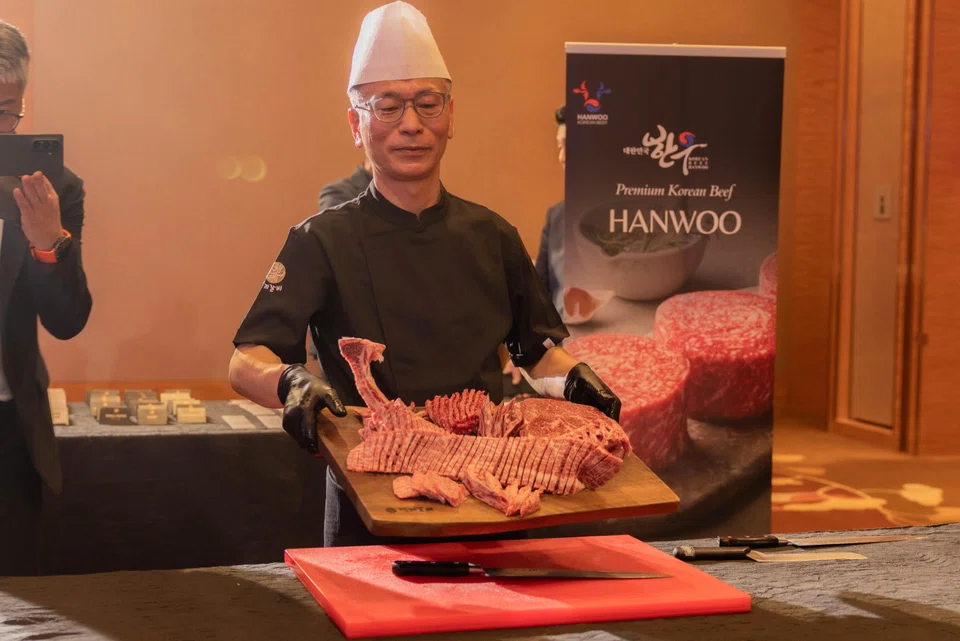
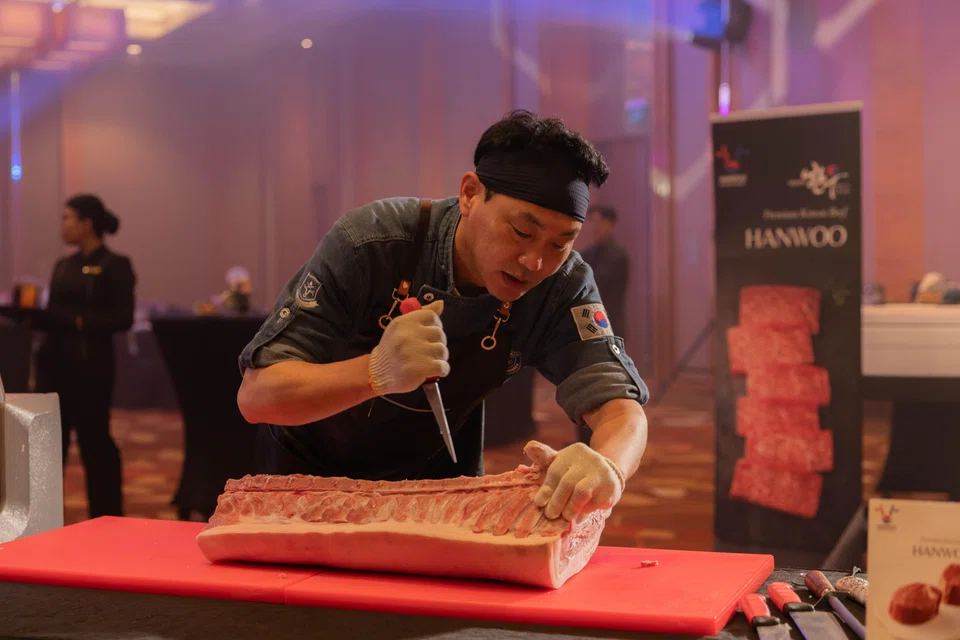
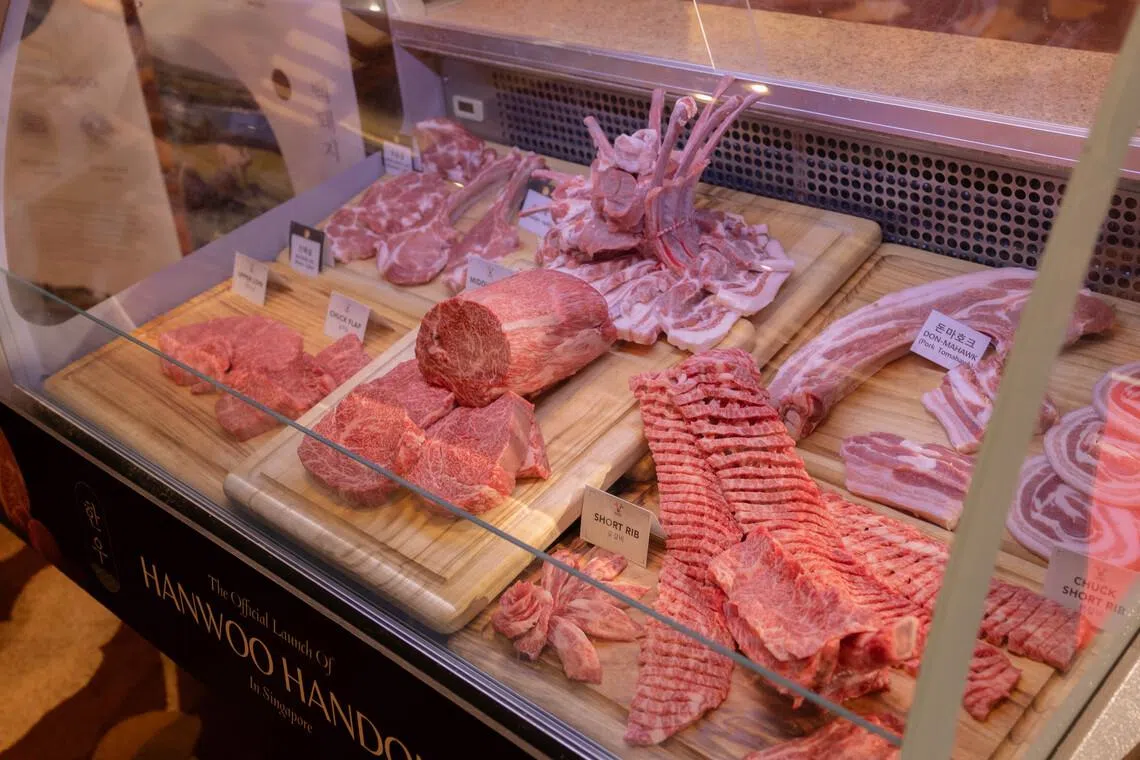
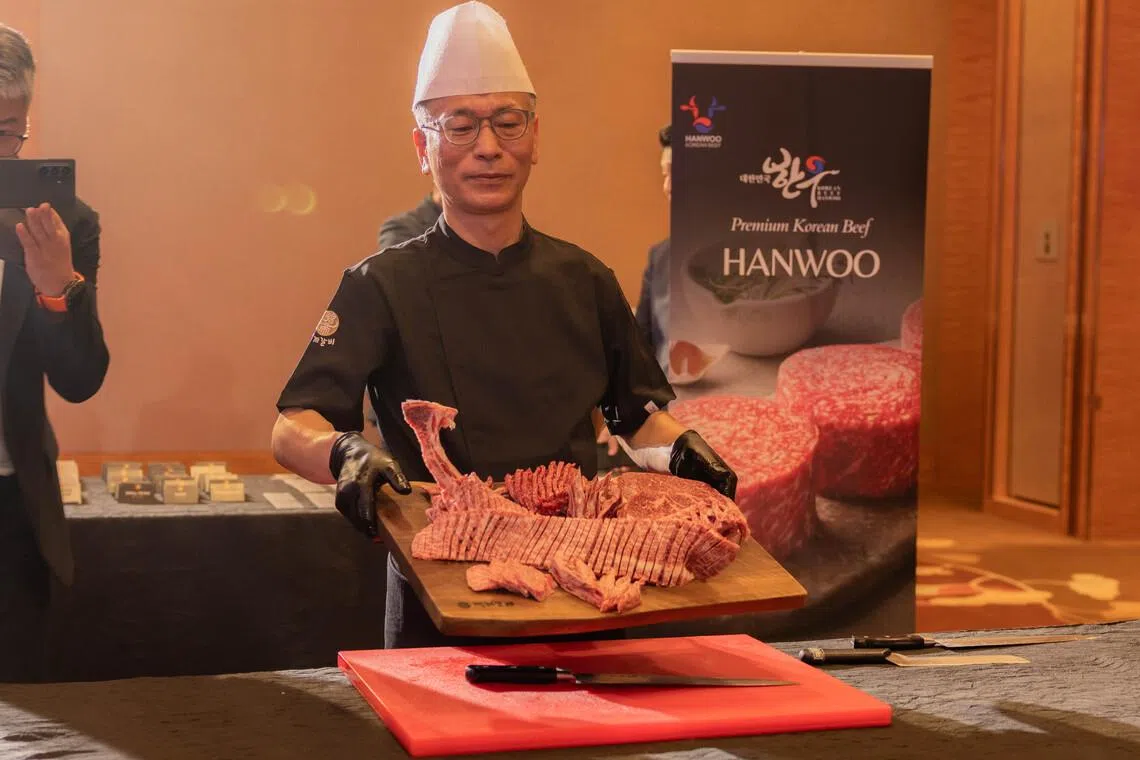
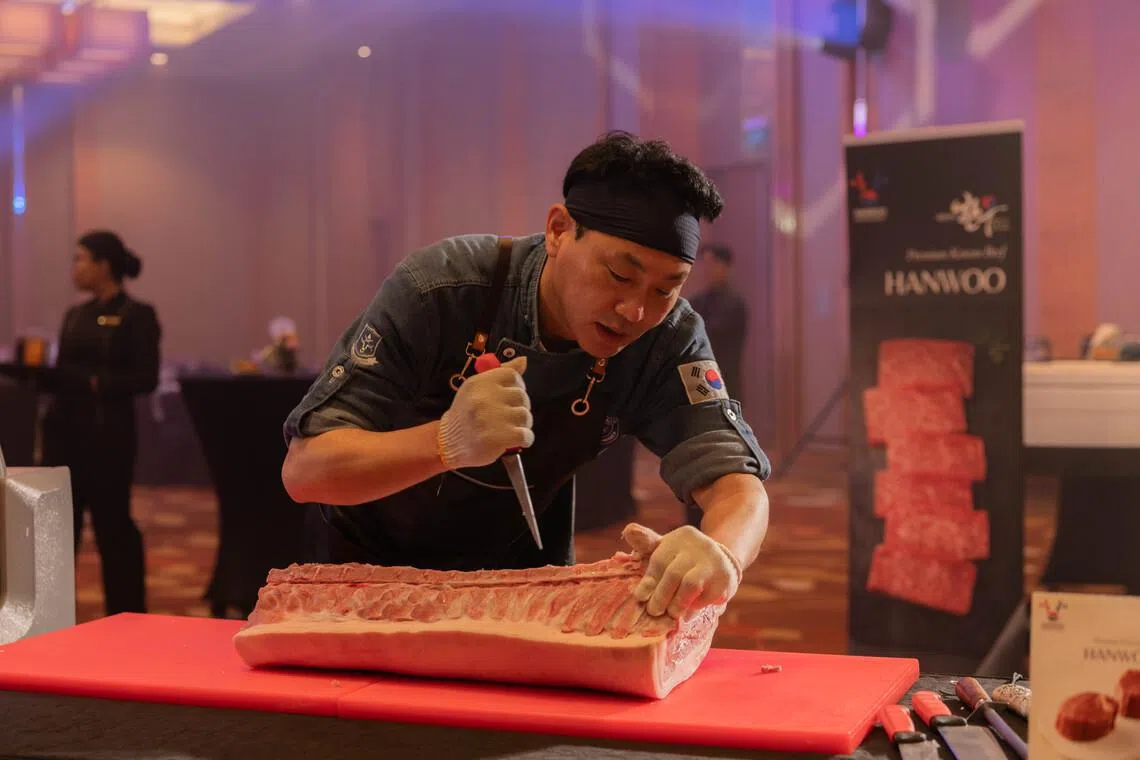
Hanwoo and handon are already being exported to markets such as Hong Kong and Malaysia, but Singapore was the ultimate target for South Korea, says Song Mi-ryeong, the country’s minister of agriculture, food and rural affairs. She was also in town to lead a high-level delegation at the event that featured a dazzling display of butchering skills to showcase the different cuts of meat.
For Song, the partnership spelled sweet victory for her country.
Navigate Asia in
a new global order
Get the insights delivered to your inbox.
She said: “Singapore is one of the countries which adopts the strictest standards in food security. So for us to be able to export to this market means that Korea has finally achieved global standards in this aspect.”
Breaking into the Singapore market
Currently, only meat from Jeju – not the mainland – is allowed into Singapore. The key to the approval for export is traceability, thanks to a system that tracks every stage of production from farm to table – including farming conditions, feed, slaughterhouse and slaughter date. For hanwoo, even the cattle’s date of birth and lineage are traceable.
The runway for Korean meat exports is long, says Song, considering that the total hanwoo exports to Singapore in 2025 was worth just US$0.4 million. This is just a fraction of the US$179 million in Korean food that the city-state imported in 2024.

Out of the total 144 tonnes of Korean meat exported globally, about 31 tonnes was sent to Singapore. Song adds that the next step is to increase the network of farms that can be accredited to send their meat to Singapore – not just from Jeju, but also other parts of South Korea.
In fact, Jeju accounts for just 1 per cent of total hanwoo production, and 5 per cent for pork, so the market potential is there, adds Song. Negotiations are already in place to bring Singapore inspectors to the mainland to visit farms in various provinces, and there is hope that more varieties can be sent to Singapore by the middle of 2027.
While several importers bring in Korean beef and pork, Culina could well be the biggest, with its commitment to bring in 200 heads of hanwoo and 50 tonnes of handon in the first year, starting from November 2025.
Culina’s general manager Leelyne Yeo says: “In the first three months, we have already imported 40 per cent, and we look set to exceed that commitment.”
She has worked with Olivia Lee, chief executive of SoGoodK – which imports premium Korean fruit and other produce – since 2018 to lay the groundwork for importing the prized meats.
Is hanwoo the new wagyu?
Hanwoo is generally described as having the tenderness of wagyu and the beefiness of American beef. “When you eat wagyu, you tend to feel full very quickly because it’s so rich and soft,” says Song. “But hanwoo has a chewy and beefy texture which you can eat more of.”
The key difference between pigs and cattle raised in Jeju and other parts of South Korea lies in the environment and water, says Min Kyungcheon, chairman of the Korean Hanwoo Board.
“Jeju is far from the mainland, so the environment is very clean, with natural mineral water and rich soil conditions. Taste-wise, a lot depends on the individual farm, the composition of the feed fed to the animals, as well as the terroir of the various provinces.”
Jeju also offers fertile ground to raise quality pigs, says Lee Kihong, who chairs the Korea Handon Board, stressing the freshness of the pork sent to Singapore. The island is famous for its indigenous black pigs – which produce just 0.01 per cent of all pork produced in South Korea – as well as white pork raised in clean, stress-free farms.
The ratio of fat and meat is key to the quality of hanwoo, which is graded from 1 to 1++, with a marbling score of 5 to 9.
Anh said at a Q&A session: “Marbling translates to flavour. How the fat melts, the texture of the meat, are all key to enjoying the taste of hanwoo.”
Premium pricing and impact on F&B scene
With its limited production compared to Japanese wagyu, hanwoo is naturally priced higher, notes Yeo. But restaurants, especially Korean ones, have been quick to switch to hanwoo after having relied mainly on Australian or Japanese beef, she says.
“Other (restaurants) may see it as a new offering and refresh their menus (to include hanwoo) to create different dining experiences.”
Meanwhile, Japanese beef suppliers are not worried about hanwoo displacing wagyu. One importer notes that even with economic uncertainty, sales of wagyu have stayed stable, with fine-dining restaurants preferring to distinguish themselves by sourcing directly from individual farmers in Japan.
Simon Ho, head of food service at Tiong Lian, which imports beef and pork from Australia and Japan, is also importing Korean meat, but “we’re not reducing our wagyu quantities at all”.
He adds: “Meat supplies are generally constant, but due to market and global conditions, prices have been on a rollercoaster ride. Consumers still want their meat, but maybe they’re not spending as much as before.”
Damien Michelini, business transformation director of Indoguna, says his company is still waiting for approval to import hanwoo from its preferred farm.
But Indoguna is in no hurry to offer it because “it enters the market at a higher price point than Japanese wagyu which, when combined with the requirement to purchase full sets (both prime and off cuts) significantly reduces flexibility and economies of scale. It offers no clear commercial advantage under current market conditions”.
Despite the proliferation of Japanese wagyu, demand remains strong although “the market has clearly become more price-conscious”. Still, beef sales for Indoguna rose 20 per cent in 2025 from 2024 levels, “despite a 15 to 20 per cent increase in global beef prices – which indicates that demand remains resilient even in a challenging economic environment”.
Demand for variety
Andrea De Paolo, group executive chef of 54° Steakhouse has noticed a drop in demand for Japanese beef as diners shy away from the overly high level of marbling, and instead prefer Australian wagyu for its “balanced marbling and texture”.
If anything, guests prioritise premium meats, “so hanwoo fits very well into the current landscape – it’s closer in structure to USDA beef without the overwhelming fattiness of well-marbled wagyu”.
Isaac Tan, head of culinary and product innovations at Commonwealth Concepts, which runs Bedrock and Fat Cow, feels that while Japanese beef remains highly sought-after, the market has broadened.
“Diners are more informed, and happy to enjoy alternatives such as Australian wagyu, hanwoo and Spanish rubia gallega,” he says.
“Rather than becoming the ‘next wagyu’, hanwoo is likely to be another top-tier option alongside Japanese beef, offering diners greater choice at the highest end of the beef spectrum.”
Decoding Asia newsletter: your guide to navigating Asia in a new global order. Sign up here to get Decoding Asia newsletter. Delivered to your inbox. Free.
Copyright SPH Media. All rights reserved.

