

Is AI stealing your job?
White-collar workers risk displacement, but mass layoffs aren’t on the table

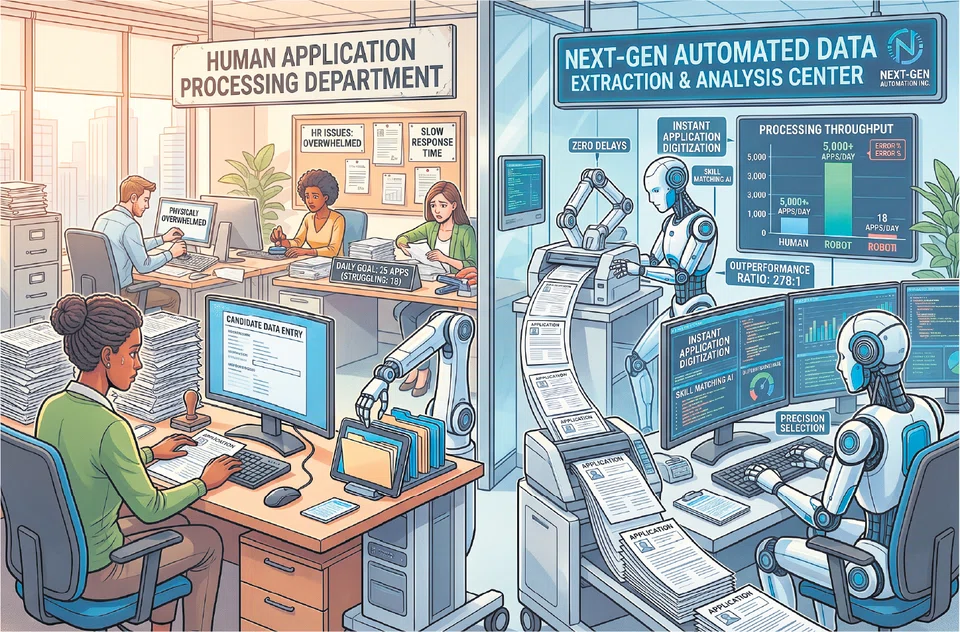
[SINGAPORE] There has been growing buzz around how artificial intelligence is reshaping hiring, changing jobs, and even putting roles at risk.
In May, labour chief Ng Chee Meng put forth a motion calling for no “jobless growth” amid AI-driven disruption at workplaces, referring to a situation in which an economy expands but job creation lags.
Then manpower minister Tan See Leng noted the concern that AI may erode Singaporeans’ skills and experience, or even take over their jobs altogether – with workers’ fears fanned by news of large technology firms announcing layoffs attributed to AI adoption.
In Singapore, that debate is becoming increasingly real for workers as companies rethink the skills they need and how work gets done.
Among those caught up in this shift is a former manager in the healthcare sector.
Before Rishika Dey was laid off, the 30-year-old’s job involved conducting studies and comparative analyses of drugs developed by different companies.
“But now we can give a very refined prompt and Claude or any other AI platform can do that (analysis) for us,” she comments. Besides performing those analytical tasks much more quickly, AI can also automate project tracking and milestone monitoring.
Dey, whose position has now been made redundant, believes that more jobs will be lost as more people discover what AI can do.
Taking over tasks
And Dey is not alone. Other workers in Singapore are also finding their roles reshaped by AI, with some tasks increasingly automated and some positions disappearing altogether.
One creative professional, who asked to remain anonymous, believes that her termination earlier this year was indirectly linked to AI. “After 16 years as a creative, I have decided to switch my career to something non-creative and AI-proof,” she says.
A graphic artist, who also asked to remain anonymous, similarly says her employer retrenched her as AI tools became increasingly capable of producing artwork.
Yet, for every account such as these, the wider picture is harder to pin down.
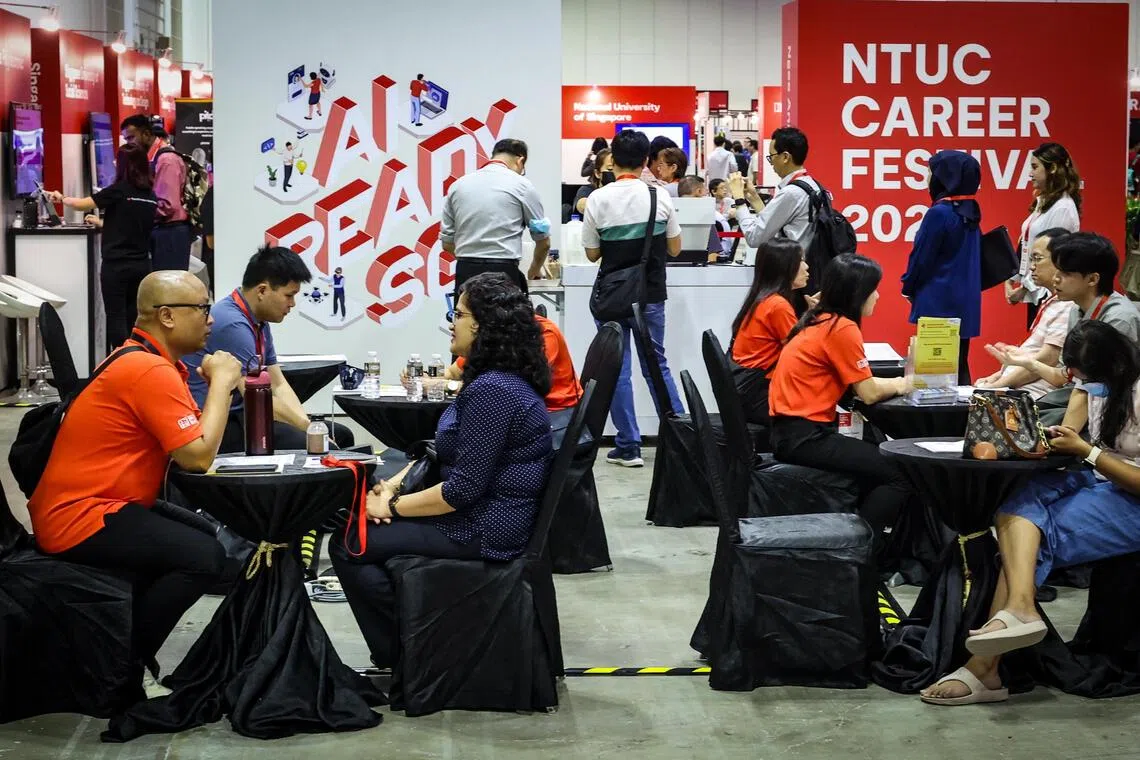
Jayanth Nagarajan, a Singapore-based technology executive and industry watcher, suspects the near-term impact of AI will be less about mass layoffs.
“The biggest workforce effect may be the jobs that are never created, vacancies that are not replaced, and teams becoming smaller as each employee can do more,” he says.
At the outset, AI typically augments tasks such as research, drafting, analysis, documentation, customer interactions and coding. As these tasks change, companies may then redesign roles and organisational structures, Jayanth observes.
He finds it difficult to attribute any restructuring solely to AI, as “companies are simultaneously responding to cost pressures, economic conditions and earlier over-hiring”. Still, AI is becoming another factor in assessments about productivity and costs.
Sean Tan, workforce and rewards practice leader at human consulting firm Marsh Singapore, agrees that the impact is more likely to be gradual and progressive.
Employers here use AI more to automate routine work and improve productivity than to cut headcount directly.
“That means the bigger effect will likely come through slower hiring, fewer entry-level roles and a steady redesign of work and teams rather than widespread abrupt AI-driven layoffs,” he says.
Impact still limited
Despite these ongoing job cuts, official data suggests that AI has not yet made a major dent on the employment landscape. Singapore’s unemployment rate stood at 2 per cent as of June 2026, unchanged since end-2024.
To be sure, there has been an increase in retrenchments – defined as the termination of permanent employees due to redundancy, or the early termination of term contract employees for the same reason.
MOM data recorded 4,500 retrenchments in the second quarter, up from 3,830 in the first quarter and the highest quarterly figure since the pandemic.
Full-year statistics show 14,490 retrenchments in 2025, rising from 13,020 in 2024.
But, despite the recent rise in retrenchments, the extent to which AI is driving them remains difficult to isolate.
Human resources expert Adrian Tan, whose website LayoffSG tracks job cuts across companies and industries in Singapore based on user submissions and news reports, notes that his tracker cannot establish whether a layoff was driven by technological change, as companies do not always disclose whether AI played a role.
The muted share of AI-related layoffs may also arguably be because AI adoption among businesses remains relatively limited.
A Ministry of Manpower (MOM) survey, carried out in the first quarter of 2026, found that 71.5 per cent of businesses had not yet adopted AI.
Among the 28.5 per cent that had, meaningful integration into core processes remained limited, with many most still at the planning or piloting stages.
The relatively limited adoption is also reflected in the number of firms reporting job displacement. Only 6.2 per cent said they had reduced headcount after adopting AI.
Instead, firms were more likely to redesign roles or create new AI-related jobs.
Marsh’s Tan says many Singapore companies are approaching AI in this manner.
Rather than simply cutting costs, “they are looking for efficiency gains, faster execution and better output from existing teams,” he says.
Uneven impact
Still, there are significant differences in how exposed workers are.
The MOM report found that AI adoption was highest in information and communications (74.1 per cent), professional services (57.5 per cent), and financial and insurance services (56.4 per cent). These sectors have a higher share of tasks that can be automated or augmented by AI, including software development, systems analysis and data analytics.
The functions that employers see as most at risk from AI integration are administration and business support, IT and digital transformation, and accounting and finance.
National Trades Union Congress (NTUC) Assistant Secretary-General Caryn Lim remarks that the impact of AI on the workforce is expected to vary across sectors, roles and firms – with “greater pressure on our younger workers and entry-level PMEs”, even as lower-wage and non-PME workers are less aware of how AI may impact their job opportunities.
Less discussed is how AI is affecting senior and executive management, says Dr Ng Weiyi of the Department of Strategy and Policy at NUS Business School: “Historically, age and seniority are inversely correlated with technology adoption, and AI is no different.”
If the business leaders making AI-related decisions are not well versed in the technology, there will be a limit to how much value AI actually generates.
“When you don’t understand the tool, you default to the most obvious application, which is cutting headcount,” says Dr Ng. “That’s substitution, not enhancement.”
Tan, from LayoffSG, similarly told The Business Times that companies are framing AI-driven productivity gains inaccurately.
“Why are you limiting your own upside?” he says of companies. “Your full-year target is S$1 million and AI can help you with (increasing) your output by 10 times, then why can’t your target become S$10 million while you retain the same headcount? Why must it be maintained at S$1 million while the headcount is reduced by 10 times?”
However, the impact of AI is also not evenly felt across seniority, adds Goh Shihua, senior consultant for HR and business support at global talent solutions firm Robert Walters Singapore.
She notes greater selectivity in junior-level hiring, as employers redesign roles to expand beyond basic tasks such as data gathering and administrative work that can be offloaded onto AI.
Even so, entry-level professional, manager, executive and technician (PMET) job openings edged up by a hair’s breadth from 32,500 in December 2025 to 32,800 in March 2026.

While vulnerable to the automation of certain tasks, the digitally fluent PMETs who are concentrated in sectors with higher AI adoption may also be well placed to adopt and work alongside AI tools effectively – if they can pick up the skills needed.
In fact, the data suggests that the impact of AI so far has been more about job redesign than broad-based reductions in hiring, says Goh.
“From a recruiter lens, the bar for junior hires is rising but doors are not closing for now.”
Readying for the future
The AI outlook is fast changing.
Mercer’s 2026 Global Talent Trends Report found that 99 per cent of CEOs worldwide expect AI to result in workforce reductions over the next two years.
And, in a survey conducted in November 2025, Robert Walters found that 33 per cent of companies have already introduced AI with the goal of optimising headcount, while another 30 per cent plan to do so.
But it appears that AI is still primarily transforming tasks rather than replacing jobs or workers outright – which, in turn, is changing what skills employers look for.
AI model and application development and AI literacy skills ranked among the hardest-to-find skills in ManpowerGroup’s latest Talent Shortage Survey.
Linda Teo, country manager at ManpowerGroup Singapore, says hiring discussions increasingly focus on how candidates can apply AI and digital capabilities at work.
“Rather than fundamentally changing demand for talent, AI appears to be changing what employers value and how they assess readiness to contribute,” she says.
Workers will need to adapt as the nature of jobs changes.
“The bigger risk is remaining employable only for the part of the job that AI can already do,” Goh from Robert Walters says.
“Ultimately, the more employable employee is not necessarily the one whose job cannot be automated, but the one who knows how to use AI to automate the routine parts of their role and focus their time on judgement, relationships and understanding the business.”
That emphasis on human judgment is echoed by Dr Ng.
For instance, large language models’ output will still require humans to provide the context needed to shape it into something useful for a particular audience.
“Workers need to figure out how to use these tools to augment what they already bring, and then think introspectively about what they can contribute beyond the tool’s reach,” she adds.
NTUC’s Lim, who was appointed the labour movement’s first job security chief in July 2025, emphasised that the priority for Singapore’s tripartite partners is to ensure that workers can navigate changing requirements with skills training or help switching into emerging jobs.
The goal, she says, is “to ensure workers and businesses are well-positioned to benefit from AI-driven transformation, while managing transitions in a fair and inclusive manner”.
TRENDING NOW
PSD reviewing paper that alleges civil servants disproportionately bought homes near unannounced MRT stations

CapitaLand Investment’s retrenchments: Mind the downsides of a profitable business laying off staff

In a business takeover, how can landlords in Singapore protect themselves?

How Asia’s next generation is rewriting legacy through entrepreneurship

