

Bankers get a dire warning from Jane Austen’s final book
As climate change advances, failing to prepare one’s business or move with the times can be ruinous
JANE Austen’s novels continue to grip readers in her semi-quincentennial year.
Her enduring appeal may come from the comfort her stories bring, with much of the action taking place in drawing rooms and manicured gardens. To be an Austen heroine is usually to win the literary lottery, when looked at outwardly, at least. You get a spouse, money and a secure home, things that many modern readers find harder to come by.
But off the page, there was turmoil in Austen’s world. A couple of years before her death, she and her family were struck by a climate event that changed everything. Her experience remains relevant today.
In April 1815, some 12,500 km away from Austen’s Hampshire home, Mount Tambora, a stratovolcano in Indonesia, erupted.
The blast was the most powerful in recorded history. It killed an estimated 11,000 people and as many as 90,000 more died as the islands of Lombok, Sumbawa and Bali were struck by famine and disease.
The destruction didn’t end there. Tambora released huge amounts of sulphur dioxide and ash into the stratosphere, cooling the planet by somewhere between 0.4 deg C and 0.7 deg C.
This was a calamity for the Northern Hemisphere, leading to what became known as the “year without a summer”. There are reports of six inches of snow falling in New England in June 1816. The cold, heavy rain and hard frosts led to crop failures, famine, food riots and disease epidemics across Europe.
Coupled with the end of the Napoleonic Wars, the economic consequences were dire.
With farmers, millers and maltsters defaulting on their loans, many regional banks failed, including Austen, Gray & Vincent in Hampshire, a lender set up by the writer’s older brother Henry. As the recession and poor weather went on, his bad debts piled up, ultimately leading to the demise of his London bank, Austen, Maunde & Tilson, in 1816.
Not only did it put Austen and her family in a financially insecure and societally shameful position – despite earning well from her books, as an unmarried woman she still relied on her brothers for money – it brought an abrupt end to a happy existence in the capital city.
She had to return to Hampshire and never visited London again. By the summer of 1817 she was dead.
Compared with those who lost their lives to the volcano’s direct and indirect impacts, Austen was hardly a climate victim. But the upheaval did transform her writing.
As Edward Whitley, author of the 2025 book Jane Austen and George Eliot: The Lady and the Radical, explained, most of her novels portray wealth as stable: It’s unthinkable that Mr Darcy might somehow lose his fortune. Money is safe, and invested at the prevailing rate of 5 per cent to provide a steady income.
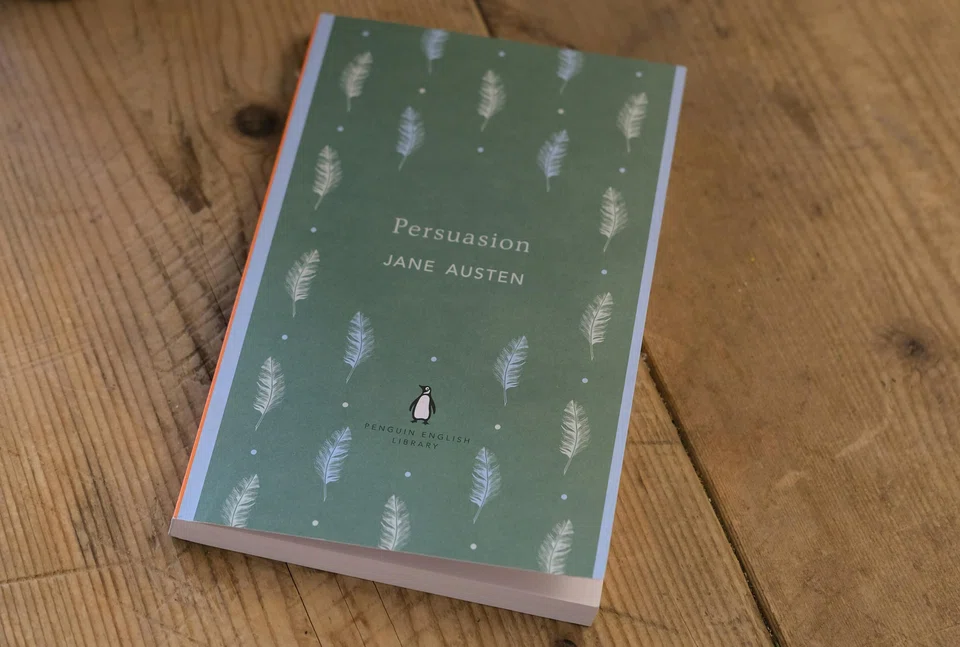
That all changes in her final novel, Persuasion, written during the freezing year of 1816 but not published until after her death.
It opens with the vain and self-absorbed Sir Walter Elliot, head of an aristocratic family, figuring out how to avoid imminent bankruptcy. Meanwhile, Captain Wentworth – the love interest for Persuasion’s main character Anne – has become rich and successful, just years after Anne was forced to reject him over his lack of social standing and financial means.
In this last book, money moves quickly and fortunes are lost and won. There’s almost certainly a message in there of hope and resilience for her disgraced but beloved brother, Whitley said.
Much of what we know about Austen is through her letters, and although she’s famous for not complaining, the summerless year tested that reluctance.
In a January 1817 letter to her friend Alethea Bigg, she writes that the “rain and dirt” have cut the family off from everyone else. It’s impassable even for her donkeys, which are “having so long a run of luxurious idleness” that she jokes they’ll have “forgotten much of their education” when they’re used to pull their cart again.
This wild and wet landscape makes its way into Persuasion, too. The action takes us out of the drawing room and onto the then dangerous Dorset coast of Lyme Regis. Though Austen was trapped by floods and poor health, her heroine, Anne, could wander the country.
Austen isn’t the only cultural figure influenced by Tambora’s eruption. Mary Shelley’s Swiss holiday in 1816 took place in nonstop rain. Stuck inside with her husband, Percy Bysshe Shelley, and Lord Bryon, the latter proposed a challenge for each to write a ghost story. Frankenstein was born. The volcano’s pollution also created the fiery sunsets and sunrises captured in paint by William Turner.
When faced with difficult times, humans are wonderfully innovative and creative. But we’ve been able to enjoy what emerged from Austen’s time because the climate change was a blip. What’s happening today, much more extreme in its deviation from the norm, is far from temporary and creates harder challenges.
Perhaps the most important lesson from Austen is that money isn’t immune. A failure to prepare one’s business or move with the times can be ruinous. Those neglecting to acknowledge climate change’s real and very serious consequences ought to remember that. BLOOMBERG
TRENDING NOW

Why US$100 oil, 5% US yields affect Singdollar, ringgit differently vs other Asean currencies

Anthropic to open Singapore office in October, sees it as ‘standout market’ for Claude

Singapore’s covered bond boom is largely a DBS story
Malaysian developer Eco World tops bids for Sin Ming area housing plot with S$1,612 psf ppr offer

