

Brics summit will put India’s diplomatic balancing act to the test
The schisms over the Iran crisis and calls to replace the US dollar will challenge the group’s unity
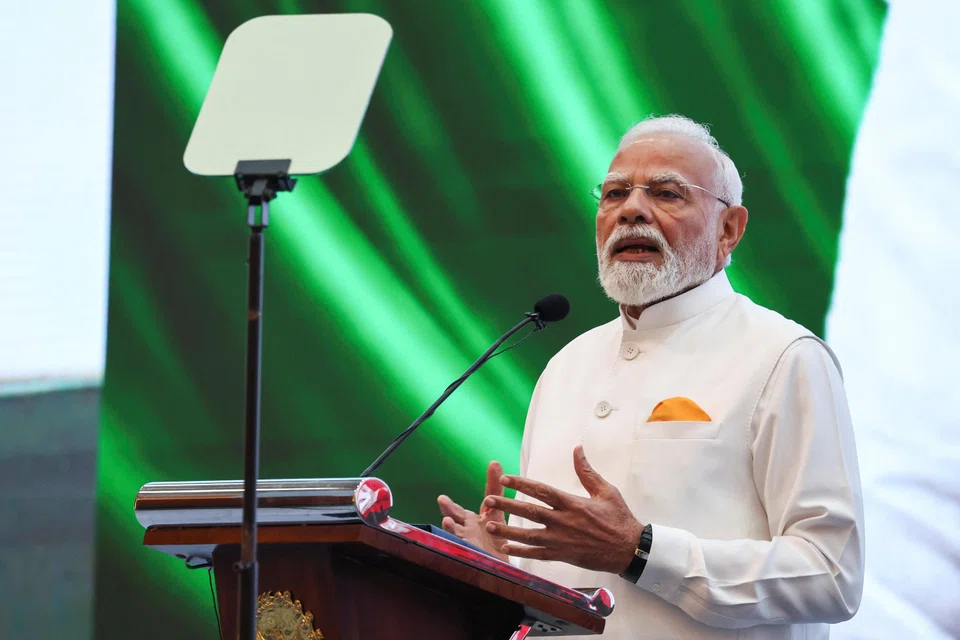
THIS year’s Brics summit, which runs from Sep 12 to 13, should be a victory lap for Indian diplomacy on the global stage. Yet, it will present Prime Minister Narendra Modi with one of his toughest challenges to date.
This is because New Delhi chairs the group at a paradoxical moment for the club of emerging markets.
Brics is growing in geopolitical weight. Core membership has expanded to 11 countries: Brazil, Russia, India, China, South Africa, Ethiopia, Egypt, Iran, the United Arab Emirates, Indonesia and Saudi Arabia, going by official Brics sources, although the kingdom has yet to confirm its status.
Its members encompass 40 per cent of the world’s economy and nearly half the world’s population.
In addition, the bloc has given partnership status to 10 nations, such as Malaysia, Thailand and Vietnam; meanwhile, other countries have expressed an interest in collaborating with the Brics forum.
But the group is simultaneously splintering from within.
Already, intra-bloc tensions have been on view in the run-up to this year’s India-led event, stemming especially from differences over the Iran conflict. This has its roots, in part, from the fact that Iran has used military force against the UAE, a fellow member of Brics.
In April, a Brics meeting of deputy foreign ministers ended without a joint statement despite intensive diplomacy. This forced the India chair to issue a face-saving statement instead.
Members of the bloc also have different visions of what the group should do – whether to act as a counter-hegemonic force against the US, or to boost multilateral economic engagement.
Modi is seeking to avoid these wrangles at the September meeting, which is themed around “resilience, innovation, cooperation and sustainability”.
Along those lines, he will want to issue a powerful declaration that focuses on issues including the impact of the Iran crisis on energy supply chains, global sanctions and tariffs, and trade in national currencies among Brics members.
Modi’s diplomatic efforts
To this end, Modi has embarked on shuttle diplomacy which encompasses not only the Brics event, but also the Shanghai Cooperation Organisation (SCO) Summit in Bishkek, Kyrgyzstan, from Aug 31 to Sep 1, and the United Nations General Assembly meetings in New York beginning Sep 8.
The pressure on him to deliver a successful summit, despite all the challenges, is especially high after neighbouring Pakistan’s high-profile statecraft in hosting US-Iran talks recently.
New Delhi was absent from those discussions, and there is a growing perception that it needs to show success at Brics to live up to its self-ascribed status as “Vishwa Guru”, meaning “teacher to the world”, a catchphrase commonly used by the Modi government to describe the country’s geopolitical status.
However, there are reasons for Modi to be hopeful that tensions stemming from the Iran crisis can be ameliorated at the event.
First, forums can offer a pathway for de-escalation. For instance, the SCO summit in 2020 helped calm ties between India and China amid armed skirmishes at their borders.
Second, a breakthrough may be possible not only because of Modi’s shuttle diplomacy, but also the expected cast of world leaders at the event, which will likely include Chinese President Xi Jinping, Russian President Vladimir Putin and Iranian President Masoud Pezeshkian.
If Xi attends, as expected, it will be the first time he has set foot on Indian soil since 2019, signalling the rebuilding of ties between Beijing and New Delhi.
Splits within Brics
Yet, even if a compromise on the Iran crisis can be found, splinters in the Brics club go well beyond this burning issue. One of the deeper and more fundamental differences is over the future strategic posture of the bloc.
Some members, including China, Russia and Iran, see Brics as a strategic counterweight to Western influence, while India and other states view the group largely in economic terms, with an aim of promoting issue-based cooperation.
For nearly two decades, New Delhi has also been consistent in its support for the bloc being complementary to existing structures, not an outright replacement.
A good example of these schisms is over payment systems and building alternatives to the US dollar in the global monetary system.
As has been argued by British economist Jim O’Neill, who originally coined the Brics term in 2001, advances in payment technologies mean that the emerging market bloc could potentially create an alternative financial system, after decades of US dollar dominance following the collapse of the Bretton Woods Agreement in the 1970s.
To be sure, New Delhi supports the settlement of bilateral trade within Brics in the countries’ respective national currencies.
However, it is not a strong advocate of the emerging de-dollarisation narrative, focused on replacing a US dollar-denominated international system, possibly with one based on the Chinese renminbi.
In 2025, Indian Commerce Minister Piyush Goyal went as far as to say: “Imagine us having a currency shared with China. We have no plans. It is impossible to think of a Brics currency.”
A tricky balancing act
This debate underlines the dual focus of India being not only a champion of the Global South, a role enabled by its membership in the Brics club, but also as a partner to the West through forums like the Quadrilateral Security Dialogue with the US, Australia and Japan.
In the first two decades since the original Brics formed, when the group comprised China, India, Russia and Brazil, the tension between these two roles has become more manageable for New Delhi.
Today, however, there is less space for compromise amid growing polarisation in world politics.
Modi’s diplomatic efforts could pay off; the odds of him brokering a summit consensus, including over the Iran crisis, may be underestimated.
However, if fragmentation continues to drive Brics nations and the US apart, it will be increasingly hard for New Delhi to straddle its dual goals, narrowing India’s pathway to strategic autonomy.
The writer is an associate at LSE Ideas at the London School of Economics
TRENDING NOW
PSD reviewing paper that alleges civil servants disproportionately bought homes near unannounced MRT stations

CapitaLand Investment’s retrenchments: Mind the downsides of a profitable business laying off staff

In a business takeover, how can landlords in Singapore protect themselves?
How Asia’s next generation is rewriting legacy through entrepreneurship

