

Gold, RTOs, wind energy: While new listings are floundering, other issuers are finding their way
It seems unlikely investors will be eager to take their chances with IPOs of untested issuers in the rest of the year

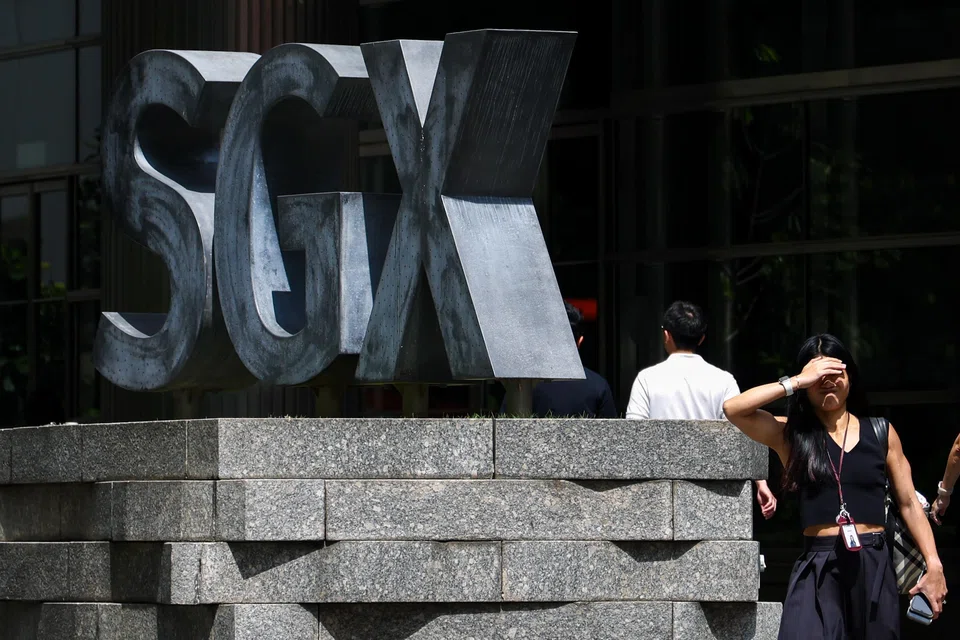
[SINGAPORE] While writing the Mark To Market column last week about Fu Yu Corporation seeking to transfer its listing from the mainboard of the Singapore Exchange (SGX) to Catalist, I was intrigued to learn that no less than half a dozen companies have moved in the opposite direction this year.
Why is that relevant? For one thing, only five issuers have obtained primary listings on the mainboard this year in conjunction with an initial public offering.
Of those five issuers, only EGP Energy Corp is currently above water. The other four – UI Boustead Reit, JustCo, Foundation Healthcare and All-Link Air and Sea – were trading below their respective IPO prices at the end of last week.
To be sure, the upgraders from Catalist – which included Choo Chiang Holdings, Lum Chang Creations and Ley Choon Group – have relatively small market caps, and operate rather old-fashioned businesses.
Moreover, their share prices have pulled back from the peaks they hit as they moved to the mainboard.
Yet, many long-term shareholders of these companies would have benefitted from the growth that made them eligible to graduate from Catalist to the mainboard. In contrast, IPOs are often too richly priced to deliver meaningful upside in the short term.
Indeed, it is not just the mainboard debutantes that are floundering. All three of the companies that listed on Catalist this year – Toku, The Assembly Place and Kin Global – are currently trading below their respective IPO prices too.
After this poor showing by newly listed companies, and with global interest rates rising, it seems unlikely to me that investors will be eager to take their chances with more IPOs of untested issuers during the remaining months of this year.
It may be far more worthwhile for them – and for the market as a whole – to support the evolution and growth of companies that are already listed and quietly leveraging big global currents for growth.
Going for gold
One big trend that has elevated a few Catalist companies to the mainboard this year is the lofty price of gold, driven by geopolitical uncertainty, rising inflation and waning faith in fiat currencies.
Notably, CNMC Goldmine transferred its listing from Catalist to the mainboard only last month.
The company said in May that the move would widen its investor base, and provide it with greater opportunities for fundraising. It also noted that its earnings had surged from US$4.1 million in 2023, to US$9.8 million in 2024, and to US$42 million in 2025.
CNMC said last month that its earnings for H1 2026 rose 17.8 per cent to US$18.6 million, driven by higher selling prices, which offset softer output stemming from lower ore grades at its mine in Malaysia.
CNMC ended last week at S$1.35, up 29.8 per cent since the beginning of the year.
Elevated gold prices have also boosted profitability at Aspial Lifestyle and MoneyMax Financial Services, which transferred from Catalist to the mainboard within days of each other in May.
For these pawnbrokers and jewellery traders, the increased opportunity to raise funds and broaden their investor base was not theoretical.
Before Aspial Lifestyle moved to the mainboard, its parent company pared its stake to satisfy the free float requirement, by selling 10 million shares at S$0.31 each.
After the move, Aspial Lifestyle went on to raise S$84.8 million of fresh equity through 1-for-30 preferential offering of 61.7 million shares and a placement of 149.3 million shares, at S$0.402 each.
Aspial Lifestyle ended last week at S$0.36, up 67.4 per cent since the beginning of the year.
On the other hand, MoneyMax raised S$44.3 million through a placement of 53 million new shares at S$0.835 each before its move to the mainboard. The new shares were taken up by Fullerton Fund Management, Lion Global Investors and Eastspring Investments, which are recipients of funds under the S$6.5 billion Equity Market Development Programmes.
Last week, MoneyMax also proposed a 1-for-3 bonus issue of new shares.
The stock ended the week at S$0.80, up 73.9 per cent since the beginning of the year.
Reincarnation on Catalist
Meanwhile, some moribund Catalist companies are being rejuvenated through the injection of new assets that may find resonance with local investors.
This week, on Tuesday (Sep 15), the former Hatten Land – which had ambitions of creating a “digital twincity” of Melaka – will begin trading on Catalist again under the name Metrocon. This follows a reverse takeover (RTO) of the foundation works specialist valued at S$28 million.
The company said last week that it had completed a compliance placement of 23 million new shares priced at S$0.20 each. The placement was supported by Ever Glory United chairman Sun Renwang, Lum Chang Creations managing director Lim Thiam Hooi and Hexagon Construction.
Based on its enlarged number of shares, the placement price puts Metrocon’s market cap at S$35.4 million. For the half-year to Jun 30, the group’s key subsidiary recorded revenue of S$24.4 million, and profit after tax of S$2.1 million. This included one-off listing expenses of S$1 million.
Its order book stood at S$85.3 million as at Jun 30.
Spinoff for greater visibility
Separately, Marco Polo Marine (MPM) said last week that it had inked an agreement to inject its shipyard assets into Fuji Offset Plates Manufacturing for up to S$139 million of new shares priced at S$0.701 each.
This RTO would ultimately result in MPM owning up to 76.8 per cent of the enlarged Fuji Offset, which will be renamed MPSE upon completion of the deal.
MPM said last week that its shipyard division recorded revenue of S$72.8 million for the nine months to Jun 30, and profit after tax of S$10.6 million. In its group financial statement, however, the shipyard division’s revenue for the same period was stated as S$41.4 million.
“Currently, a substantial portion of the shipyard’s revenue from intragroup projects – such as the group’s fleet renewal programme and its expansion into offshore wind support – is eliminated upon consolidation at the group level,” MPM explained in a statement.
It added: “Following completion (of the RTO), all revenue will be fully reportable and visible to the market, providing investors and analysts with clear visibility into the shipyard business’s earnings capacity and its strategic role in the offshore wind sector.”
This could foster a deeper understanding of the MPM group among investors, and spur its share price performance, in my view.
While all of this corporate activity is not a substitute for a more vibrant IPO scene, one could argue that the Singapore market ecosystem is quietly working – enabling issuers to broaden their investor base as they evolve, execute occasional turnarounds, and harness big global tailwinds that deliver strong growth.
TRENDING NOW

PSD reviewing paper that alleges civil servants disproportionately bought homes near unannounced MRT stations

CapitaLand Investment’s retrenchments: Mind the downsides of a profitable business laying off staff

In a business takeover, how can landlords in Singapore protect themselves?

How Asia’s next generation is rewriting legacy through entrepreneurship

