

The next frontier of Singapore’s urban infrastructure is recovery
As the Republic’s population reaches super-aged status, the city must include rest spaces in its city planning
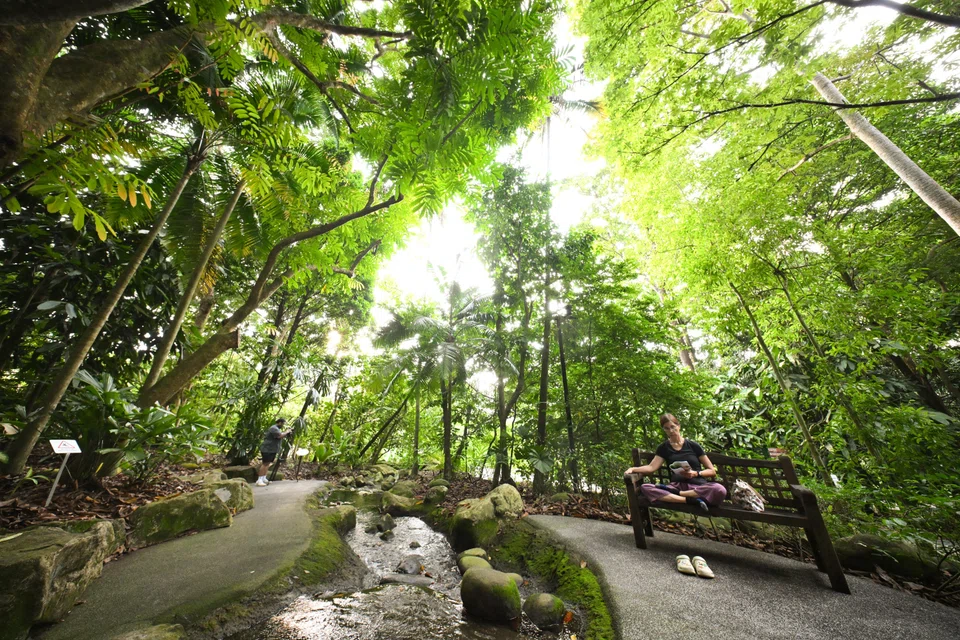
I HAVE been visiting Singapore regularly for 25 years. As I have aged and evolved, so too has the city. Today, Singapore has reached super-aged status, with more than one in five residents now 65 and above.
This year, the retirement and re-employment ages rose to 64 and 69, respectively; in October, the government confirmed that they will be raised again, to 65 and 70, from 2029 – a year ahead of schedule.
Singapore has always been a forward-thinking city, and while this move is a sound response to the nation’s demographic reality, it raises a question that goes beyond employment policy.
If people are going to live and work longer, what should their cities give back to help them sustain those longer lives? I believe part of the answer lies in an often-overlooked area of urban planning – recovery and well-being infrastructure.
Recovery is not the same as ageing well
Society’s collective thinking around longevity has long centred on healthcare and retirement savings as main support mechanisms for ageing well.
Accordingly, healthy ageing is seen as a long-term outcome, currently measured through lifespan, chronic disease and mobility.
By contrast, recovery is something different altogether. It is the regular, everyday restoration of our physical, mental and social energy. Access to it is what enables a return to a healthy baseline, to combat burnout, and to enjoy productivity in our later years.
If healthy ageing is where we hope to end up, recovery is what we need to do each day; it matters at 25 as much as at 65. Rest is the pause that enables recovery.
This makes recovery a long-term health sustainability issue, not necessarily just a medical one. Nobody can sustain five or six decades of work on will and effort alone. Burnout, chronic stress and poor sleep erode productivity, raise healthcare costs and shorten careers.
Pausing periodically, but without recovering daily, may sometimes give only short-term reprieve. A workforce that needs and wants to stay productive over the long run must be able to recover regularly, and close to home.
From an active city to a restorative city
Across civilisations and through history, human beings have always needed places to gather, recover, bathe, share food, rest, and reconnect with nature and one another.
Take communal bathhouses, saunas and thermal spaces, for example. Beyond the physical experience of heat and water, they enable a break from daily demands and participation in a shared ritual.
Research by the University of Eastern Finland links regular sauna use with better heart health. In today’s context, a bathhouse is also one of the few places where the phone stays in the locker, giving people a reason to come together.
In Japan, the neighbourhood sento has long been a place where grandparents and grandchildren share the same bath; in Budapest, regulars play chess in the steaming outdoor pools of the Szechenyi Thermal Bath, which opened in 1913.
That human connection matters; studies show that people with strong social ties are more likely to have healthier lives and thrive than those without.
Combining water and heat is one approach. Gardens work on the same principles.
NParks’ Therapeutic Garden at West Coast Park, for example, has a sensory path, hands-on planting beds and relaxation zones. It also hosts gardening activities and guided tours with community volunteers.
NParks’ research with the National University of Singapore found that individuals who visited a park during the day were less stressed that evening.
Recovery works best in layers – from small, everyday spaces close to home to larger destinations where people from different generations gather. No single destination can be the whole answer.
What Singapore can do next
The Republic already has strong foundations to build a healthy city. Its planning has long promoted active living and social connection: The park connector network, the hawker centres that serve as the city’s shared living rooms, and more than 230 Active Ageing Centres give older residents places to meet close to home.
Independent bathhouses in Singapore are growing popular, and offer a third space, beyond home and work, for regular access to rest and recovery, particularly for busy professionals.
The is well-placed to further its progress on enabling healthy populations.
Two steps could help: First, design for rest within the spaces Singapore already has. NParks is starting to do this, with invigorating landscapes and more rest points along park connectors. The same thinking could shape community hubs, void decks and new estates, so that quiet corners for recovery sit alongside places to exercise.
Second, build on Healthier SG, which pairs residents with a family doctor and a personal health plan, by encouraging people to include time in parks, gardens and recovery spaces as part of that plan.
Singapore has shown that a city can and should be planned to be liveable. The task now is to plan future cities that support people’s healthspan and recovery.
That means expanding our notion of infrastructure to move beyond hospitals and highways, and to include spots for people to step away from work in order to come back whole, rested and ready to participate.
Rest is not the opposite of productivity, but one of its foundations. A well-functioning city depends on well-functioning people, and Singapore, with its track record of planning ahead, is in a strong position to show the world how to build for both.
The writer is founder and CEO of Therme Group
TRENDING NOW
LNG, stronger regional power links key to Asean’s energy resilience: Shell

JPMorgan, BlackRock among those making bid to manage CPF savings
David Neo, Heng Swee Keat to join 120 Singapore delegates in Kobe for Spotlight Singapore

As Indonesia picks new vice-president to succeed Gibran, investors see risks and opportunities

