No free lunch: South-east Asia’s price controls become harder to sustain
Subsidies on household essentials pose a fiscal burden, but their popularity means they’re tricky to roll back


[SINGAPORE] At supermarket counters from Kuala Lumpur to Manila, global macroeconomic shocks have been jacking up grocery bills – while extracting much higher costs from many governments.
In much of South-east Asia, food carries a significant weight in the consumer price index basket. The prolonged shutdown of the Strait of Hormuz has pushed up global oil prices, in turn raising transportation, logistics and production costs. Higher fertiliser prices have also made agricultural production costlier, while El Nino-related weather conditions have hit crop yields.
But these cost increases have not uniformly translated to higher consumer prices at the till – partly because some governments have stepped in to cap prices or offer subsidies.
Can they afford to keep intervening to protect household purchasing power?
Established caps
“Countries with larger buffers, stronger currencies or diversified import sources can absorb more of the shock,” says Maybank analyst Brian Lee. “Countries with thin inventories or greater import dependence are considerably more exposed.”
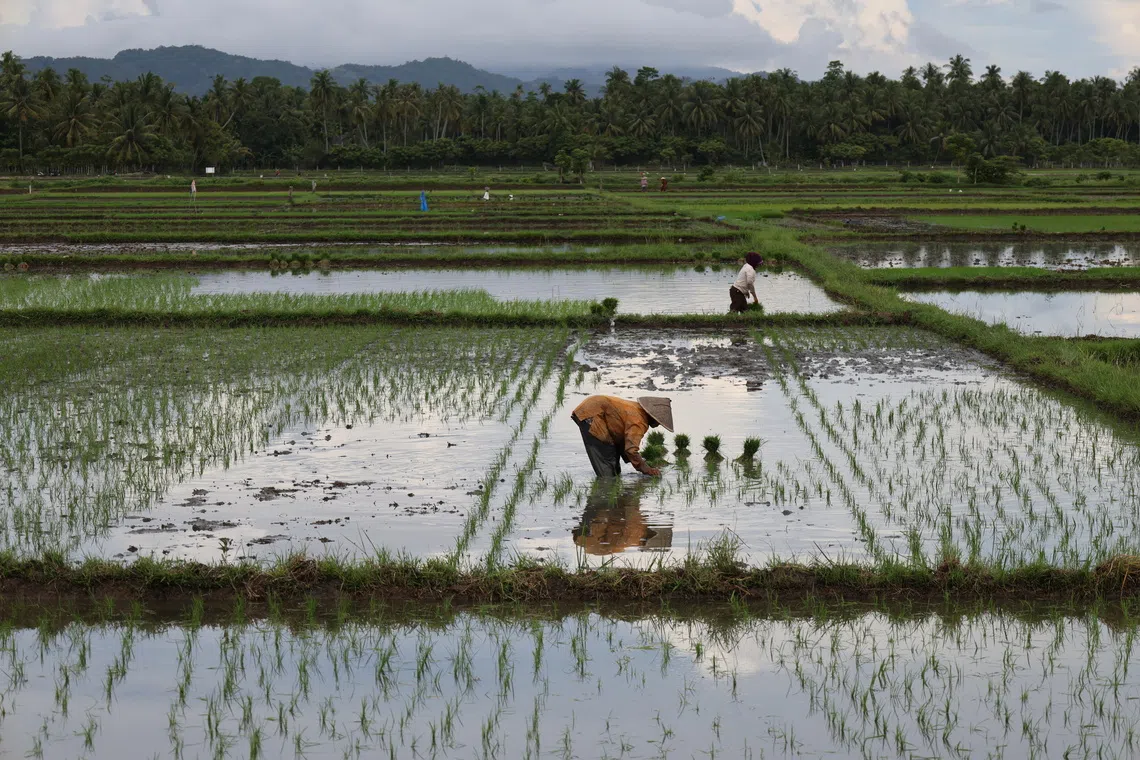
Food prices in the Philippines rose by 6.4 per cent year on year in October, down slightly from inflation of 6.8 per cent in September. Yet rice prices in the country – which produces more than 70 per cent of its rice supply domestically – still picked up at a faster clip.

Food has been a key driver of headline inflation in the Philippines. Catharine Kho, a senior economist at the Asean+3 Macroeconomic Research Office (Amro), notes that heavy rains and flooding disrupted production and deliveries recently, while “higher fuel costs and a weaker peso added to these pressures”.
That’s even though countries such as the Philippines and Indonesia have stockpiles of staples such as rice to serve as what Amro economist Ravisara Hataiseree calls “strategic food reserves… to buffer against sudden supply disruptions”.
At the same time, another factor determining the extent of cost pass-through in developing economies has been state controls on the prices of staples.



Price controls are well established in the region, where policymakers favour mandatory price ceilings for providing immediate and highly visible relief to keep essential goods affordable, while subsidies are preferred for preserving the incentive to produce or supply goods.
As Lee points out: “For staples such as rice, sugar and cooking oil, governments are more inclined to intervene because consumption is widespread, these goods carry high social and political salience, and poorer households spend a larger share of their income on them.”
RHB group chief economist Barnabas Gan comments that food inflation in Malaysia has “remained relatively contained compared to what would otherwise have been expected”, thanks in part to its price controls on a range of grocery staples.
Notably, Malaysia has capped the price of standard coarse white sugar at RM2.85 (US$0.70) per kilogram since 2018. This is among the lowest prices in the region, according to S&P Global Market Intelligence economists Ahmad Mobeen, Lei Yi and Harumi Taguchi, who highlight Malaysia’s “longstanding system of administered prices”.
While direct consumer subsidies for sugar were abolished in 2013, Malaysia has offered incentives to sugar refiners since late 2023, to maintain retail price stability.
Responsive rollouts
Beyond long-running schemes, governments may also step in on an ad-hoc basis to manage prices – such as the Philippines’ imposition, in May, of a 50-peso (US$0.79) ceiling on certain rice imports for 30 days.
In response to the weather-related production declines, the Indonesian government in early November announced that it would distribute one million tonnes of rice through its existing Food Supply and Price Stabilisation programme at 12,500 rupiah (US$0.68) per kilogram, below the market rate of between 15,000 and 17,000 rupiah per kilogram.
Established schemes to tackle fuel costs – another common target of government price controls – have taken on increased prominence in the wake of the global energy shock too.
For instance, Thailand has an oil fuel fund that the government taps to compensate for the increase in retail fuel prices when oil prices surge.
Nomura chief Asean economist Euben Paracuelles sees a sharp divergence in energy price increases across South-east Asian states depending on whether they maintain fuel subsidies.
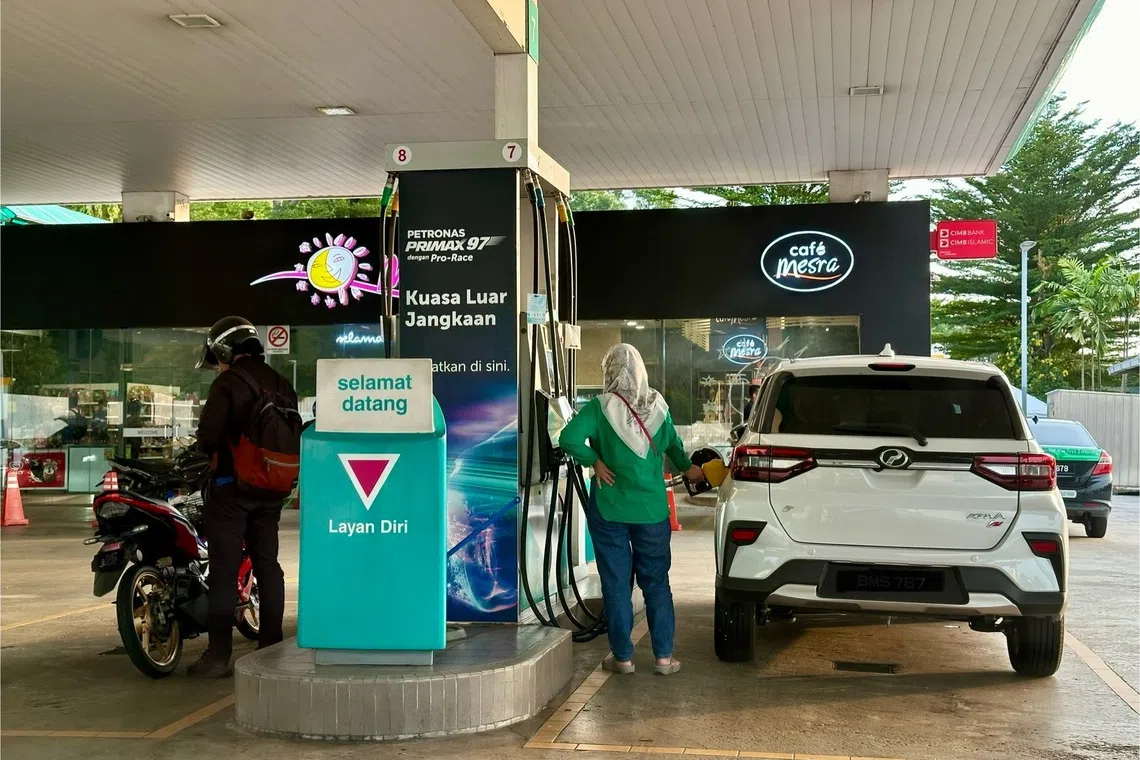
Malaysia uses subsidies to maintain RON95 fuel prices at RM1.99 per litre for eligible residents, while Indonesia keeps subsidised prices for RON90 petrol at 10,000 rupiah per litre and for biodiesel blend at 6,800 rupiah per litre.
Such fuel subsidies have been effective in curbing inflation, with levels within authorities’ target ranges, Paracuelles says.
He pointed out that Malaysia and Indonesia have seen zero increase in subsidised retail fuel prices since the global energy crisis began with the outbreak of hostilities in the Middle East in February.
At the opposite extreme, the Philippines has no measures to tackle fuel price changes – “so the pass-through is quick and very large”, he said, with 50 to 60 per cent jumps in retail fuel prices in the same period.
Such moves come as more than 80 per cent of Asia-Pacific economies have introduced measures to dampen the pass-through of higher energy prices since February, according to an October regional assessment by the International Monetary Fund.
Conversely, Singapore manages inflation through an exchange rate-based monetary policy and direct household support in the form of vouchers, rebates and payouts. The government explicitly avoids enforcing price ceilings or subsidies to prevent market distortions.
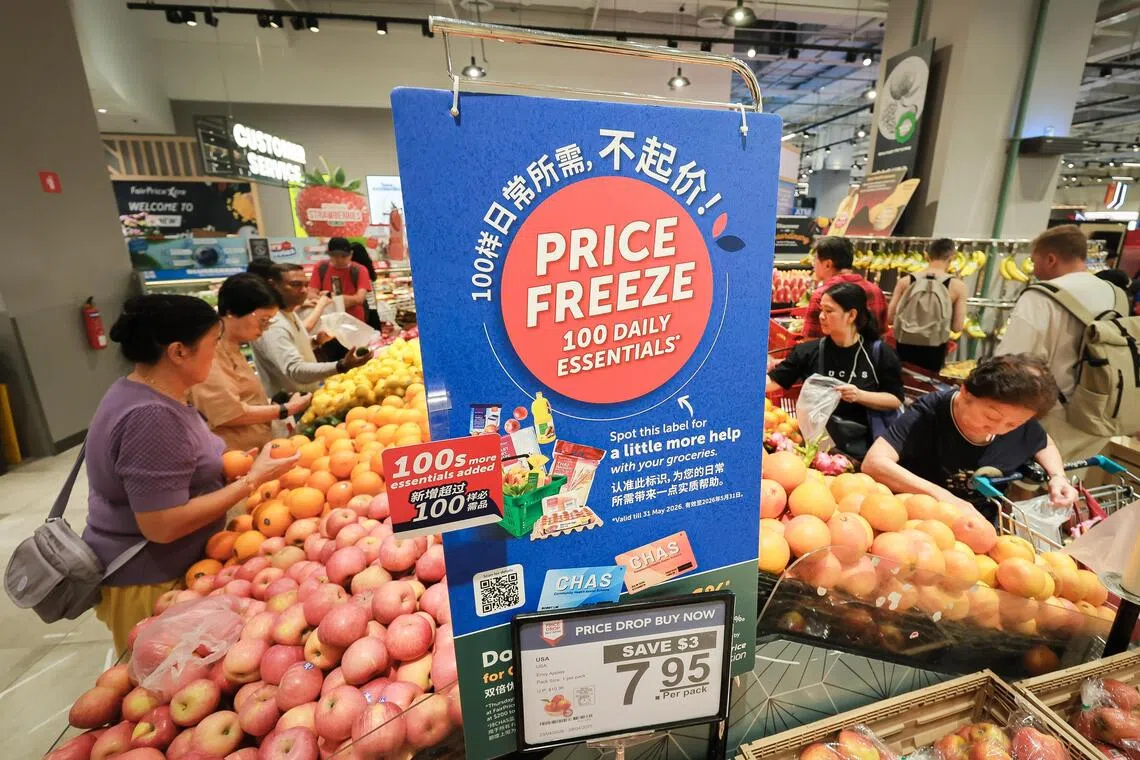
But the National Trades Union Congress-affiliated FairPrice Group (FPG) implements voluntary, time-limited price freezes and discounts on daily essentials. In October, it lowered prices for chicken and eggs – two popular protein staples – until the end of 2026.
In all, FPG has committed more than S$7.5 million worth of savings on groceries and household essentials in 2026, which the retailer attributed in part to concerns over global uncertainty and potential pressure on food and commodity prices.
FPG may be able to negotiate with suppliers for lower prices or absorb some of the higher costs by accepting lower margins, according to Chua Yeow Hwee, an assistant professor of economics at Nanyang Technological University.
S&P’s team adds that the market leader’s pricing decisions may also exert some competitive pressure on other retailers and keep a lid on price increases in the market.
Still, watchers say the overall impact of such voluntary price controls on inflation is likely limited.
As a profit-seeking entity, FPG is limited by its own financial resources, despite its social mandate, UOB head of research Suan Teck Kin observes.
The S&P analysts add that such initiatives “cannot fully offset sustained increases in global food, energy, fertiliser or freight costs, particularly given Singapore’s high dependence on imported food”.
Price controls’ high costs
Government price controls may be effective in keeping price rises at bay – to some extent.
At the same time, they can also have unintended negative consequences.
Broad-based price caps and blanket subsidies may benefit not only lower-income households but also affluent ones, resulting in inefficiencies.
Along those lines, the availability of RON95 fuel that is priced significantly below market levels in Malaysia may lead to cross-border leakages, particularly along the Malaysia-Thailand border, according to Gan.
Price controls can also encourage overconsumption. If set below market levels, they may compress margins for producers and retailers, weaken supply incentives and lead to shortages or lower-quality goods.
In Malaysia, cheap sugar has even created tension with public health objectives and burdened the heavily subsidised healthcare system, the S&P analysts remark.
Above all, subsidies come with high public expenditure and, in many cases, become extended drains on state coffers.
S&P estimates that sugar subsidies provided to two refiners in Malaysia, which were initially intended as a stopgap measure in November 2023, now cost the nation RM42 million each month.
NTU’s Dr Chua notes: “(Malaysia’s) fuel subsidy bill is projected to approach RM40 billion in 2026, more than double the amount originally budgeted.”
Lee suggests that the Indonesian government “has had to reprioritise and cut expenditure elsewhere” as a result of commitments not to increase certain fuel prices until the year-end, despite the steep rise in subsidy-related spending.
And although Thailand’s Oil Fuel Fund “looks helpful”, prolonged and pronounced increases in oil prices could mean that the fund’s deficit can widen rapidly, Paracuelles says. That deficit now stands at over 100 billion baht (US$2.98 billion).
If this continues to climb towards 120 billion baht, the government may be pushed to turn to measures such as raising more debt.
“You’re kind of hitting close to that limit already, so I think the response is… try and allow diesel prices to adjust a little bit higher, so (as to) reduce the pressure on the fund,” he says.
Running on fumes
Given that price shocks may be protracted, state-funded price freezes may not be viable in the long term.
Byunghoon Nam, deputy group head and senior economist at Amro, notes that fiscal revenues have generally held up well, on the back of solid economic growth and – ironically – elevated inflation.
“However, borrowing costs are rising, as reflected in higher sovereign bond yields,” he says.
Larger, more persistent energy and food price pressures could increase the strain on public finances and crowd out other spending priorities.
He adds: “Any additional borrowing at elevated interest rates would also raise debt-servicing costs, further limiting fiscal flexibility.”
Says OCBC chief economist Selena Ling: “It’s not just a function of borrowing costs, but also their fiscal position and foreign exchange reserves to sustain those subsidies when global energy or food prices are rising without destabilising their currency, balance of payments or public finances.”
Governments that run fiscal deficits and subsidise prices for certain goods may need to cut back on subsidies or raise new sources of revenue, such as through taxation, she says.
Regional inflation is expected to stay high into early 2027.
“There may be a time lag effect on food prices, even if energy prices stabilise... The risk is for a longer period of elevated and volatile food prices,” says Ling.
The capacity to absorb these prolonged shocks varies by economy. Countries most at risk have large budget deficits, high public debt and sizeable recurring subsidies, as well as current account deficits, reliance on imports, and weak growth, among other factors.
Ling flags economic vulnerability in the Philippines, Indonesia, Thailand, Vietnam and India, while Singapore, China, Japan, South Korea and Brunei may be more resilient.
Meanwhile, Malaysia’s state-owned energy company Petronas has recorded “some windfall revenues” on climbing oil prices, which Paracuelles says creates “somewhat of an offset”, as these funds can be tapped by the government to defray subsidy costs.
To keep fiscal outlay sustainable, analysts suggest governments implement targeted and temporary support measures – such as handouts or vouchers as direct offsets, which can be more efficient and more equitable than blanket subsidies – while allowing prices to reflect underlying supply and demand conditions.
Price caps and price-related subsidies can be justified as temporary measures, says Nam, particularly when economic and social stability are at risk. “They can buy time to introduce more targeted support.”
But these should be withdrawn as underlying shocks subside, to reduce the fiscal cost and market distortion, he adds.
In the longer run, improving agricultural productivity, diversifying imports and strengthening supply chains provide more sustainable protection against future shocks, Dr Chua adds.
Sticker shock
Even if price shocks are persistent, subsidies and price caps should be phased out gradually, unless there is a very significant threat to macro-financial stability, Nam tells The Business Times.
He adds that sunsetting subsidies should take place with clear communication from the government to the public, to restore market price signals and contain fiscal costs, while targeted support has to be strengthened for the neediest citizens.
Says Paracuelles: “The way to do it is to have a bit of a medium-term transition plan… obviously you can’t worsen the shock by taking out the subsidies in this period. But at the same time, you also don’t want the subsidies to stay there forever.”
But this may be easier said than done.
“In reality, there are societal pressures and political aims involved as well,” Lee acknowledges. Given ground conditions, “policymakers may not necessarily pursue the most economically efficient way” to temper the impact of inflation.
Letting the cost of living go up is generally unpopular with voters.
Continued fuel subsidies are “partly for political considerations”, Paracuelles says, pointing to upcoming elections in Malaysia, as well as to recent protests by Indonesian students in end-October over issues that included rising prices and dwindling subsidies.
Once price controls are introduced, they can be difficult to unwind, with Gan noting that households and businesses “become accustomed to the support” and Ling pointing to an “entitlement mindset”.
“For domestic sociopolitical (reasons), many governments would still want to be seen as proactively shielding their voters from any sharp inflation shock, especially if it hits essentials like food,” Ling says.
“When you increasingly look around the world and see social protests about cost of living and jobs, policymakers would be under pressure to intervene... maybe the ‘here and now’ matters more for governments facing imminent elections.”
Decoding Asia newsletter: your guide to navigating Asia in a new global order. Sign up here to get Decoding Asia newsletter. Delivered to your inbox. Free.
Copyright SPH Media. All rights reserved.