

People care about clean air. Climate action starts there
As haze returns, the case for acting against pollution in the atmosphere and global warming sharpens
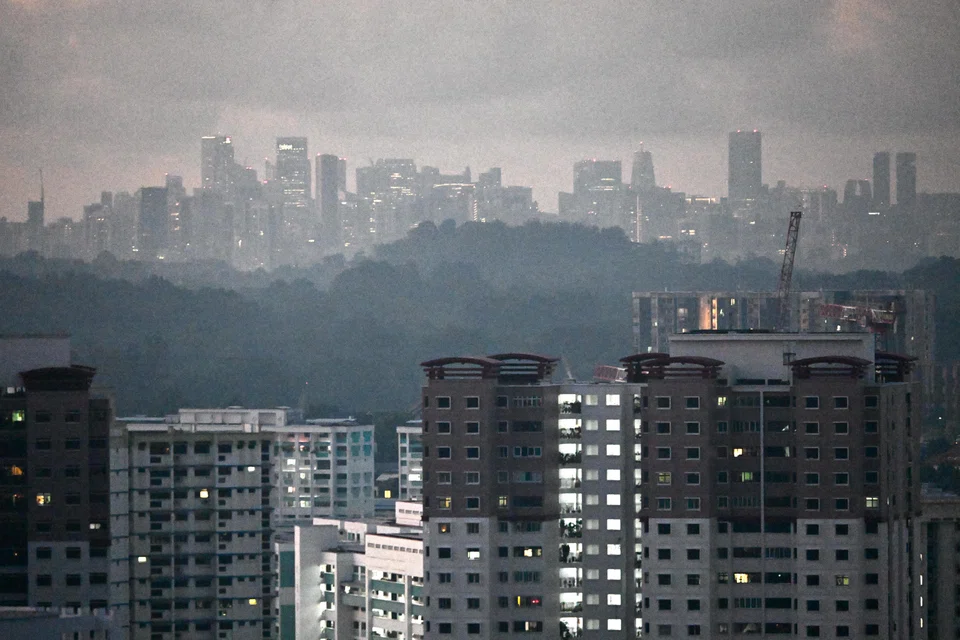
[SINGAPORE] Singapore’s sky has just sent us a warning.
On Sep 4, the National Environment Agency reported that the 24-hour Pollutant Standards Index (PSI) reached 104 in central Singapore. A PSI between 101 and 200 is considered “unhealthy”, and it is the first time since October 2023 the reading has hit that level.
Dry conditions had intensified hot spots over Sumatra and Kalimantan, while south-eastern winds could carry smoke from southern Sumatra.
The Asean Specialised Meteorological Centre had raised its southern region alert to Level 3, signalling greater transboundary haze risk.
Singapore is prepared; 28 agencies stand ready if the PSI crosses 100. Masks are stockpiled, while schools and care facilities have air purifiers.
However, these safeguards manage the consequences of pollution; they do not prevent it from reaching us.
Clear skies need not mean clean air. Vehicles, ships, power generation and industry emit without a burnt smell or visible haze.
If concern begins at PSI 101 and ends with the monsoon, Singapore remains trapped in response mode.
Different clocks, common cause
To break this cycle, we must understand that prevention means reducing emissions before they enter the atmosphere.
Regional fires emit not only smoke, but also carbon dioxide, methane and black carbon that drive atmospheric warming.
Air pollution and global warming are thus connected, but they run on different clocks.
Air pollution is a concentration problem: Harmful particles and gases can damage people near their source within hours.
Global warming is an accumulation problem: Carbon dioxide mixes globally, persists for centuries and causes increasing damage, as emissions build.
Bad air can close a school field or clear a shopping district tomorrow. Global warming changes climate patterns – temperatures, rainfall and more – and drives severe environmental impacts such as rising sea levels and extreme events for generations.
Neither threat is less important.
Yet, cleaner air offers something global-warming policy often cannot: an immediate return citizens can see, feel and calculate. That makes air pollution a powerful entry point for climate action.
Dirty air is bad for business
The economic damage by air pollution is immediate. It drives customers away, tourists postpone visits or avoid outdoor attractions, and residents stay indoors.
Singapore’s 2015 haze produced losses in tourism, hospitality, retail and entertainment, as footfall collapsed.
Restaurants suffer quickly, as households cook at home or order delivery instead of dining out. A 2025 study covering 52 Chinese cities found that higher PM2.5 levels reduced dining out and caused a net loss in restaurant revenue. Delivery cannot replace every lost sale.
No sector escapes the productivity cost.
Pollution not only increases illness and absenteeism, but also affects employees who remain at work.
Among call-centre workers in China, a 10 per cent rise in the pollution index reduced daily calls handled by 0.3 per cent, despite employees working indoors. Clean air is a productive economic asset.
Shifting the unpaid bill from polluters to victims
As these costs rarely appear on corporate balance sheets, polluting activities seems cheaper than they really are.
Businesses pay for air filtration, masks, medical leave, disrupted schedules, lost productivity and cancelled activities. Families pay for treatment, caregiving and lost income.
Taxpayers fund growing government expenses for healthcare, public safety and social support, even when pollution is not recorded as the cause.
Repeated haze can also weaken Singapore’s reputation as a clean, liveable destination for visitors, workers and investors.
The World Bank valued global PM2.5 health damage in 2019 at US$8.1 trillion.
In Singapore, Professor Euston Quah and Associate Professor Chia Wai Mun from Nanyang Technological University estimated that a 15 microgram per cubic metre change in particulate concentrations costs Singapore about S$3.75 billion.
This translates to S$5.18 billion in 2025 values, equivalent to 2.04 per cent of gross domestic product in 2009.
In 2015, haze imposed S$1.83 billion, S$2.17 billion in 2025 values, in tangible damage and S$0.36 billion in intangible losses – S$0.43 billion in 2025 values – on Singapore.
The Indonesian fires behind the haze released 1.75 billion tonnes of carbon dioxide equivalent.
Polluters do not bear the full cost of the damage they cause. Businesses, health systems and citizens footing the bill do.
The human and social toll
The World Health Organization estimates that 99 per cent of people breathe air exceeding its guidelines.
Pollution is associated with 6.7 million premature deaths annually, including 4.2 million from outdoor pollution in 2019, mainly through heart disease, stroke, respiratory illness and cancer.
Long-term exposure has also been linked to male infertility, miscarriage and stillbirth.
Newer research reveals that pollution’s effects can extend beyond physical illness to mental health and public safety.
A UK study linked long-term exposure to common pollutants, even at low levels, to risks of depression and anxiety.
Studies in London and the US show that daily air pollution spikes correlate with increase in crime. One study estimated that a 10 per cent reduction in daily PM2.5 and ozone by 10 per cent could avoid US$1.4 billion in annual crime costs.
These findings should not be sensationalised. While pollution does not mechanically turn people into criminals, plausible pathways include inflammation, impaired cognition, stress, irritability and reduced self-control.
Psychological and cognitive stress carry real costs.
Cutting pollution at the source
Notably, air pollutants and warming emissions often share a source: combustion.
Burning coal, oil, diesel, gas and biomass produce carbon dioxide, fine particles and nitrogen oxides. Forest and peat fires release carbon dioxide, methane and soot.
Source control can both improve air quality and slow global warming. Energy efficiency burns less fuel. Cleaner electricity displaces dirtier generation.
Electrified transport removes tailpipe pollution and, when powered by cleaner electricity, cuts carbon dioxide. Preventing open burning avoids smoke and greenhouse gases together.
Black carbon makes the connection especially clear.
This component of soot, which enters lungs and causes health issues, also absorbs sunlight, warming the atmosphere. Methane is a powerful warming gas and a contributor to ground-level ozone, which harms breathing and crops.
Cutting these short-lived pollutants improves air quickly and slows warming within years rather than centuries. The United Nations Environment Programme estimates that implementing available measures could help in avoiding up to 0.6 deg C of warming by 2050.
In South-east Asia, preventing forest and peat fires would protect the health of individuals from haze-related issues and avoid economic losses, while reducing warming over time.
Meanwhile, societies must continue to bring carbon dioxide emissions to net zero to halt their accumulation.
It starts with clean air
Global-warming policy often asks people to accept immediate costs for benefits that appear distant and widely shared. Clean-air policy changes that political equation.
People experience fewer asthma attacks, healthier children, safer outdoor work, lower medical costs and clearer days. Those immediate gains can build support for the deeper energy and land-use changes that global warming demands.
We should distinguish air pollution from global warming, but not separate their solutions. One threatens the next breath; the other reshapes the world inherited by future generations.
Much of the same combustion drives both.
Prevent the fires. Burn less fuel. Replace dirty energy. Cut soot and methane, while driving carbon dioxide towards zero.
The route to slower global warming begins with a promise everyone understands: cleaner air and a stronger economy – now.
Professor Euston Quah, president of Economic Society of Singapore (ESS), is the Albert Winsemius chair professor of economics and director of the Economic Growth Centre at Nanyang Technological University. Dr Eugene Or, honorary assistant secretary of ESS, is a lecturer at the Singapore University of Social Sciences.
TRENDING NOW

He built the Vingroup empire. Now South-east Asia’s richest man is handing some key roles to his sons
Quarter of Singtel special discounted shares sold ahead of CPF Board transfer

Why Tan Aik Keong of digital solutions specialist Agmo wants to make himself less indispensable
Asia needs new energy security architecture

