

Singapore’s 2027 Asean chairmanship could test the balance of power in Asia
Much depends on the Republic’s response to three potential developments next year
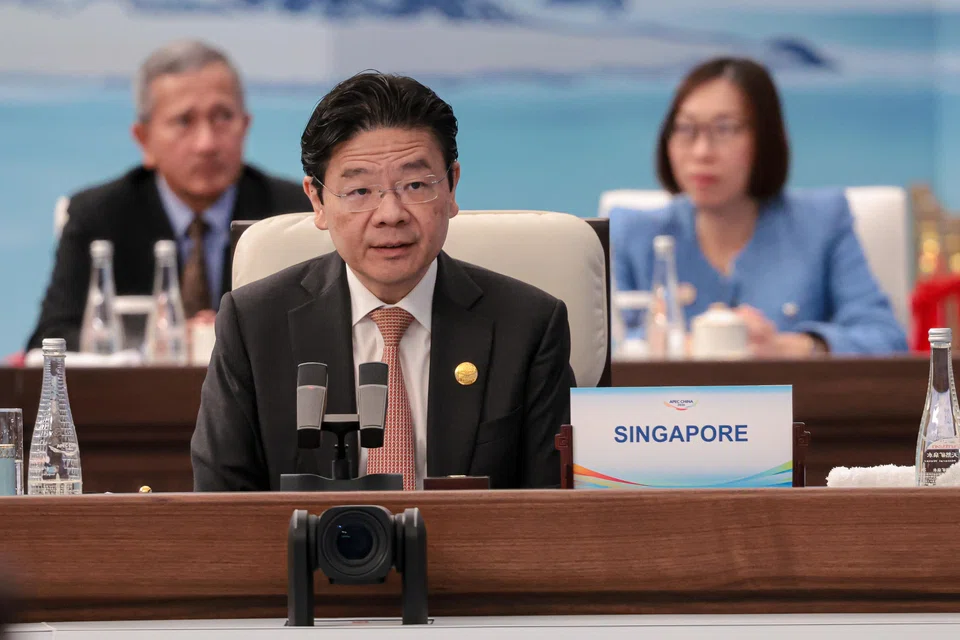
FOR two decades, China and Asean have tried to agree on rules for the South China Sea, where Beijing’s claims overlap with those of Brunei, Malaysia, the Philippines and Vietnam.
In mid-November 2026, Manila, Beijing and Asean settled about 80 per cent of a code of conduct for the sea – but this missed their 2026 deadline to conclude discussions.
Singapore, which chairs Asean from Jan 1, 2027, inherits the unfinished 20 per cent, and with it the job of brokering between Beijing and four of the bloc’s own members.
At the same time, it has to keep the US engaged in the region. That task makes this year’s IPS-Nathan Lectures, run by the Institute of Policy Studies, timely.
The speaker, Ng Chee Khern, a former air force and intelligence chief who heads the Iseas-Yusof Ishak Institute, rightly urges “strategic empathy” towards both great powers in his lecture “The Power to Choose”.
We can go further. Empathy explains motives; it does not tell us when a powerful nation becomes a dangerous one. Two tests do: the balance of power and the balance of threat.
The Lowy Institute in 2025 ranked China ahead of America on military posture in Asia, referring to the ability to deploy armed forces quickly and sustain them if a conflict breaks out in the region.
But power need not threaten. Political scientist Stephen Walt argued that states balance against threat, judged by proximity, offensive capability and perceived intent, rather than military strength alone.
Beijing has carefully adjusted how threatening it appears to different Asean members, depending on its goals. For instance, it chose to confront the Philippines at sea, but showed restraint towards Vietnam.
That calibration has paid off. In April, an Iseas survey showed that 52 per cent of South-east Asian opinion leaders would side with China over the US if forced to choose. Beijing has won preference, if not trust. Asean has hedged its diplomatic moves accordingly.
Hedging, however, rests on a US-led balance, which America maintains for its own reasons: to deny Beijing regional hegemony.
But Washington appears to be wavering. At the recent Asean Summit, US President Donald Trump joked that leaders should call him if Secretary of State Marco Rubio was slow to respond to them: “I’ll say, ‘Marco, you’re fired.’”
Even though Trump seemed to say that in jest, praising Rubio later, a president sure of America’s standing in South-east Asia would not need the line.
Three tests for Asean
Against that backdrop, Prime Minister Lawrence Wong has set Singapore’s theme for 2027 as “Deeper Integration, Wider Partnerships”. Three issues will test if the Republic can fulfil that goal.
The first is Taiwan. War is unlikely as invasion remains a gamble for Beijing, but its damage would not stay in the Western Pacific.
A blockade of Taiwan could invite US and other forces to conduct a counter-blockade of Chinese shipping at the Malacca Strait, which carries nearly 29 per cent of seaborne oil. War-risk premiums would hit the fuel, food and components crossing the South China Sea to South-east Asia.
Asean has little sway in great-power rivalry; it can only choose its response, as PM Wong has said.
One choice is to avoid entanglement. Ng explains why: China’s presence in the region is geography, America’s is political will. South-east Asia must live with Beijing after any war, whatever decisions Washington makes during one.
The other response is resilience. Asean has taken steps to boost it. The bloc is awaiting ratification of its renewed fuel-sharing pact and the crisis provisions of its upgraded goods-trade agreement.
Singapore has strategic partnerships with Australia and New Zealand, both of which sit on southern routes that a northern war would barely touch.
The Republic has pacts with both to keep fuel and food flowing in a crisis; as chair, it should consider taking these arrangements region-wide.
The next test for Singapore’s Asean chairmanship is artificial intelligence. AI and chips are security goods, not trade goods. Washington’s new chip-licence rule for four Asean states, aimed at Chinese firms renting computing power there, proves it.
Yet, the region cannot afford to pick between China and the US, as both supply chips and models. AI Singapore’s Sea-Lion model, for instance, draws on both Alibaba’s Qwen and Google’s Gemma.
But Asean can build its own resilience through an “AI archipelago”. That could link national AI ecosystems into a regional chain, from Singapore’s chip design to Johor’s land and Penang’s fabrication, bound by common data rules and standards, and open to American chips and Chinese open-weight models alike.
By deepening integration this way, the region ensures that export controls would be less likely to disrupt the whole ecosystem. Importantly, it gives small firms – which employ most of the region’s workers – a market beyond their borders.
The third, and most important, issue is the code of conduct for the South China Sea. One outstanding clause is whether outside powers may hold military exercises in disputed waters.
Beijing wants them limited, since drills with the US help claimants contest China’s interests there. A code that shuts America out would hand Beijing the balance by treaty.
As a non-claimant to the South China Sea, Singapore can offer Beijing predictability, such as notice of drills and hotlines, without conceding a veto over who trains with whom.
Keeping the US engaged in South-east Asia sustains the balance of power; doing so without leaving Beijing feeling encircled keeps the balance of threat from tipping.
Asean will have to sustain both – and the work continues, in no small part, under the chairmanship of its smallest member.
The writer is the chairman of the Public Affairs Group at PRCA Asia Pacific and a director at Temus, where he heads corporate affairs. He is currently an MA candidate at the War Studies Department of King’s College London.






