

China new home prices fall for third straight month as prolonged property slump weighs on economy
Annual price decline narrows to 3% in August from 3.2% in July
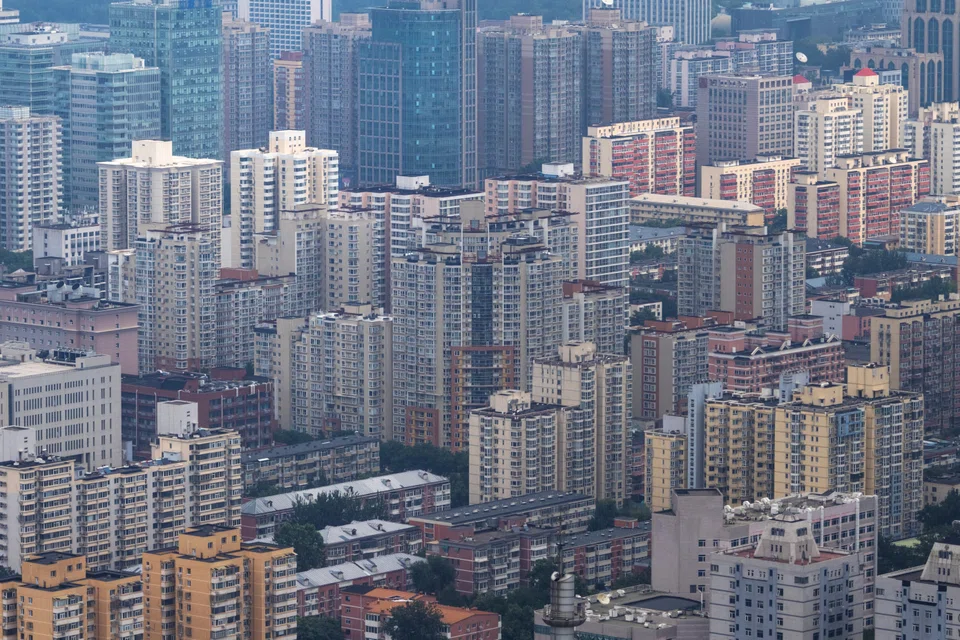
[BEIJING] China’s new home prices fell again in August, underscoring persistent weakness in the housing market and suggesting the economy will struggle to generate momentum from domestic demand.
The sector’s prolonged weakness suggests the real estate market will remain a drag on the economy, constricting domestic consumption and straining local government income, unless policymakers launch strong stimulus to revive the sector.
The economic imbalance has left policymakers facing growing pressure to revive the housing market with support measures and boost consumer spending to put growth on a more sustainable footing.
New home prices fell 0.1 per cent in August, matching the decline in July and June, according to Reuters calculations based on data released by China’s National Bureau of Statistics.
On an annual basis, prices fell 3 per cent, narrowing from a 3.2 per cent drop in July, the slowest pace of decline in 2026.
“The year-on-year decline in home prices across cities of all tiers continues to narrow, which shows that the previous sustained downward trend in prices has been contained,” said Zhang Dawei, chief analyst at Centaline Property, adding that the market had likely passed its most pessimistic phase.
Still, a broad-based nationwide recovery was unlikely in the near term given the seasonal slowdown typically seen at this time of year, he said.
Price performance was uneven across the country. The biggest cities showed signs of stabilisation while smaller markets continued to struggle.
New home prices in tier-one cities rose 0.1 per cent in August from July, snapping a prior monthly drop, while tier-two and tier-three cities saw declines.
SEE ALSO




Resale prices in tier-one cities also showed improvement, edging up in August.
China’s real estate stock index and a gauge tracking Hong Kong-listed mainland developers both reversed early losses to trade higher.
The government issued a flurry of measures in August to guide developers away from a pre-sale model that triggered homebuyer protests when construction on the homes they paid for stalled after the downturn hit. Financial regulators also extended the maximum term for mortgage loans to 40 years from 30 years.
A drag on the economy
The measures seek to shore up homebuyer confidence and establish a less risky funding model for real estate development in the long run, but analysts said they were unlikely to tangibly improve housing demand in the short term.
“Whether the market can see further repair going forward will depend on the recovery of homebuyers’ confidence, the release of reasonable housing demand, and how effectively local stabilisation policies are implemented,” Zhang said.
Broader indicators showed little sign of a turnaround, with property sales, investment, and new construction starts all tumbling in the first eight months of 2026, according to separate data.
Household loans, including mortgages, shrank by 202.9 billion yuan (US$30.2 billion) in August, following a 460.3 billion yuan contraction in July, showing a reluctance by households to borrow.
Economic growth slowed to 4.3 per cent in the second quarter, and data on Tuesday (Sep 15) indicated that the world’s second-largest economy would continue to rely on external demand to offset soft domestic consumption and an investment downturn.
“We now expect the housing downturn to persist through the current Five-Year Plan, with residential investment not recovering until 2031,” said Sheana Yue, senior economist at Oxford Economics, in a research note on Tuesday.
“A more proactive policy response is increasingly needed to revive domestic demand,” Yue said. “We have lowered our 2027 growth forecast to 4.3 per cent, reflecting a more prolonged property downturn which is likely to keep growth subdued despite stronger public investment.” REUTERS
Decoding Asia newsletter: your guide to navigating Asia in a new global order. Sign up here to get Decoding Asia newsletter. Delivered to your inbox. Free.
Share with us your feedback on BT's products and services
TRENDING NOW
PSD reviewing paper that alleges civil servants disproportionately bought homes near unannounced MRT stations

CapitaLand Investment’s retrenchments: Mind the downsides of a profitable business laying off staff

In a business takeover, how can landlords in Singapore protect themselves?

How Asia’s next generation is rewriting legacy through entrepreneurship

