Google to expand AI partnerships with public healthcare groups, establish new Singapore research hub
Initiatives include a predictive population health programme and testing of clinical artificial intelligence tools

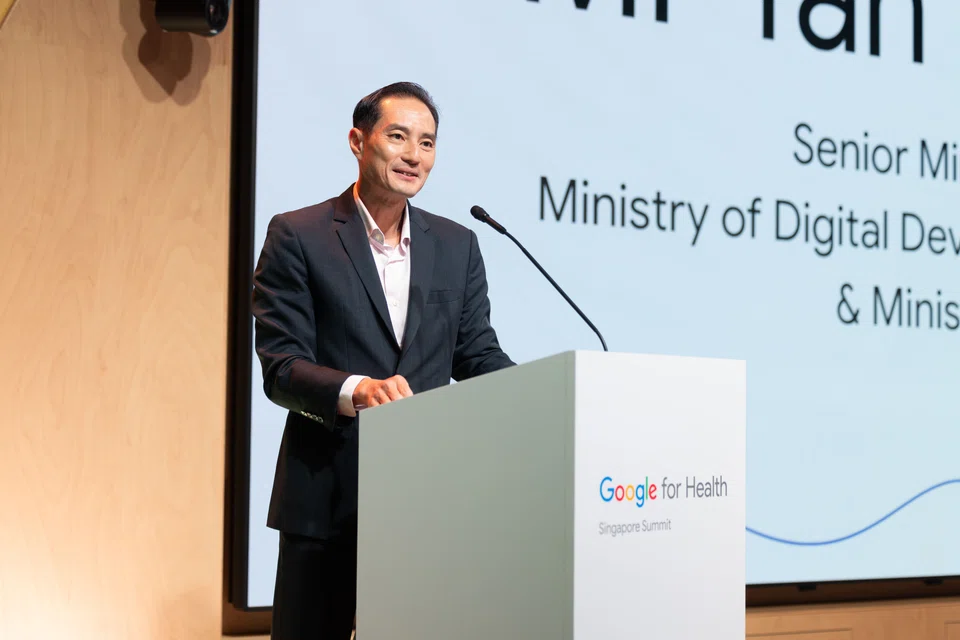
[SINGAPORE] Google will expand its partnerships with public healthcare institutions in Singapore, said top executives from the technology giant during the inaugural Google for Health Summit held in the Republic on Thursday (Oct 29).
These include a population health digital transformation programme alongside Singapore’s NHG Health, focused on scaling preventive healthcare efforts using AI-driven predictive insights.
Google will also establish a research hub in Singapore, comprising locally based research scientists and software engineers.
Ben King, country managing director of Google Singapore, said the company hopes to develop healthcare AI technologies locally that can eventually be deployed internationally.
“By pairing our technical expertise with Singapore’s world-class health institutions and talent, we can build a resilient, future-ready healthcare system together and scale these innovations from Singapore to the world.”
The population health digital transformation programme features a predictive model combining NHG Health’s de-identified population health database with Google’s geospatial tooling.
Climate and environmental data, along with search and behavioural signals, can be used to forecast health risks such as chronic diseases and frailty, following which an AI-enabled health coach can deliver contextual lifestyle advice and preventive guidance to residents.
Through its AI research laboratory Google DeepMind, Google will work with the National University Health System to test and evaluate its global AI co-clinician research initiative, which is designed to explore how clinicians’ capabilities can be enhanced using AI.
Google aims to use this partnership to study the accuracy, safety and usefulness of the AI’s responses by evaluating them against established clinical criteria.
Senior Minister of State for Health Tan Kiat How noted that the initiative with NHG Health will help to move care beyond hospitals into communities and homes.
“The greatest value of AI may not come from doing today’s healthcare faster,” said Tan, who is also senior minister of state for digital development and information. “It comes from enabling forms of care that were previously difficult to deliver at scale.”
The initiatives build on the national AI partnership with Google announced earlier this year, aimed at deploying the tech giant’s frontier AI models to address a variety of societal challenges and opportunities.
Tan said the collaborations could allow Singapore to develop and validate healthcare AI applications that may eventually be adopted internationally.
“As AI becomes dramatically more capable, how do we turn that capability into better outcomes for people safely, responsibly and at scale?” he said.
“Google brings the frontier of what technology can do. Our health system brings the frontier of what healthcare needs, and that is why this partnership matters.”
Research hub
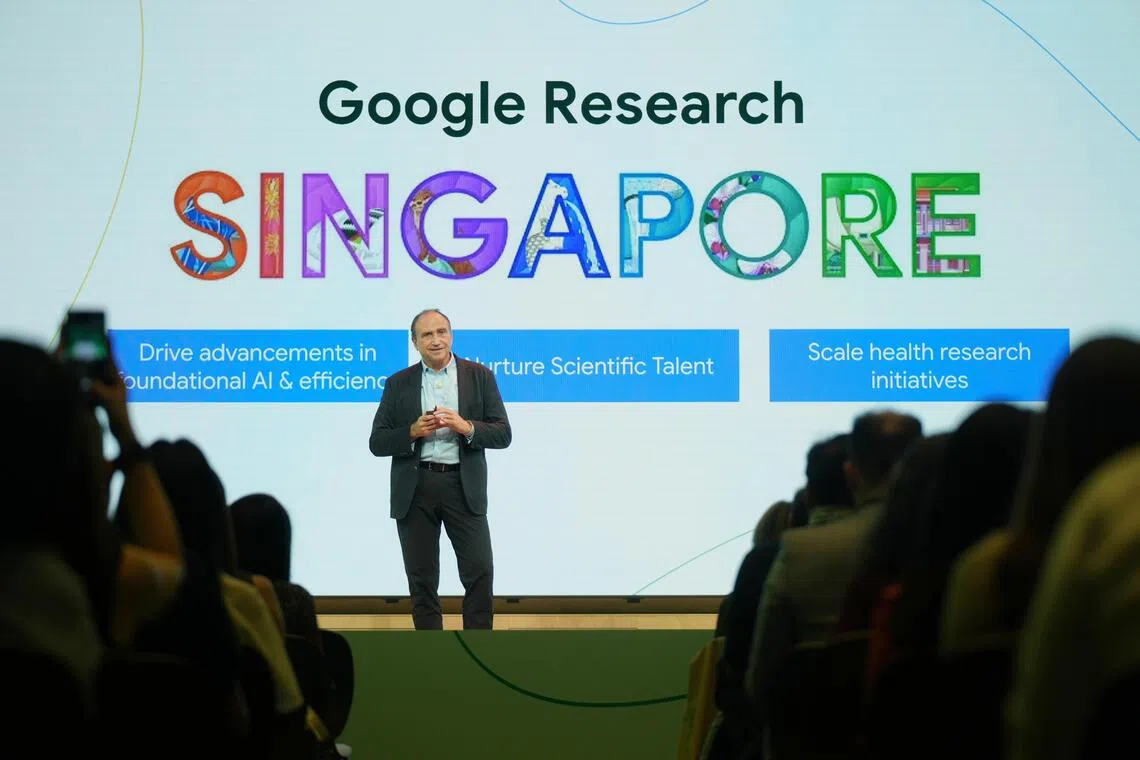
Dr Yossi Matias, vice-president at Google and general manager of Google Research, said the new Singapore research hub will work with the company’s global teams, focusing on improving the efficiency of frontier AI models.
The hub will partner local universities, including the National University of Singapore and Nanyang Technological University, to nurture research talent and provide support for scientific research.
“Singapore brings together world-class research institutions, a forward-looking national AI strategy and a healthcare system ready to put AI to work,” he said.
He added that the hub will enable Google to scale its existing health research initiatives into local healthcare ecosystems, including MedGemma, the company’s open-source AI model designed for medical applications.
Tan said breakthroughs in scientific and medical research can translate into clinical applications, though the success of these applications should not be taken as a given. “A breakthrough creates possibility,” he added. “A system converts possibility into impact in the real world.”
He stressed that AI applications should undergo rigorous testing before being deployed in clinical settings, with continued monitoring to ensure they remain safe and effective.
“A powerful model does not automatically produce better health,” he said. “It has to connect trusted data, fit into real workflows, help professionals make better decisions, generate evidence and value and earn the trust of patients and users.”
Decoding Asia newsletter: your guide to navigating Asia in a new global order. Sign up here to get Decoding Asia newsletter. Delivered to your inbox. Free.
Copyright SPH Media. All rights reserved.