

US tariffs: How trade partners are responding
Singapore will explore ways to reduce tariffs, while Taiwan is confident of retaining its current rate

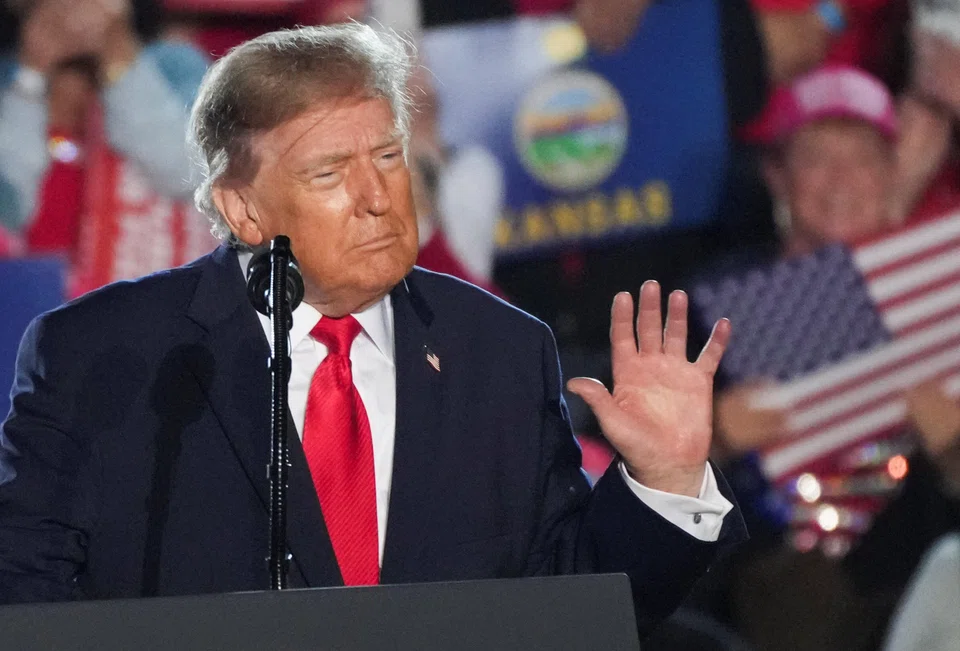
[SINGAPORE] US President Donald Trump has once again announced new tariffs, this time on 14 trading partners, following a probe into excess factory capacity.
Apart from Singapore, the partners affected are China, the European Union, Switzerland, Indonesia, Malaysia, Cambodia, Thailand, South Korea, Vietnam, Taiwan, Bangladesh, Japan and India.
While the proposed new maximum rates announced on Wednesday (Nov 25) range between 20 and 40 per cent, the United States Trade Representative’s (USTR) office said it intends to cap the duties at lower levels, agreed under ongoing or completed trade deals.
These are how the various trade partners are responding:
Singapore: In a statement, the country’s Ministry of Energy, Trade and Industry (METI) said that it was “very disappointed” with the US’ proposed actions against Singapore. It also disagreed with the USTR’s findings.
“The USTR’s findings do not take into account the structure of Singapore’s economy. Singapore’s global trade surplus is a reflection of our outward and market-oriented economy as well as our status as a trusted business and trading hub,” said the ministry.

It added that it would engage USTR “constructively”, including to urge the USTR to reconsider its proposed actions on Singapore and to explore ways to reduce the tariff.
China: A spokesperson for China’s embassy in Washington rejected allegations that China is a source of excess capacity. “The so-called issue of ‘industrial overcapacity’ does not really exist and should not be used as a pretext for political manipulation,” the spokesperson said.
The spokesperson urged the two sides to jointly deliver on agreements between Trump and Chinese President Xi Jinping.
Indonesia: The country is reviewing the proposed 18 per cent tariff rate and will coordinate with industries, its coordinating economic ministry said.
South Korea: The 15 per cent tariff ceiling was consistent with the two countries’ trade deal last year. Following the latest announcement, South Korea said that its manufacturing sector was an integral part of US supply chains, and that it would hold further talks to safeguard its national interests.
Trade, Industry and Energy Minister Kim Jung-kwan said that defending this cap was more than a decent outcome, according to local media reports.
Vietnam: The nation’s trade ministry said it is working with the US to complete a trade deal as soon as possible. The US’ trade deficit with Vietnam is the largest that it has with any partner.
Vietnam’s trade ministry said that it would “coordinate with relevant US agencies to fully participate in the next stages of the USTR’s investigation process, including registering for, attending and presenting views, and responding to US questions at the public hearing”.
Taiwan: The US trade partner said it is confident of maintaining its existing 15 per cent tariff rate from the US. Taiwan and the US signed an investment cooperation Memorandum of Understanding and an Agreement on Reciprocal Trade earlier this year.
The agreements secured preferential treatment for semiconductors and other tech products which account for over 70 per cent of Taiwan’s exports to the US.
Japan: Chief Cabinet Secretary Minoru Kihara called the proposed tariffs – which will impose a 15 per cent cap on Japanese goods – regrettable, and rejected the US’ allegations that it maintains excess production capacity.
India: The country faces a 25 per cent tariff ceiling, the second-highest among the affected partners. Its government said it remains committed to working closely with the US towards an early conclusion of a bilateral trade deal, which would lower the cap to 17 per cent.
At the same time, India rejected the claim that it had structural excess manufacturing capacity, local media reported.
EU: The European Commission rejected the accusation of fuelling industrial overcapacity, after the US proposed a 15 per cent tariff on its goods. It added that the bloc is, instead, among the most exposed to overcapacity. As the EU and US share this concern, it regrets the lack of joint action, it said.
Switzerland: The Swiss economy ministry said it expects that the agreement between itself and the US announced in November 2025 to be respected. It assumes that the new proposed levies will be consistent with the 15 per cent cap set then, the ministry said.
With reporting from Reuters
Decoding Asia newsletter: your guide to navigating Asia in a new global order. Sign up here to get Decoding Asia newsletter. Delivered to your inbox. Free.
Copyright SPH Media. All rights reserved.
TRENDING NOW

Nvidia halts chip shipments to 4 countries in South-east Asia, including Singapore: FT

Should Keppel swoop in to snare Mapletree Investments?

OCBC opens 100-tonne gold vaulting facility to meet growing institutional demand
‘Very disappointed’: Singapore disagrees with US tariff rationale, to seek lower levies

