Haze in 2026 estimated to cost Singapore S$2.32 billion, up 4% from 2015: experts
They attribute the rise to factors including a larger population and higher incomes and visitor spending

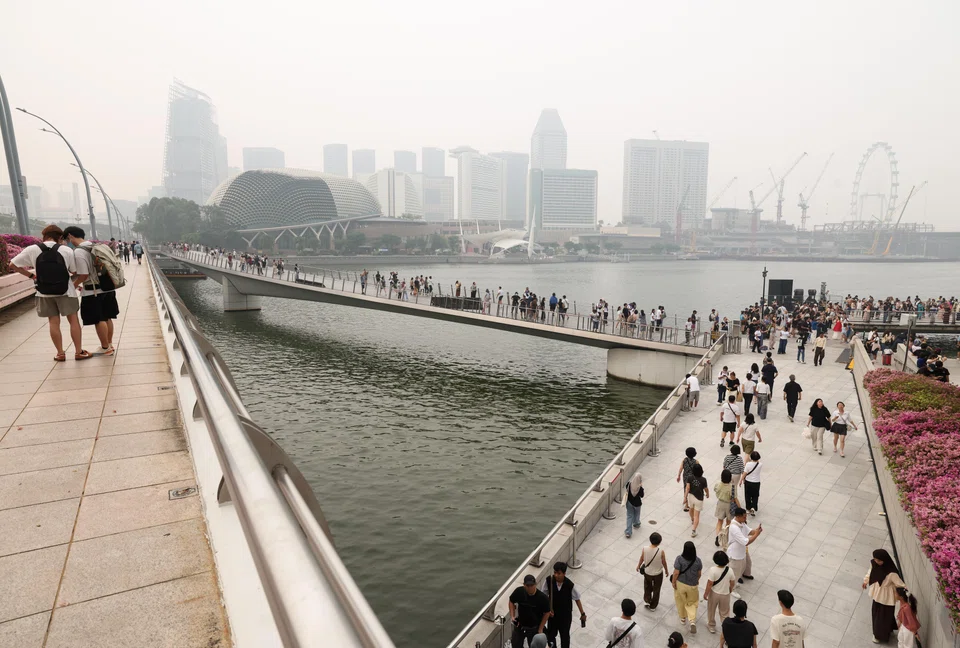
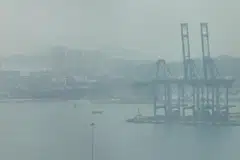
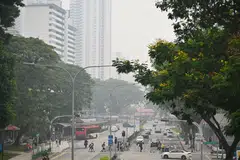
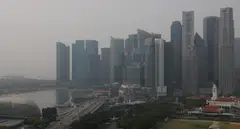
[SINGAPORE] This year’s haze episode – the worst in more than a decade – has cost Singapore’s economy S$2.32 billion as at Oct 31, about 4 per cent higher than in 2015.
This is according to a preliminary estimate from Nanyang Technological University’s (NTU) Professor Euston Quah and Singapore University of Social Sciences’ (SUSS) Dr Eugene Or.
“The sheer scale of this damage strengthens the case for funding prevention alongside tougher penalties,” they argued.
The 2026 estimate builds on a published, peer-reviewed cost framework created by Dr Quah, NTU Associate Professor Chia Wai Mun and SUSS’ Dr Tan Tsiat Siong in 2015.
Then, they estimated 2015 haze costs to be S$1.83 billion, or S$2.23 billion in September 2026 prices.
Dr Quah and Dr Or arrived at the larger bill for this year despite fewer hazy days and a lower average Pollutant Standards Index (PSI) reading. The professors attributed this to a larger population, higher incomes and visitor spending, and updated health data and assumptions.

The health burden, comprising not just treatment bills, but also the value of reducing the risk of illness and premature death, was higher this year than in 2015.
Tourism losses – both direct and additional business losses – were also higher in 2026 than 11 years ago, taking into consideration arrivals as well as spending data.
Disruption also shows up in lost time due to illness, whether for work or non-work activities. The 2026 cost was lower than in 2015, as fewer hazy days and lower pollution outweighed higher earnings and population growth.
SEE ALSO
Another cost component considered was protection, such as masks, which fell from 2015 levels. Household growth was offset by the shorter haze duration.
Also accounted for in the calculations was well-being, taking into consideration peoples’ willingness to pay for cleaner air.
Complementary approaches
Measuring haze losses should guide action, Dr Quah and Dr Or said, adding that understanding who bears the cost can help Singapore target protection and plan adaptations.
The data can also be used to pursue cost-sharing with Indonesia and other affected countries to prevent burning.
While the law can assist in preventing fires by changing what businesses stand to lose, the professors also suggested using a complementary “victim-pays” approach, where affected countries help finance prevention by making alternatives to burning more affordable.
“If supporting fire-free practices costs less than the damage avoided, contributing can leave these countries better off,” they said.
But they also acknowledged that this raises concerns about fairness, and that while public money should fund measurable reductions in fire risk, companies responsible should still be held accountable.
“Each proposal still requires a thorough cost-benefit analysis,” they said, noting that measuring haze losses provides a starting point for decision-making.
“A S$2.32 billion haze bill does not automatically justify a S$2.32 billion prevention budget,” Dr Quah and Dr Or added, suggesting phased funding based on results.
“Measuring haze damage helps Singapore decide where action could make the greatest difference.”
Decoding Asia newsletter: your guide to navigating Asia in a new global order. Sign up here to get Decoding Asia newsletter. Delivered to your inbox. Free.
Copyright SPH Media. All rights reserved.