

Haze law overhaul gives it more teeth, but firms beyond its reach remain the test
Observers say the plantation sector’s opaque corporate structures, overseas-based operations hinder enforcement

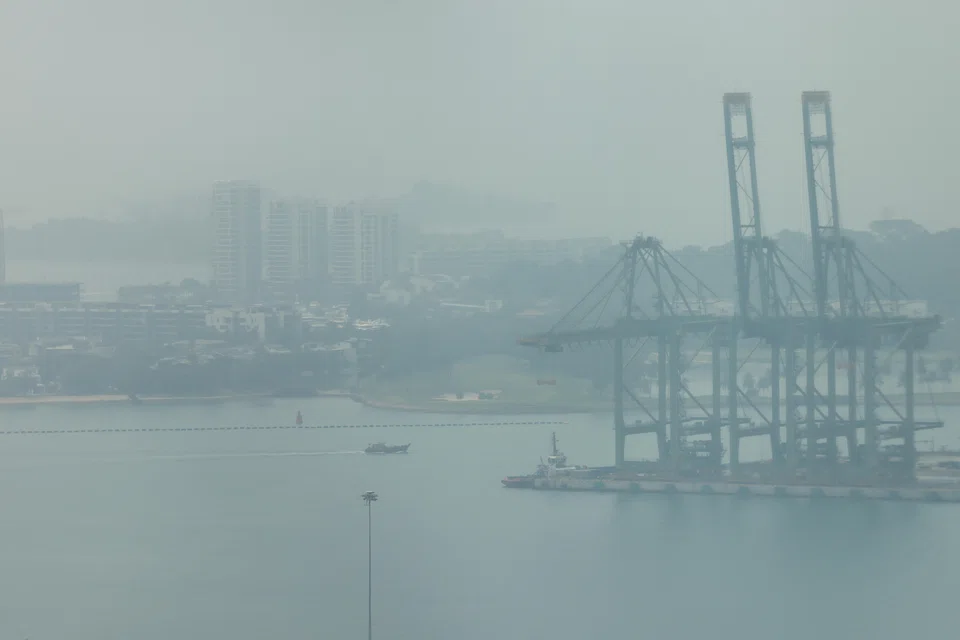
[SINGAPORE] Changes to the law on transboundary haze are set to give it more teeth to go after errant firms, but companies based overseas are likely to stay hard to catch, observers said.
Simon Tay, chairman of the Singapore Institute of International Affairs (SIIA), said that the changes to the law sharpen the government’s capacity to trace supply chains and complex ownership structures.
Even firms not directly responsible can be held guilty of “condoning” fires through their commercial actions, he added in remarks made available to the media.
This matters because many plantation companies have a presence in Singapore and some are listed here, he said. Major traders also have the power and duty to influence the behaviour of those they buy from.
Companies with no presence here will be harder to go after, he added. However, they may instead be served documents electronically or through the media, or they could be tried in absentia; their representatives could also be arrested if they enter Singapore.
Tay, describing the Transboundary Haze Pollution Act (THPA) as “a legal weapon that can be used against corporations”, added: “It is now loaded and has more bullets. But there is no magic-bullet solution.”
Among the amendments to the THPA passed in Parliament on Wednesday (Nov 4) is a bumped-up fine for causing or contributing to haze pollution. It will rise 10 times to S$20 million.
The government can also require firms with suspected haze links to appoint private assessors at their own expense, curb business dealings with designated entities, and seek civil penalties of up to S$10 million.
Notices have already been issued to 10 Singapore-registered companies, seeking information on their operations and possible haze links.
Tay said that more significant than the fine is the government’s ability to make an errant company a “corporate pariah”, a move with a chilling effect on its ability to do business in Singapore.
Professor Lawrence Loh, director of the Centre for Governance and Sustainability at the National University of Singapore (NUS) Business School, called the amendments “necessary augmentations”, as businesses that own or manage palm oil plantations, directly or indirectly, are a root cause of the choking smog enveloping the region.
But reaching them can be difficult, he added, as special-purpose entities, nominee directors, multi-tiered subsidiaries and hidden joint ventures may obscure accountability. He called for a whole-of-system approach beyond legislation to deter future haze-causing activities.
Joseph Chun of law firm Shook Lin & Bok said boards and investors in firms in forestry, plantations and agricultural commodities operating in high-risk jurisdictions should already have treated the haze as a material governance risk.
The amendments to the THPA make this “more imperative”, he noted. Yet, obligations should be proportionate to a company’s actual exposure, rather than assuming every Singapore-linked business faces the same level of risk, he added.
TRENDING NOW
How Vietjet’s US$250 million global asset freeze complicates its 600-aircraft financing plans

Work Permit holders increase by 10,900, but S Pass, EP holders decline by 900 each in Q2: Jasmin Lau

US midterms: What investors can expect after Democrats shatter Republican strongholds

The AI frenzy gets a reality check

