‘Keep what works, change what does not’: PM Wong on Singapore’s approach to navigating challenges
He was speaking ahead of the opening plenary of the World Cities Summit 2026
 Add BT as a preferred source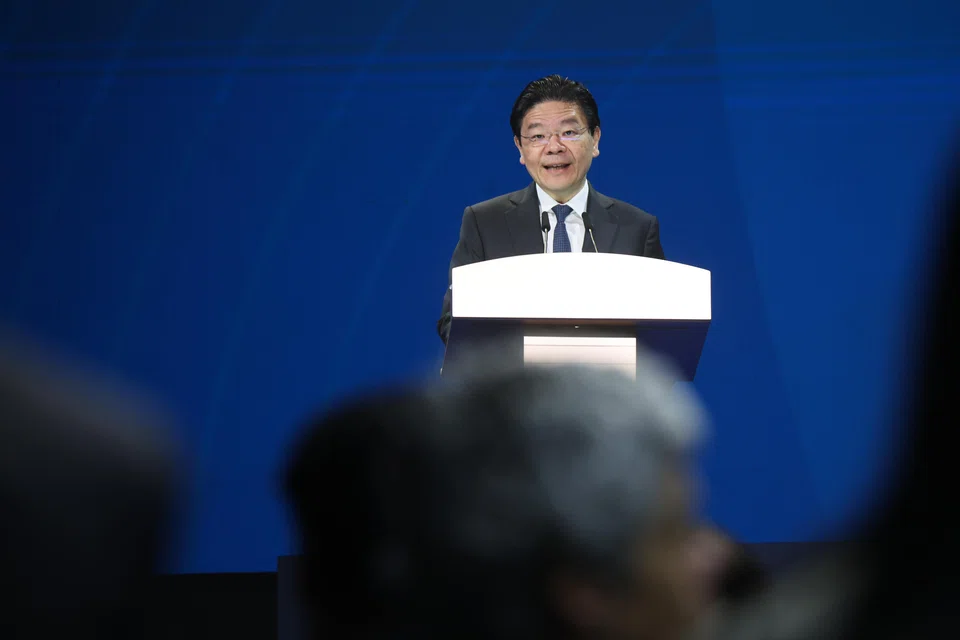
[SINGAPORE] Singapore is guided by pragmatism and not ideology – an approach that means it must continue to learn, adapt and innovate as its circumstances change, said Prime Minister Lawrence Wong on Jun 15.
This is especially since cities like Singapore are often the first to feel the impact of global changes such as technological shifts and geopolitical tensions, he added.
Speaking ahead of the opening plenary of the World Cities Summit 2026, the Prime Minister said: “City planning is not about pursuing a fixed blueprint... Cities succeed when they remain open to new ideas, while staying anchored to enduring principles.”
He also noted that every city must navigate constraints and tap its unique strengths to deal with challenges such growing infrastructure sustainably, and harnessing technology without leaving anyone behind.
To help cities learn from each other, the Prime Minister said Singapore is launching a new fellowship for mayors to exchange ideas and build relationships.
Singapore’s journey, said PM Wong, illustrates how difficult these trade-offs can be in practice, as the country’s development has always involved balancing competing priorities.
He noted that while external observers try to fit Singapore into a particular model or framework, the Republic often “defies easy categorisation”.
For instance, he said some note that Singapore is consistently ranked among the world’s freest economies, “yet they are struck by the active role the government plays across many areas”.
Others focus on Singapore’s state capacity and assume the country has a large public sector, he said, adding that they are often surprised to find that Government spending accounts for less than 20 per cent of Singapore’s gross domestic product, which is lower than in many advanced economies.
SEE ALSO
PM Wong, who was speaking at the Suntec Singapore Convention and Exhibition Centre, said that Singapore’s pragmatism means the country has “never fitted neatly into any single doctrine, model or label”.
“We try different approaches, keep what works, and change what does not. Above all, we focus on what will deliver the best outcomes for Singapore and Singaporeans,” he said, illustrating his point with three examples.
First, said PM Wong, the country emphasises economic growth, but also recognises that GDP alone is not a measure of good life.
This is why “we protect our natural and cultural heritage and dedicate prime land to such spaces, even in a small, land-scarce city,” he said, giving Gardens by the Bay – sited on some of the country’s most valuable land – and the 24 km-long Rail Corridor as examples.
“In both cases, we looked beyond purely commercial considerations and took a broader view of value,” he said.
“We chose instead to create public spaces that enhance quality of life, strengthen our connection with nature, and can be enjoyed by generations of Singaporeans.”
Second, PM Wong said that while the Government believes in the power of markets to allocate resources efficiently, it also takes a more active role as it recognises that markets alone do not always produce desirable outcomes.
He cited Singapore’s state-led housing model – in which about 8 in 10 Singaporeans live in public flats – as an example.
“We ensure a sufficient supply of new flats to meet demand, and heavily subsidise them to keep home ownership within reach for Singaporeans,” said PM Wong, who added that the Government’s objectives go beyond affordability, demonstrated by the social mixing and community building role that Housing Board estates play.
Third, PM Wong said that while Singapore is associated with active state planning, the country also places emphasis on partnerships and ground-up participation.
He gave the example of Age Well neighbourhoods that the Government is developing, where seniors can age in place, within their own communities, and access a wide range of services close to home.
“That depends on much more than physical infrastructure. It requires strong partnerships with healthcare providers, community organisations, caregivers and volunteers,” said PM Wong.
He said that the three examples demonstrate how “we do not assume that yesterday’s solutions will always work tomorrow”.
“As circumstances change, we continue to learn, adapt and innovate,” he added, citing the country’s efforts to harness technology and tackle long-term climate threats.
New mayoral fellowship and speaker series
He also announced two new initiatives.
First, the Urban Redevelopment Authority and the HDB will co-organise a new Liu Thai Ker Distinguished Speaker Series, named after the late architect and master planner who previously headed both agencies.
The inaugural session will be held later in 2026.
Second, PM Wong said a new Mayoral Fellowship will be launched to bring current and former mayors from around the world together to connect and exchange ideas.
The fellowship is a by-invite programme, and includes visiting fellows, who are former mayors that can share their experience and knowledge with the mayoral fellows.
The inaugural batch of fellows comprises Hemlata Diwakar (Agra, India), Ciprian Ciucu (Bucharest, Romania), Samuel Dusengiyumva (Kigali, Rwanda) and Nasiphi Moya (Tshwane, South Africa), and the visiting fellows for the first cycle are Anne Hidalgo (former mayor of Paris, France) and Jan Vapaavuori (former mayor of Helsinki, Finland).
“In an increasingly fragmented world, these connections matter more than ever,” said PM Wong. “Cities may differ in size, history and circumstances. But we all share a common purpose – to improve the lives of our residents, and build a better future for the people we serve.”
While acknowledging that the challenges that cities face today are complex, he said they are not insurmountable.
“If we continue to learn from one another, adapt boldly and work together, we can build cities that are not only more liveable and sustainable, but also more inclusive, resilient and hopeful,” he said.
The World Cities Summit, which takes place once every two years and is in its tenth edition, runs until Jun 16. Organised by Centre for Liveable Cities and URA, it brings together government leaders, industry experts and academia. THE STRAITS TIMES
Decoding Asia newsletter: your guide to navigating Asia in a new global order. Sign up here to get Decoding Asia newsletter. Delivered to your inbox. Free.
Share with us your feedback on BT's products and services