

Singapore factory output growth accelerates to 6.1% in October
On a seasonally adjusted monthly basis, total output increases 7.1%

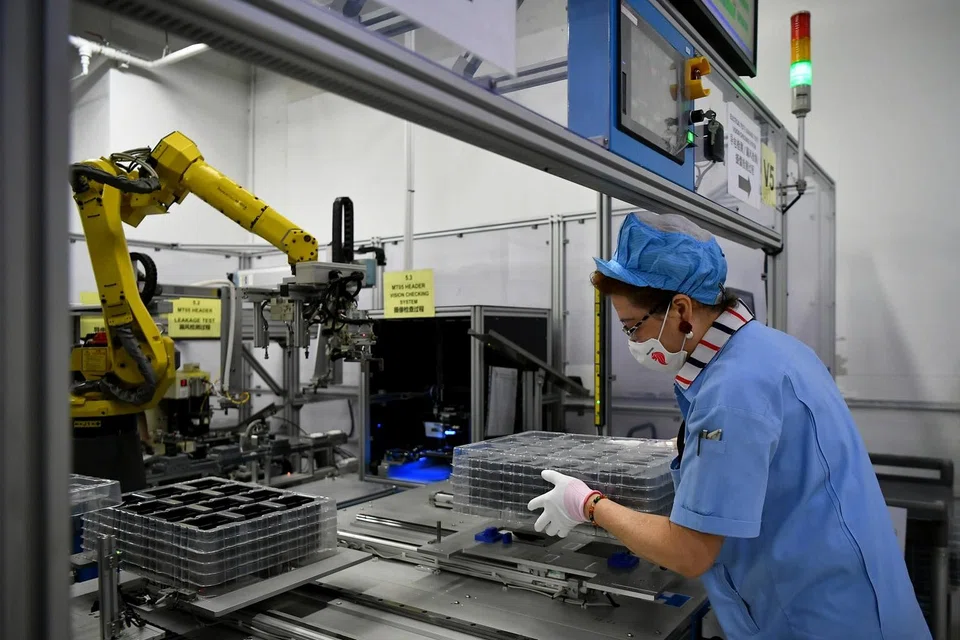
[SINGAPORE] The Republic’s factory output growth picked up to 6.1 per cent year on year in October, from 5 per cent in September, based on data released by the Economic Development Board (EDB) on Thursday (Nov 26).
Excluding the volatile biomedical manufacturing cluster, output increased 12.1 per cent year on year, accelerating from September’s revised 10.9 per cent expansion.
On a seasonally adjusted month on month basis, output expanded 7.1 per cent in October, reversing from September’s revised figure of a 3.2 per cent decline.
Excluding biomedical manufacturing, output increased 7.3 per cent on a monthly basis, in a turnaround from the 4.8 per cent fall in September.
Performance by cluster
Within the manufacturing sector, all but two of the six clusters recorded output growth on a year-on-year basis in October.
Precision engineering led the growth, with output for the cluster rising 54.1 per cent. This was led by higher production of semiconductor equipment in the machinery and systems segment, EDB said.

The precision modules and components segment also recorded higher output of industrial rubber goods, precision metal components and dies, moulds, tools, jigs and fixtures.
The linchpin electronics cluster expanded 6.6 per cent, with all segments increasing amid sustained artificial intelligence-related demand.
Chemicals output grew 4.4 per cent, reversing from a 4.6 per cent decline in September. This was on the back of a higher output of fragrances in the other chemicals segment and increased production of industrial gases, chemicals and food additives in the specialities segment. The petroleum segment also recorded higher production of refined products.

Conversely, the petrochemicals segment declined amid softer demand and feedstock supply disruptions that continued to constrain production, EDB noted.
General manufacturing industries grew 0.5 per cent. The miscellaneous and printing segments recorded output declines, with the former reflecting lower production of structural metal products and furniture.
But the cluster’s output was supported by higher production of milk powder and beverage products in the food, beverages and tobacco segment.
On the other hand, transport engineering contracted 5.3 per cent. It was weighed down by lower shipyard activities and weak production of oil and gas field equipment in the marine and offshore engineering segment.
Conversely, the land and aerospace segments expanded, with the latter supported by higher production of aircraft parts and engine maintenance, repair and overhaul.
Industrial production in the volatile biomedical manufacturing cluster dropped 35.8 per cent, due to lower production of biologics and a change in mix of active pharmaceutical ingredients in the pharmaceuticals segment.
Decoding Asia newsletter: your guide to navigating Asia in a new global order. Sign up here to get Decoding Asia newsletter. Delivered to your inbox. Free.
Copyright SPH Media. All rights reserved.
TRENDING NOW

‘Very disappointed’: Singapore disagrees with US tariff rationale, to seek lower levies

US proposes new tariffs on 14 trading partners, including rate of up to 20% for Singapore

Should Keppel swoop in to snare Mapletree Investments?

OCBC opens 100-tonne gold vaulting facility to meet growing institutional demand

