

Singapore SMEs set for bigger role as chipmakers localise supply chains: A*Star deputy chief
The Republic’s chip sector is MNC-led but could become a national champion, says industry veteran Yeo Yee Chia

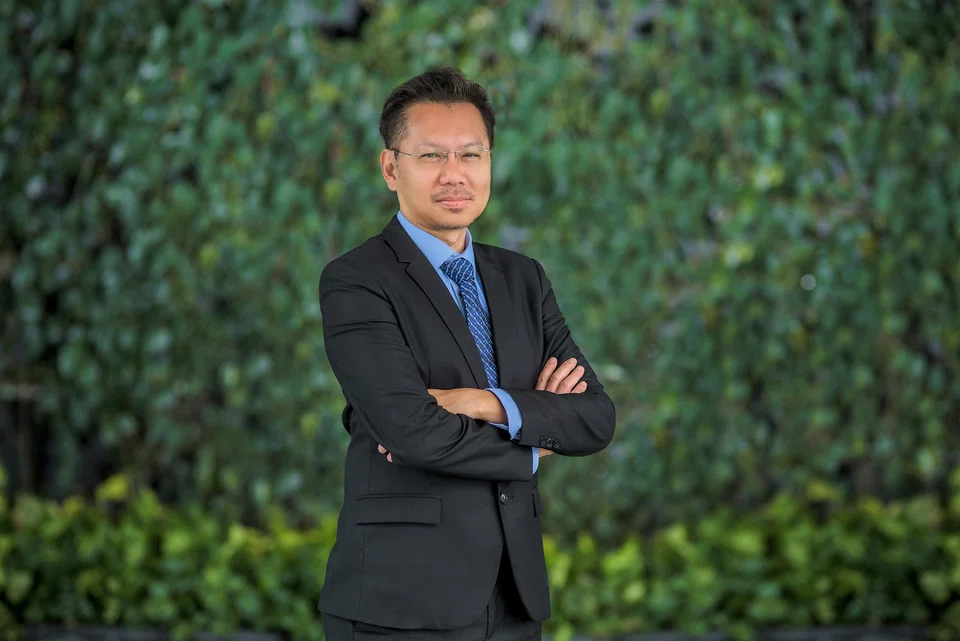
[SINGAPORE] The Republic’s small and medium-sized enterprises (SMEs) will play an increasingly important part in the semiconductor supply chain as big chipmakers localise their sourcing, said a senior official from Agency for Science, Technology and Research (A*Star) on Friday (Sep 25).
Asked whether local enterprises will always play a supporting role in secondary industries, or whether the ambition is to forge a national semicon champion, Yeo Yee Chia, A*Star deputy chief executive for innovation and enterprise, replied that Singapore does want to grow national champions.
“The economic development trajectory of Singapore has been that of getting multinational corporations (MNCs) to invest and supporting them,” he said. “But increasingly – and this is my personal opinion – I think we should be supporting our local champions,” he noted, adding that he joined the board of Singapore-listed AEM Holdings to help grow such a company.
Prof Yeo was speaking to reporters at the sidelines of Innovate Together 2026, an annual forum organised by A*Star as part of the Singapore Semiconductor Industry Association Summit.
The industry veteran, who is an assistant professor of electrical and computer engineering at the National University of Singapore, leads Singapore’s first research innovation and enterprise (RIE) flagship in semiconductors, into which the government is investing S$800 million from 2026 to 2030.
He previously served two stints at Taiwan Semiconductor Manufacturing Company (TSMC), where he worked on exploratory transistor technologies from 2001 to 2023.
In his second stint there, he served as TSMC’s director of R&D and co-developed its 7 nanometre (nm), 5 nm and 3 nm technologies.
In his interview, he said that as “queen bees” – the big MNCs – localise their supply chains in Singapore and the region, SMEs stand to benefit by supplying them with components. For instance, A*Star’s Singapore Institute of Manufacturing Technology (SIMTech) works with MNCs such as equipment makers to develop components. It then transfers the technology to SMEs so they can capture the market.
A*Star is also weighing how best to commercialise its research. Licensing is lower-risk, as the licensee takes the technology forward, while spinning off a company carries more risk but offers the highest return, said Prof Yeo.
SEE ALSO


The agency has a pipeline of spinoffs planned, following Advanced Micro Foundry, which was spun out in 2017 and acquired by GlobalFoundries in 2025. “We like to do such risk-taking adventures,” he noted.
Growing local enterprises
A*Star is also committed to growing its startups into globally competitive firms, added Prof Yeo.
“It’s not just having startups that may fail,” he said. While public funding for early-stage research is well-defined, ideas can stall later when they fail to attract private investment.
By 2030, the professor wants to see more industry partners co-investing R&D dollars alongside A*Star.
Other measures of success include more technologies deployed in products, and a bigger contribution by semicon to Singapore’s gross domestic product.
Asked how Singapore and Taiwan’s semicon industries compare, Prof Yeo noted that Taiwan’s industries are home-grown while Singapore’s is dominated by foreign firms.
Singapore also no longer makes advanced logic chips, but builds the equipment that advanced logic and packaging fabs need. Amid tense US-China relations, Singapore can also serve as a hedge and manufacturing base outside Taiwan, he said.
Asked whether Singapore has a “sacred mountain” such as TSMC, Prof Yeo said: “Do you know how small Bukit Timah Hill is? Singapore is more like a range of mountains.”
Since no one knows which will grow strongest, the aim is to help the whole industry succeed, he added.
Decoding Asia newsletter: your guide to navigating Asia in a new global order. Sign up here to get Decoding Asia newsletter. Delivered to your inbox. Free.
Copyright SPH Media. All rights reserved.
TRENDING NOW

Incidence of civil servants buying property near unannounced MRT stations ‘a concern’, but may not establish misconduct: PSD

Grab CEO’s wife Chloe Tong on life with Anthony Tan and finding her purpose
Income Insurance appoints former Manulife Singapore top man as new CEO

HDB reviewing ‘jumbo’ flat scheme after Telok Blangah unit listed for sale at S$2.18m

