


‘Our bread and butter’: Family-run Loo’s Hainanese Curry Rice hands reins to third generation
The younger owner of the heritage hawker stall is still learning how to cook her family’s well-loved recipes
Koh Kim Xuan
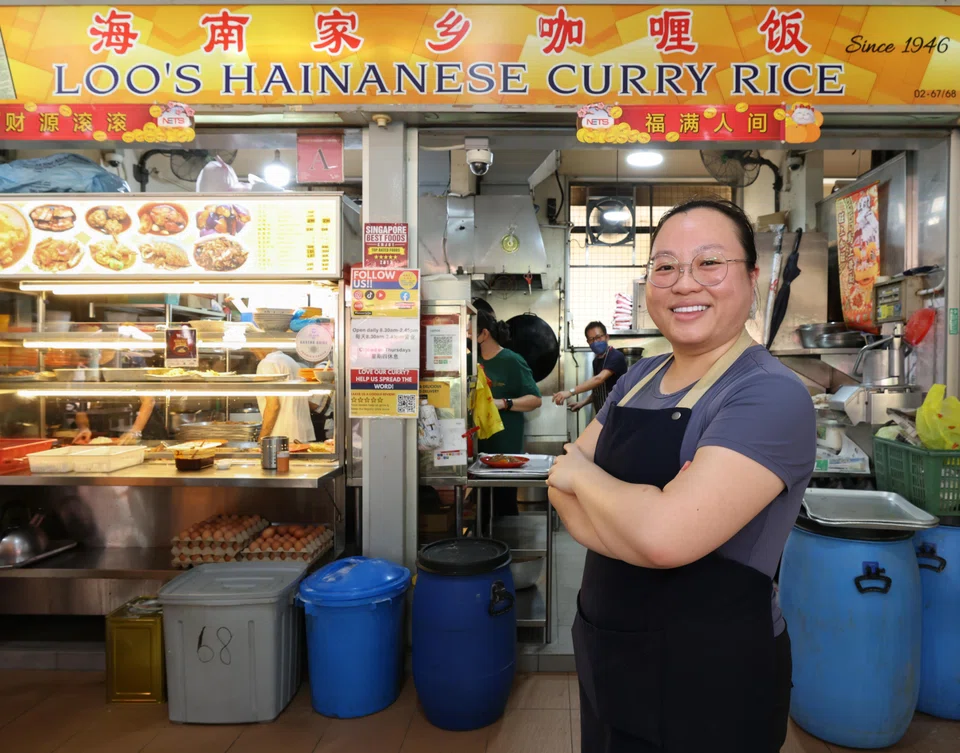
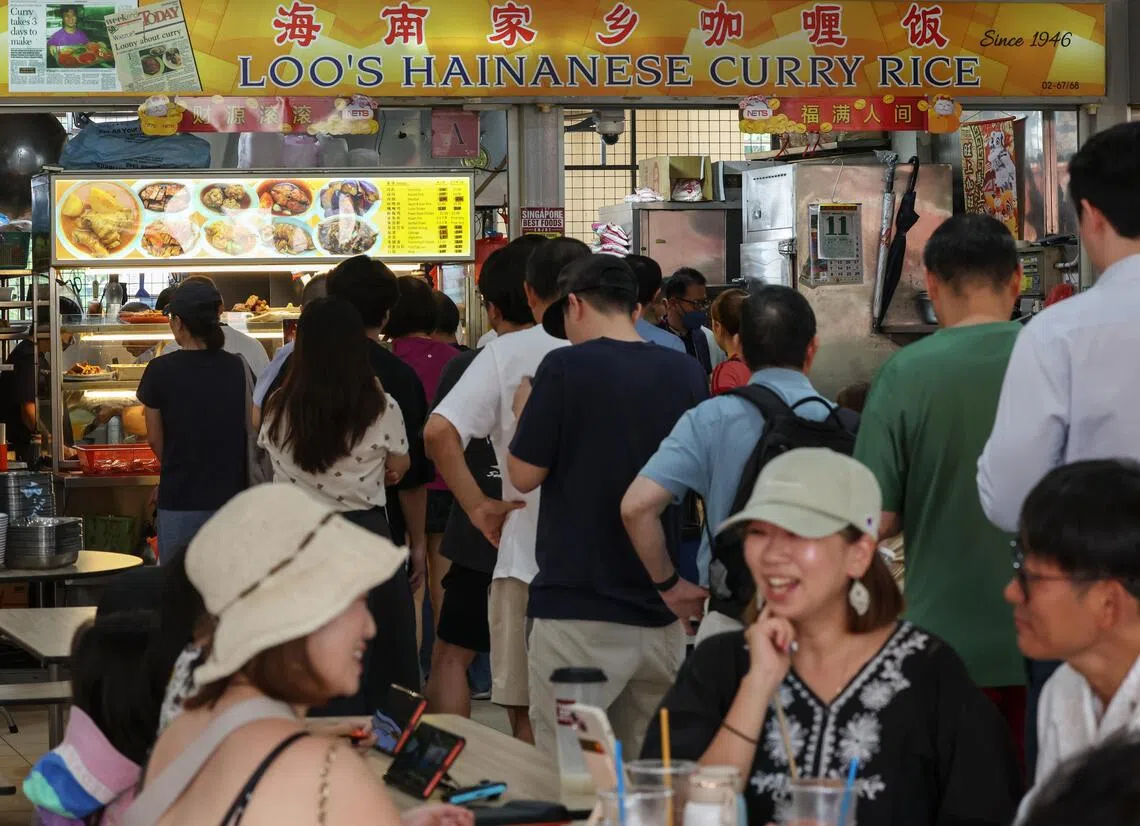
[SINGAPORE] On the second floor of Tiong Bahru Food Centre, a distinctive mix of curry and braised gravy aromas wafts through the air.
The smell of spices leads to a long line of queuing customers for family-run hawker stall Loo’s Hainanese Curry Rice.
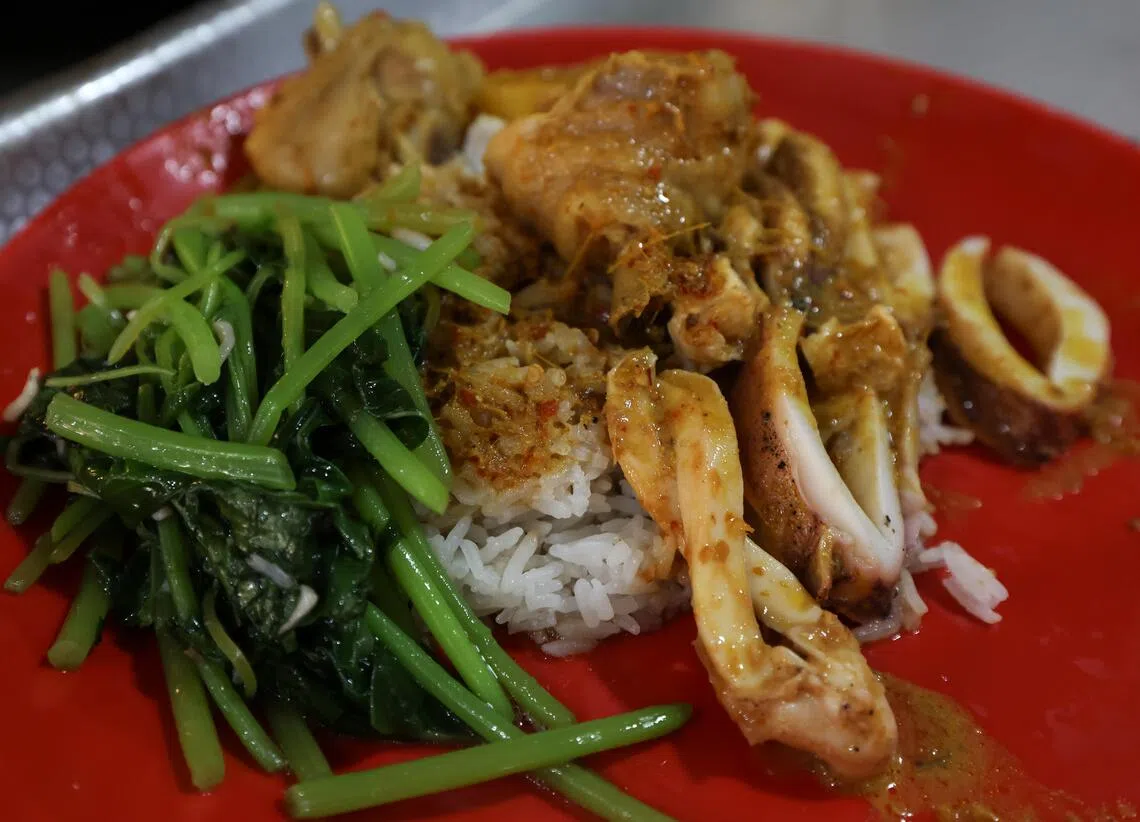
The 80-year old business is best known for its saucy meals and Hainanese-style cooked dishes, which are usually ladled generously on top of white rice, drenching the entire plate in curry.
Loo’s serves up various signature dishes each day – pork chop, handmade meatballs, assam fish, curry chicken, sambal squid and prawn, and braised pork and cabbage. Other dishes such as soy and ginger chicken and sweet and sour pork are offered occasionally.
Now, after 46 years of running the business, second-generation owner Loo Kia Chee has passed the reins to his only child, Dawn Loo, to continue the legacy of one of Singapore’s oldest Hainanese curry rice stalls.
Third-generation management
The younger Loo, who is 30, has been managing the family business since August 2025, after leaving her civil service job.
Even as she is still learning how to cook all the dishes from her father, she also mans the cashier and manages the stall’s social media accounts on Instagram, Facebook and TikTok.
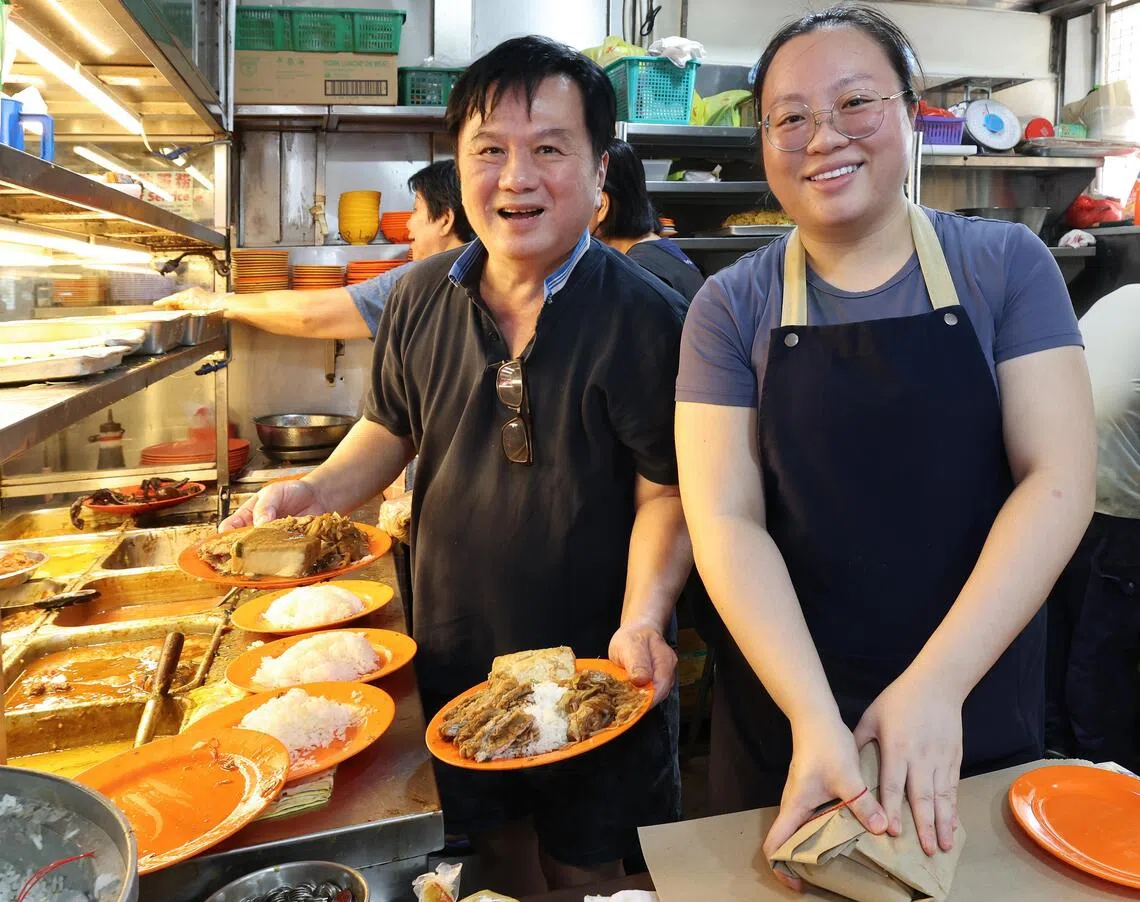
She decided to make the career switch to be a hawker and inherit the business when her father was unable to walk after a knee surgery in 2025. Dawn Loo was also motivated after seeing numerous closures of other heritage businesses and F&B stalls in Singapore.
“I felt that if I didn’t do it, then the business may close down, in maybe five years when everybody retires,” she said, adding that she will fully take over when her father feels she is ready to do so.
Beyond preserving her family’s legacy, Loo also aims to ensure Hainanese curry rice remains prominent within Singapore’s hawker scene through the use of social media.
“I want to bring up the status of Hainanese curry rice to be on par with chicken rice and kaya toast.
“We want to highlight more about the quality of ingredients that we use… to our audience and also build our brand identity,” she added.
Through online platforms, Dawn Loo hopes to educate people about how Hainanese culture originates from Singapore.
Since starting the business’ social media accounts, there has been a 30 per cent increase in customers, and many of them are younger, she said.
Revenue is projected to increase by 5 per cent this year from 2025.
“(This business) is our bread and butter. When I was young, to be honest, it was never in my plan to think about the family business or be part of it. (But) since last year, I’m getting more in touch with my roots. It’s something very special,” said Dawn Loo.
Family business
Founded in 1946 by her grandfather Loo Niap Tan, the recipe behind the curry gravy has been passed down by word of instruction to Loo Kia Chee, who has helped out in the stall since he was five years old.
Over the past 80 years, the family has been buying ingredients such as soy sauce, five-spice powder, pork and condiments from the same suppliers – which helps ensure they stay as close to the original recipes as possible.
The signature curry paste is made at a factory in Singapore, where tens of kilograms of raw ingredients are chopped and grinded in a machine to form a single batch. Small portions of this paste will then be fried for 30 minutes at the stall itself, to use in the curry.
The curry recipe originated from Loo Niap Tan’s brother-in-law, who worked in a Peranakan household as a family chef. The recipe for the pork chops – one of the stall’s best-selling items – came from Loo Niap Tan, who worked as a chef in British cuisine restaurants.
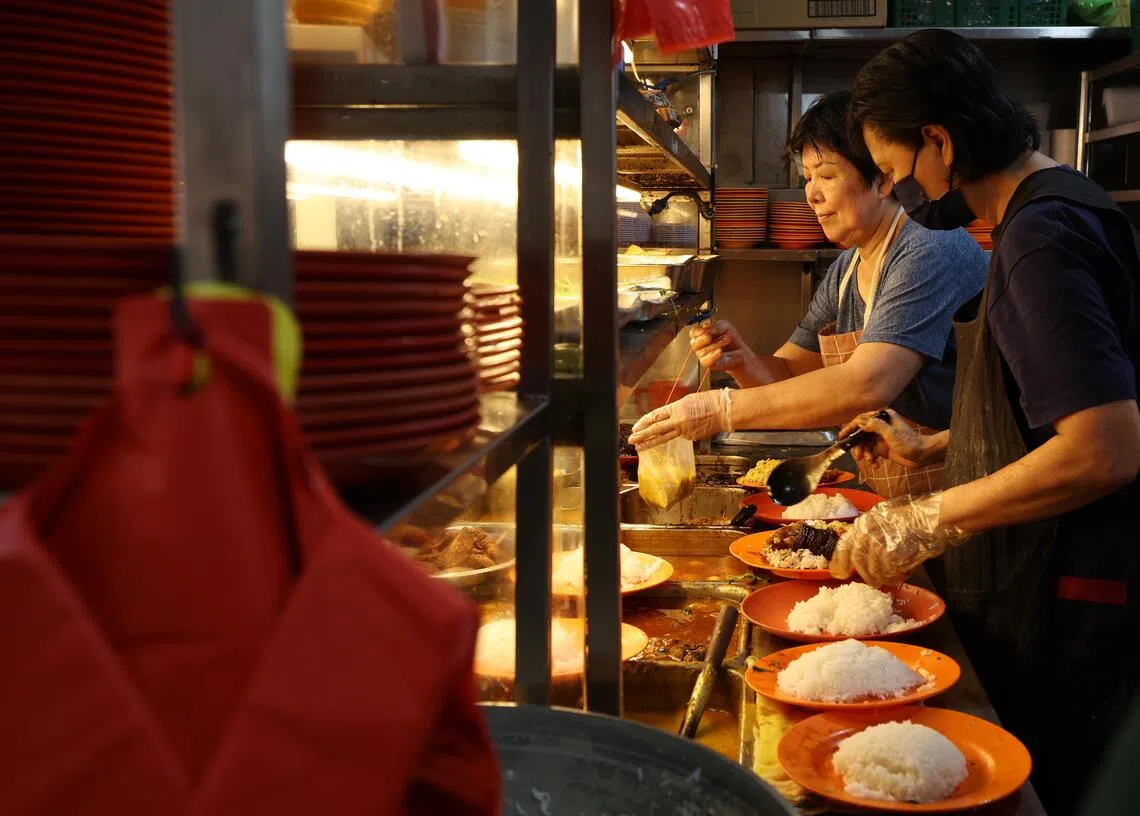
Like other heritage brands in Singapore, the family business faces issues of hiring younger workers. Currently, all of its employees are in their 60s, with the oldest having worked at Loo’s since 1983.
Dawn Loo noted that even though many young Malaysians have expressed interest in working for the business, they are unable to hire them due to regulations about employing non-Singaporeans or permanent residents.
The business has had regular customers since her grandfather operated the store at Tanjong Pagar, its first location, before it moved to Tiong Bahru Food Centre in 1990.
Expansion and collaborations
The elder Loo said there is a chance of opening another stall in the next two to three years at other hawker centres or food courts.
For now, the plan is to explore short-term joint ventures with food companies.
Back in 2022, the business worked with cultivated meat producer Good Meat, where it sold a cultivated chicken dish for a week.
“To be honest, we don’t profit much from the collaboration. It’s more for brand awareness and to reach out to a younger audience,” said the younger Loo.
More recently, in August this year, Loo’s had a one-off collaboration with cocktail bar Gibson, where it provided its Hainanese curry rice and meatballs as menu items alongside the bar’s selection of cocktails.
“We are looking for collaborations with bars to show that Hainanese food can be (repackaged and elevated to be sold at) a more atas (high-class) place,” she said.
TRENDING NOW
Simba admits exceeding spectrum limits amid failed M1 deal; full-year profits surge 277%

He built the Vingroup empire. Now South-east Asia’s richest man is handing some key roles to his sons

What’s on the agenda when Xi and Trump meet in Washington

Ex-execs of CW Group, Allied Tech charged with offences linked to lawyer’s S$76 million misappropriation

