Finding success as a female portfolio manager: Think logically, independently and communicate
Asia is at top of table in female fund manager representation over last few years: Citywire

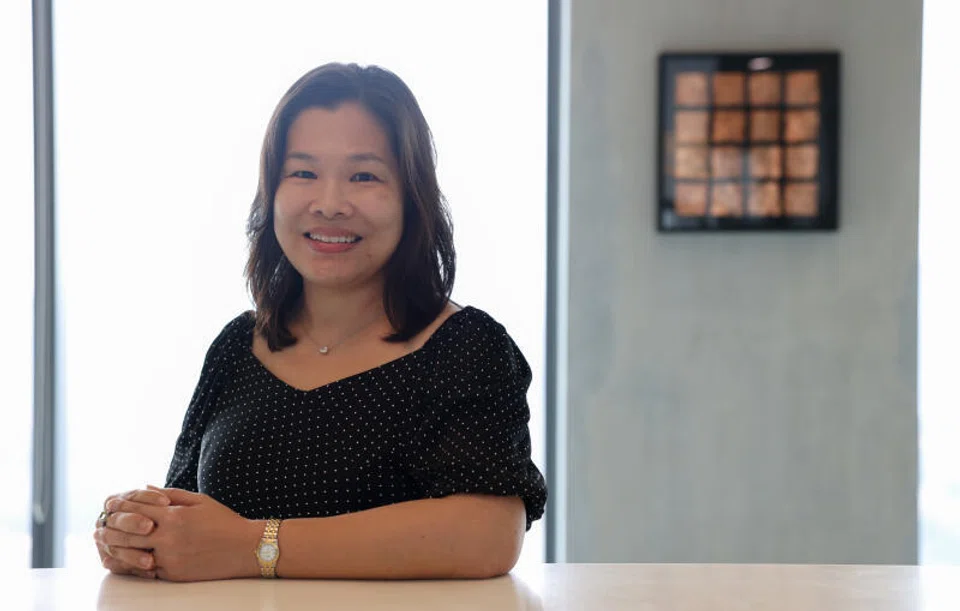
[SINGAPORE] Low Guan Yi, M&G Investments’ head of Asia fixed income, was genuinely surprised that female fund manager leadership appears to have declined on a global scale.
Data from Citywire showed a dip in active female fund managers worldwide in 2026 to 12.6 per cent, from 12.9 per cent last year, marking the first drop in 11 years.
But this has not been the case in Low’s nearly 30 years as a portfolio manager in Asia, she told The Business Times in an interview.
“Even at the senior levels, female participation in the portfolio management space has picked up in recent years in the Apac region,” she said.
Low recalled that a fair number of women were already in senior roles when she began her career.
Generally, the equities space is more male-dominated in Asia, given its longer history as an asset class. This invariably encouraged more women to focus on fixed income management very early on as a “less crowded” area, she explained.
Improved education standards and opportunities over the past 20 years are among some reasons for greater female participation, as well as a rise in diversity and inclusion practices in the last five years.
Asia has been at the top of the table in female fund manager representation over the last few years, Citywire noted in its report. Taiwan, Singapore and Hong Kong have the largest percentage of female fund managers at 31.1 per cent, 24.8 per cent and 24.2 per cent, respectively.
Asia local currency bonds as a core allocation
Low, who built M&G’s fixed income capabilities from the ground up, received the AsianInvestor Trailblazer Award earlier this year as part of the Asia Asset Management Awards 2026.
Since she established M&G’s capability in 2022, she has assembled a 11-member team, of whom five are women; launched five dedicated strategies; and built the division’s assets under management (AUM) US$10 billion as at January. M&G has total AUM of £355.8 billion (US$472.2 billion) as at end-June.
Driving her efforts is her conviction that Asian local currency bonds should not be viewed as just a tactical or peripheral exposure, but as a core allocation in global portfolios.
She recounted that for a long time, Asia was considered a part of global emerging markets.
“Asia’s onshore bond market has reached US$31.5 trillion, of which half is China. This means China’s onshore bond market is the second-largest bond market in the world, after the US.”
Significant global instability – due to ongoing US-China tensions, dramatic supply chain shifts and a weakening US dollar – have caused investors to raise their exposures to Asia markets and currencies recently.
Low said: “US President Donald Trump’s “Liberation Day” tariffs in April has finally turned the narrative – such that many in Asia are evaluating all US dollar surpluses accumulated over the years and reconsidering if they should be holding so much US dollars.”
Asian currencies and bonds could benefit from investors’ desire to diversify. Low said growth across most of Asia this year has been resilient, supported by global demand for electronics.
“This strength in exports is supporting fiscal revenues as well as record current account balances in (markets) such as Taiwan, (South) Korea, Malaysia and Singapore.”
“It puts many Asian economies in a relatively strong fundamental position at a time when fiscal pressures are rising in parts of the developed world.”
In addition, the US Federal Reserve’s rate hike on Sep 16 by 25 basis points and expected tightening into 2027 are aimed at helping to anchor inflation expectations.
“Should this succeed in stabilising global bond markets, that should ultimately provide a more supportive backdrop for Asian bonds.”
“No running format”
Low said there is “no running format” in terms of what it takes to succeed as a female portfolio manager in Asia, although the profit and loss in one’s books is an inescapable benchmark.
This is especially so when gender stereotypes in big finance are increasingly more “relaxed”. Female portfolio managers are held to the same standards as their male counterparts, she said.
She believes both women and men should be clear on what they want out of their career from the get-go, as well as the demands of being a fixed income manager in Asia.
“The fixed income space is constantly moving... so there is always something happening to pay attention to, discuss or form an action plan around. A new investment thesis may arise, or portfolio action may require framing.”
But this also means it is hard to disconnect from the market. “Client calls come whether you’re on vacation or not – and markets don’t ever stop moving,” she said. “We’re lucky if the markets are just calm.”
Low covers 10 markets in Asia. Monthly central bank meetings by Japan, Indonesia and the Philippines are key events to “watch or position for”.
Portfolio managers must be able to hold a logical thought process, think independently, and articulate decisions to clients and teammates well.
These competencies are crucial to go the distance, she said, beyond a degree in economics, accounting or financial analysis.
Low’s beginnings during the Asian financial crisis in 1998 as a risk analyst for Standard Chartered’s capital markets division gave her a strong background in bonds and foreign exchange markets.
This saw her through her career where she managed various portfolios through the 2008 global financial crisis, a sudden tightening of monetary policy by the US Federal Reserve in 2013, and the Covid-19 pandemic.
“Ultimately, communication with investors amid unexpected market events is key, given the stressful situations they are in, on top of preserving their portfolio options to (help them) weather financial crises.”
Low, who has two teenagers aged 12 and 16, said her success is not without sacrifice.
“I was lucky to have understanding superiors when I went on maternity leave who were patient with my delayed replies... Markets do not sleep when you’re away, so the work doesn’t stop.”
There are, of course, trade-offs. “Knowing my fiduciary duty – and how I am responsible for my clients’ money – can be very time-consuming,” she said.
“There are things which I know I have to give up, but it’s also about the choices I make, and how I organise my life.”